• green harvest

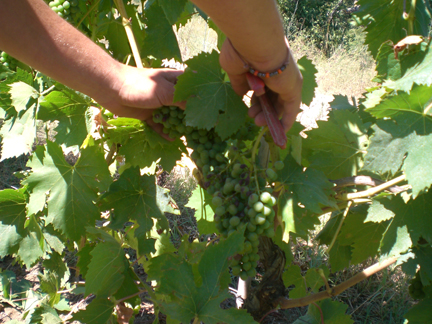
    The phrase “wine is made in the vineyard” received much attention recently when wine writers questioned some of Bordeaux’s first growth producers about their heavy financial investments in upgradation of the cellars. This also was an indication of a cautionary measure to have control over a bad vintage, which obviously reasons against the above-mentioned argument. Let’s just leave this to be dealt at another time. But the winemaker still has to work his magic in the vineyard. Hence, green harvest, a form of crop thinning practice, which helps in managing and controlling the yield in a vineyard, has found many takers lately.

    What exactly is ‘Green Harvest’?

    It is a viticulture term to describe mainly removal of excess grape clusters and to let the remaining clusters ripen fully. Some winemakers from regions such Bordeaux and Burgundy have been practicing crop thinning since more than four decades, but it can’t be considered as a very common practice. This largely depends on the weather condition in a particular vintage year. More rains mean more severe crop thinning and the opposite in case of a warm vintage. Some of the Bordeaux chateaus practicing crop thinning are Chateau Petrus, Chateau Margaux and Lynch Bages etc. The norm is to do green harvest when the grapes become red/fully ripen so that there is a significant difference between the clusters, which are riper than the ones that are still green, and then getting rid of those. However, there are still arguments over this practice, as some viticulturists believe that thinning at the stage of veraison (grapes are ripened) could have less impact on the actual quality of the yield.

    According to Giacomo Bartolommei, the owner of Caprili winery Montalcino, Italy, green harvest has an essential role to play for the production of high-quality wines. “With this process we are reducing the yield per hectare by obtaining less quantity of grapes with really great characteristics. For example more sugar, less acidity resulting into wines which are more rounded and more approachable than the past”. For Tuscany and specially Montalcino green harvest is important in the month of June, sometimes (though it’s not anymore green harvest but has the same principles) also the month of August. He adds,“Just before the harvest this year, we are going to cut some more grapes to define and achieve better ripeness of the grapes in the vineyard”.

    In regions such as Priorat, Spain, ‘green harvest’ is gaining popularity says, Albert Costa, Owner, VallLlach Winery. “It is very important to control the production as well as the quality of the yield from the vines. In Priorat, our vines don’t get enough nutrients from the soil to feed the grapes during maturity. So, green harvest helps us provide enough nutrients to the grapes to get the full ripeness that we want”. It is practiced mostly during the end of July in Priorat.

    Wojciech Bońkowski, Editor-in-chief, Winicjatywa.pl & Polish Wine Guide says that there are various approaches, some preferring to intervene during the pruning and flowering phase to let the vine concentrate on a select number of bunches. Others green harvest a few weeks before the proper harvest. He also adds that yield control is essential to any quality wine. You can only produce basic table wine if yields are not controlled, especially in high vigour environments.

    However, according to Bońkowski, green harvest, once considered a standard thing to do, is also increasingly being criticised as not respecting the natural balance of the vine. The key moment in programming the vine to produce a given amount of grapes is pruning. Pruning very short is time-consuming and requires expertise but has the advantage that the plant is geared toward a lower yield from the beginning of the vegetation period. A more conservative approach is to intervene at a later stage with green harvest, cutting unripe bunches that has developed normally through budding, flowering and fruit set.

    Speaking on whether it is a modern practice to produce only fine wines or an essential aspect of viticulture process and vineyard management Bartolommei, the Brunello producer says that it is more of a standard process that everybody has implemented on vineyard management. “I think it’s more of a process for a category of wines where there is an imposition of yield reduction, andit is not a common practice, for example, for table wines”.

    “I think it is both”, says Costa. “Of course it’s the way to produce the best wine possible, but in the same time with green harvest you can control a lot of fungus diseases, like botrytis during the maturation”.

    Robert Joseph, Wine Writer, UK believes that green harvest can be very useful if there are too many berries during the season. If pruning and set have given an ideal number, then green harvest will be unnecessary. “You need it more for vigorous young vines, and in regions with legal limits on yields. It’s a modern practice, and not essential for most commercial wine”.

    How important is the practice in case of India? Kailash Gurnani, Winemaker, York Wines says, “Green harvest is important. Generally, it can be done anytime during the growing season. But the best time to do it is between fruit set and veraison (the time when berries change colour and start becoming soft). If done at the right time, the plant adjusts its nutrient supply to the shoots & fruit. If done too late, depending on the variety there may be no significant benefits. It is definitely an essential part of viticulture. In India, however, the awareness of the science behind this practice is varied. For Indian farmers, more fruit = more tonnage = more profits which again is a problem”.

    Potential for Wine Tourism!

    Bartolommei says, “June and July are perfect months to visit vineyards and cellar because it is a less busy period and the visitors can see the vineyards during its best time. So is the time just before the harvest, which is, in most wine regions, by the end of August to the beginning of September. The process of green harvest is really important and people should see it to perfectly understand the process of wine making.

    Speaking of the pros for wine tourism, Bońkowski says, “It reveals an additional aspect of agriculture to clients as well as extends the season for visits. But I can also see several cons: green harvest is usually operated at the height of summer in very hot weather; it definitely lacks the magic of harvesting ripe grapes, eating them / drinking freshly pressed juice; even if you explain the procedure, some visitors might be (unconsciously) uncomfortable in what amounts to throwing away a part of the production”.

    However, Priorat wine producer, Costa is of the opinion that it is an interesting moment during a good time of the year when everything is green, and of course the best way to teach the visitors and show them how the practice eventually leads to production of best quality wines. It could also be of interest to showcase several vineyard management techniques, which according to him is better than showing winemaking process at the winery.

    A number of new world wine producing regions such as California and New Zealand have been practicing green harvest for some time. Misha Wilkinson, Misha Vineyards, New Zealand confirms, “We do, but every vineyard handles it differently. Usually the higher the quality of the vineyard, the more they green thin to ripen only a small tonnage to get maximum quality. It could happen at various times during the season but usually mostly at veraison”. In New Zealand, green harvest takes place from January onwards as it has 10 wine regions so the wine producers follow different timings. Down in Central Otago, the coolest of all regions, crop thinning is practiced in early February that is also depending on the variety.

    ‘Green Harvest’ as a practice is highly dependent on varietal, producer’s preference, the region etc. While some may consider the practice as a necessity, it is up to the winemaker to find the balance between over cropping and under cropping which ultimately influences the wine quality. And somewhere in between is hidden the potential for tourism, that is, if the producer is confident enough to let the visitors in a little more into the world of wine-making.

    This article was originally featured on The Wine Club website.

    http://www.thewineclub.in/trend/3755/Green-Harvest-And-Its-Potential-For-Wine-Tourism

  • XXX VM BOTTLE PIC
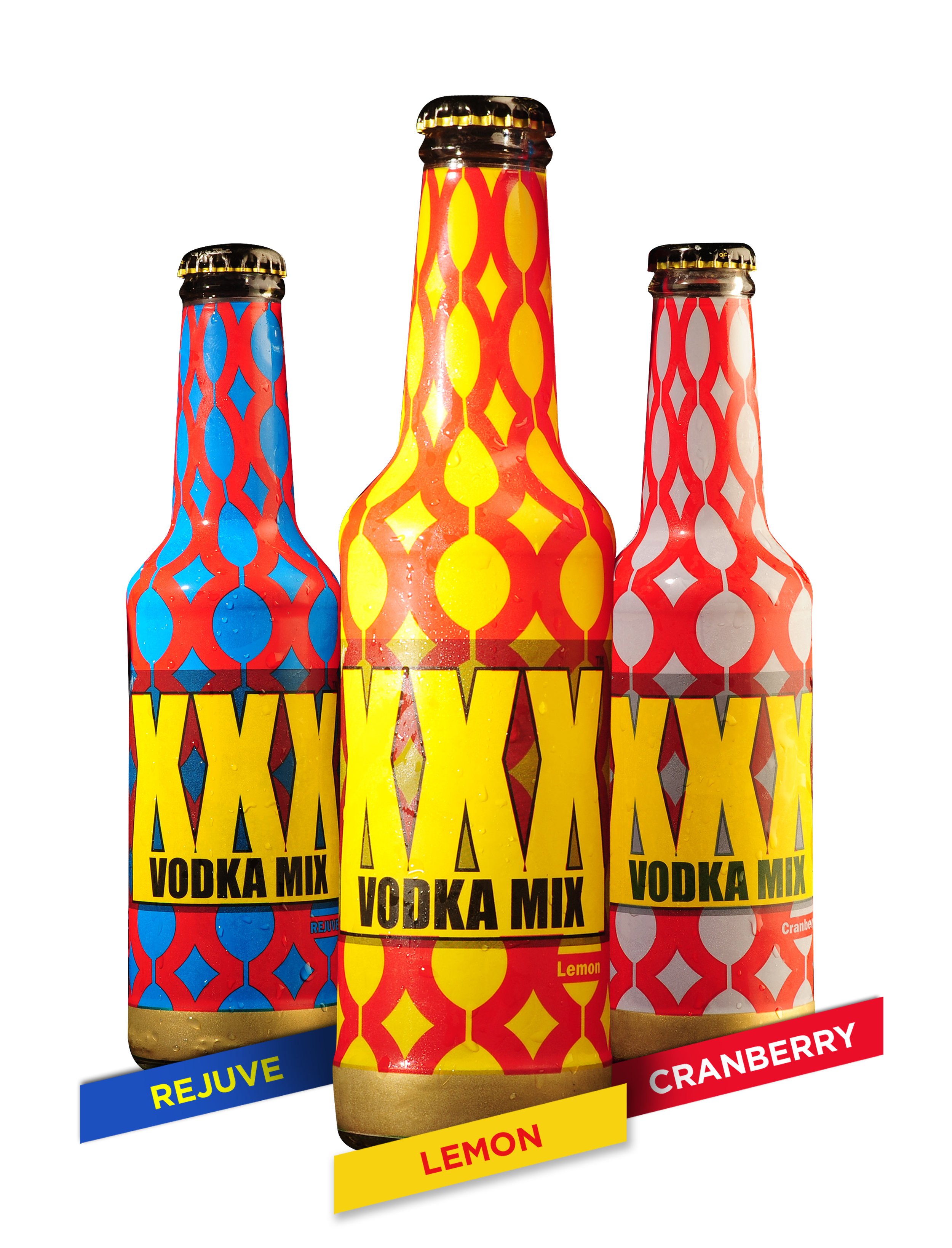
    Viiking Ventures, the owner of many businesses including the newly acquired beer brand from Goa ‘King’s’ is investing 1 billion rupees for marketing of vodka mix brand ‘XXX’ over the next three years. Sachiin Joshi, owner of Viiking Ventures has the ambition to become the market leader in Alcoholic and Non-alcoholic beverages sectors.
    ​​

    At present, the company has XXX Vodka mix, a ready to drink Vodka along with a XXX Energy drink in the market. Recently Viiking Ventures made headlines over the acquisition of King’s Beer (for INR 90 Cr.), now known as Goa King’s Beer.

    Read my news piece on this here

    http://www.just-drinks.com/news/kings-black-label-gets-revamp-ahead-of-india-roll-out_id117723.aspx

    XXXVM is a pre-mix vodka imported from Poland and bottled in India. The drink has 5% abv and available in three flavours Cranberry, Lemon and Rejuve. Starting this month, the company will be introducing around 9 to 10 flavours more of XXXVM in the market by September 2016.

  • IMG_9732

    No one understands the significance of traveling with comfort better than a frequent flyer. While it’s nearly impossible to have a fantastic experience if you are flying in economy class, or even in the business class of some of the international airlines, what is worth-every-penny is upgrading to business class in airlines such as Jet Airways to avail the Premiere experience. Space, the service, the familiarity makes the journey a memorable one.

    I recently traveled to China via Hong Kong with Jet Airways to attend an event. And, I had the opportunity to experience the premiere service on Jet Airways. From the moment I reached the Jet Airways counter to collect my boarding pass to arriving at the gate and then stepping on the plane, the process was smooth. The ground staff at HK was courteous and I knew I was home when some smiling faces at the entrance, the crewmembers of the Jet Airways flight to Mumbai, greeted me. Vivek, Cabin Manager was the first one to introduce himself, followed by the others.

    Welcome Aboard

    IMG_9728

    The beautiful lighting, the soothing Indian classical music and the seating that’s screaming of space with much-desired legroom, all were a welcome change from my previous flying experiences. I was charged up and looking forward to making full use of my travel back home.

    Comfort of Space

    IMG_9729

    The seats of the Premiere class are cozy and comfy. That’s exactly what I wanted after an eventful week with little sleep during my stay in China. The comfortable reclining seat, the warmth of the soft checkered blanket, all were tempting me to just go into slumber land but not yet. The relaxing armrest, built-in table, padded footrest, in-flight entertainment and above all the food and drinks, I had to experience it all. The stewardess arrived with soft drinks and later handed me the food and drinks menu.

    Food & Drinks


    IMG_9740 IMG_9742

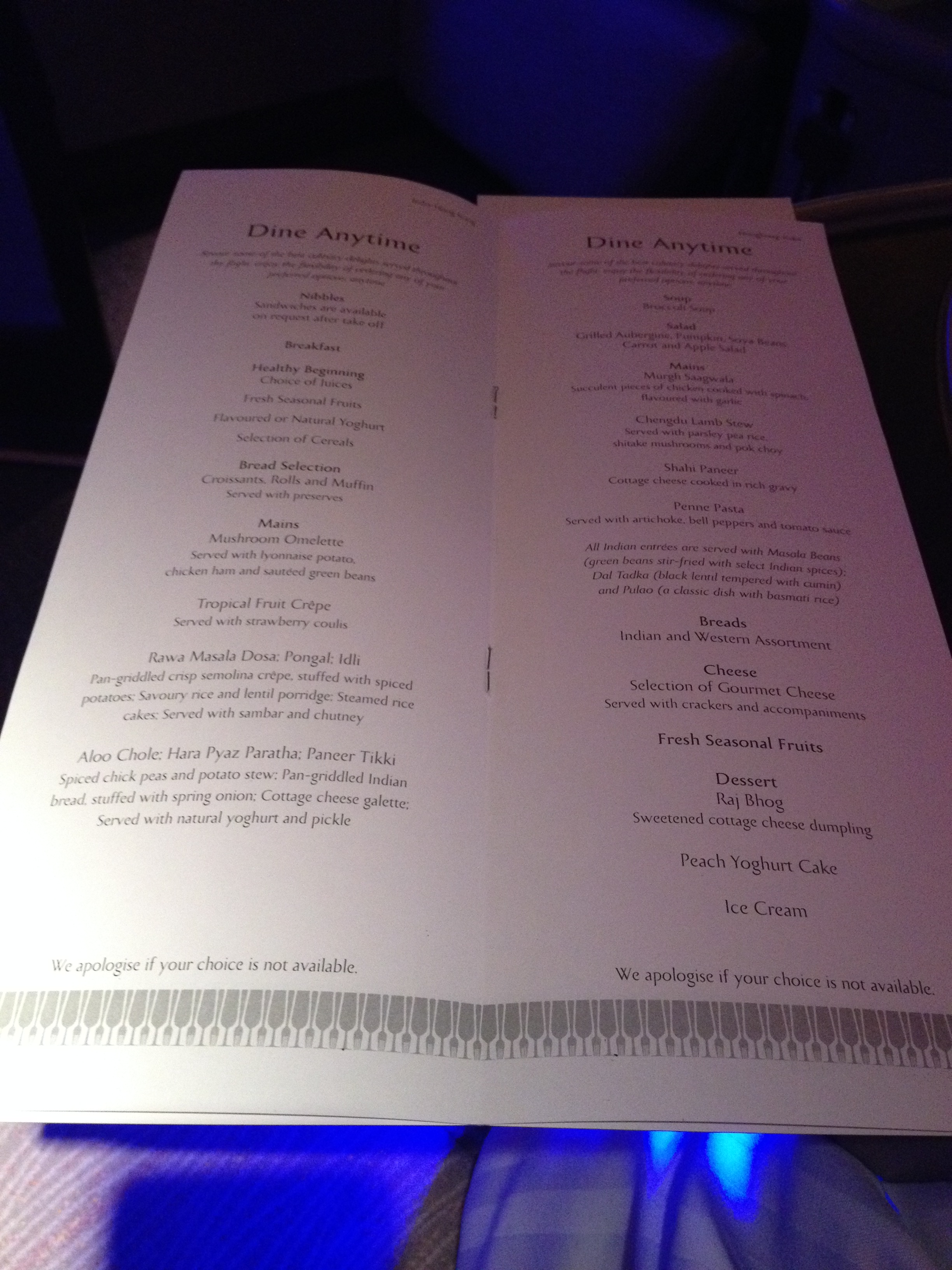
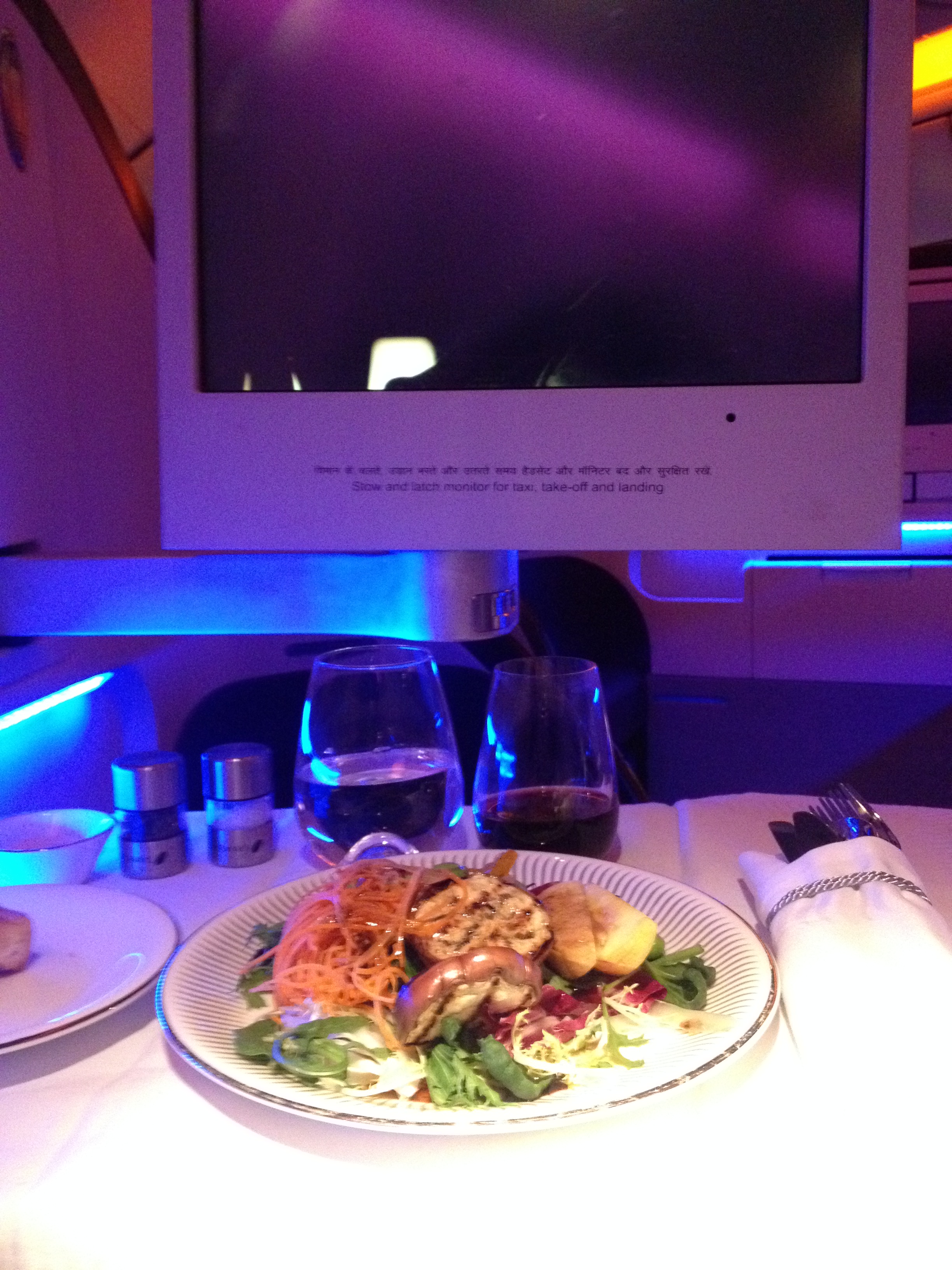
     As a food and drinks writer, I am always prepared to experiment but after indulging in authentic Chinese cuisine for a week I was longing for some simple Indian food. The Premiere class menu looked delicious. I started with salad and garlic bread and for main; I chose rice with vegetable and chicken curry. The caterer is Gate Gourmet a Hong Kong-based independent airline catering and provisioning services provider and the food was as close to home as it could get. The drinks menu was exhaustive. With the option of classic cocktails like Gimlet, Screwdriver and Bloody Mary, Campari as an aperitif and premium spirits such as Johnnie Walker Black Label, Chivas Regal Premium, Bombay Sapphire Dry Gin, Absolut Vodka and Bacardi Rum.

    IMG_9788

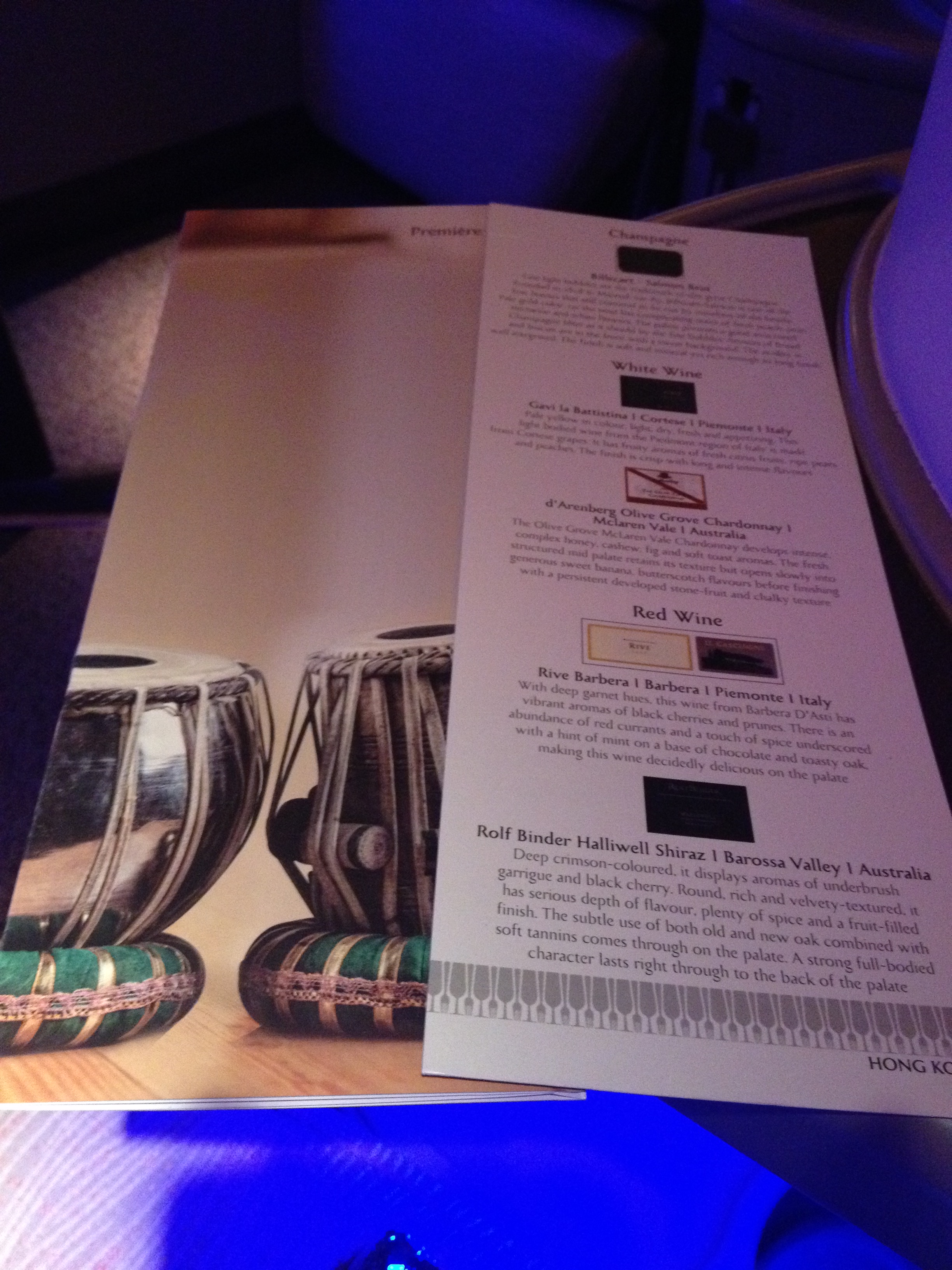
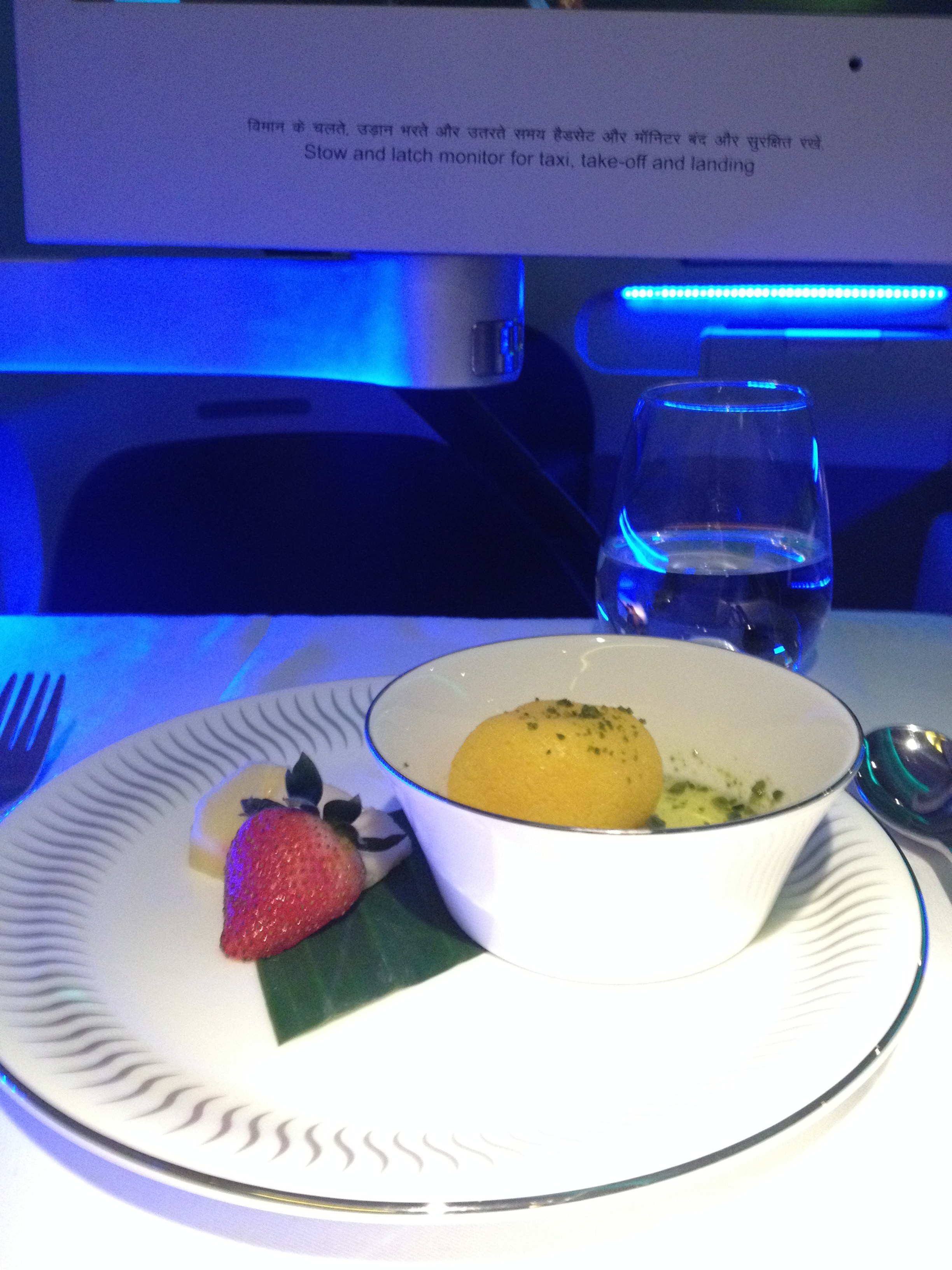
    The wine list was especially delightful. Premium champagne Billecart-Salmon and Rolf Binder Halliwell Shiraz from Barossa Valley, Australia are personal favourites. There was also the choice of Gavi la Battistna, Cortese, and Rive Barbera from Piemonte, Italy also d’Arenberg Olive Grove Chardonnay from Mclaren Australia. But to pair my wine with the food I picked Rolf Binder. For dessert, my choice was Raj Bhog. After a hearty meal, I was all set to enjoy the in-flight entertainment and followed by a long nap.

    IMG_9764 IMG_9766

    IMG_9768 IMG_9776


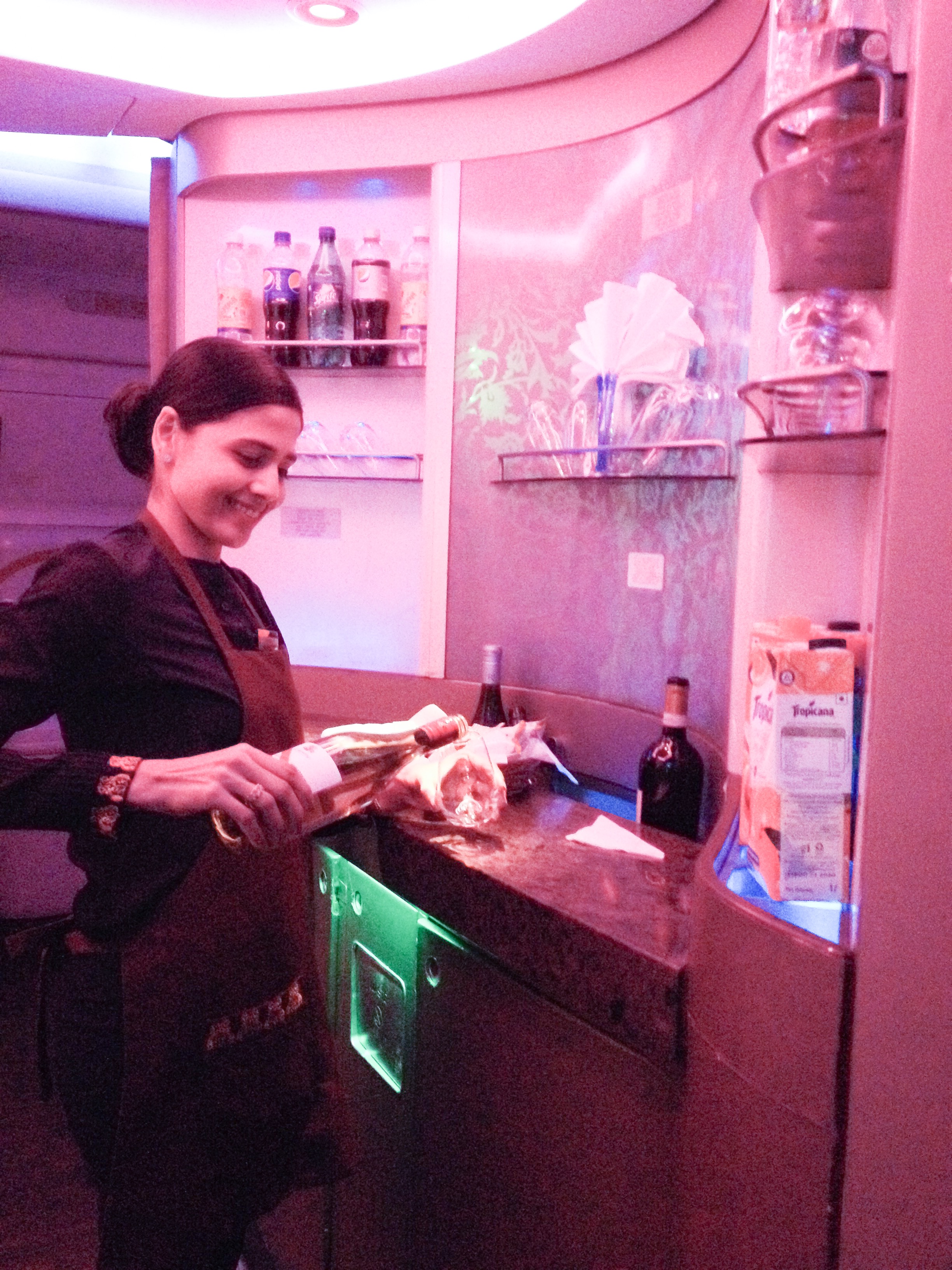
    For those who usually need that nightcap before sleep, I found the bar area was well stocked with some premium spirits, liqueurs and the crew was readily available to serve a cocktail or a glass of aperitif.

    Overall Experience

    Jet Airways Premiere made the flying time feel the shortest and the hospitality of the crewmembers made it a pleasant journey back home.

    Upon landing, I was greeted by the ground staff in Mumbai with whom I had an interesting chat about how my trip to China was as they discussed about what an exciting job I have, all this while without realizing, I had collected my baggage, cleared immigration and was dropped at the taxi stand and sent home as comfortably as possible in the middle of the night. For me, that was a first.

    Would I recommend you the Jet Airways Premiere experience from Hong Kong to India? Absolutely.

  •  

    Interesting Image

    It is time to rejoice as Indian whisky brands drive the growth chart of fastest growing brands list published by IWSR. According to the August issue of the magazine, Allied Blenders & Distillers (ABD)-owned Officer’s Choice took the title of the fastest-growing spirits brand for the second year in a row.

    Although its absolute volume gains slowed to 18.1% compared to 29.3% in 2013, this slight setback was not enough to prevent the Indian whisky from overtaking Smirnoff by nearly 3m cases in terms of total volumes, having already surpassed both Johnnie Walker and McDowell’s in 2013 to become the biggest global whisk(e)y.

     Officer’s Choice has its feet firmly planted in the working-class section of Indian society, having historically targeted blue collar workers and daily wage earners.

    The only non-Indian whisky in the top five is Fireball, the whiskey-and-cinnamon liqueur owned by Sazerac. Since 2009 Fireball has increased exponentially by 3,160%, from 130,000 to 4.2m cases in 2014, and jumped from 11th to third place in the last year. Yet the biggest instance of growth was seen last year when it nearly doubled from 2.2m cases, all while the global liqueurs market lagged behind, achieving growth of only 2.3%. The brand’s popularity is partly down to the way in which owner Sazerac has utilised social media to inspire demand among Millennials, as well as the cultivation of bartenders, and was able to achieve all this on a relatively small advertising budget.

     There are a seven Indian whisky brands in the top 25 and another five brands whose key market is India. As the second most-populous country on the planet and one of its fastest-growing economies, the opportunities within the Indian spirits market are plentiful.

  • Goa Kings 1

    The new owner of Goan lager brand King’s Black Label, India’s Viiking Group, is set to roll out the brand across the country.

    The company, which acquired the brand from Impala Distillery & Brewery in May for INR900m (US$14.1m), announced its intentions earlier this week. To coincide with the move, Viiking has changed the full brand name from King’s Black Label Premium Pilsner Beer to Goa King’s Premium Pilsner.

    From next week, the brand will be distributed in Maharashtra, followed by expansion into Karnataka and Andhra Pradesh. It will be available in 32.5cl cans at INR85, with 50cl cans and 65cl bottles set to follow.

    “People from around the world have had it in Goa and are eagerly awaiting its global availability,” said the owner of Viiking Group, Sachiin Joshi. “The product has immense potential, even overseas.”

    A new, 20-year agreement between Impala and Viiking will see the former continue to produce and bottle the beer, while Viiking will handle its marketing.

    Viiking also owns an energy drink brand called XXX, Pani-Natural water brand, a vodka-based RTD also called XXX and Goa Beer.

    In addition …

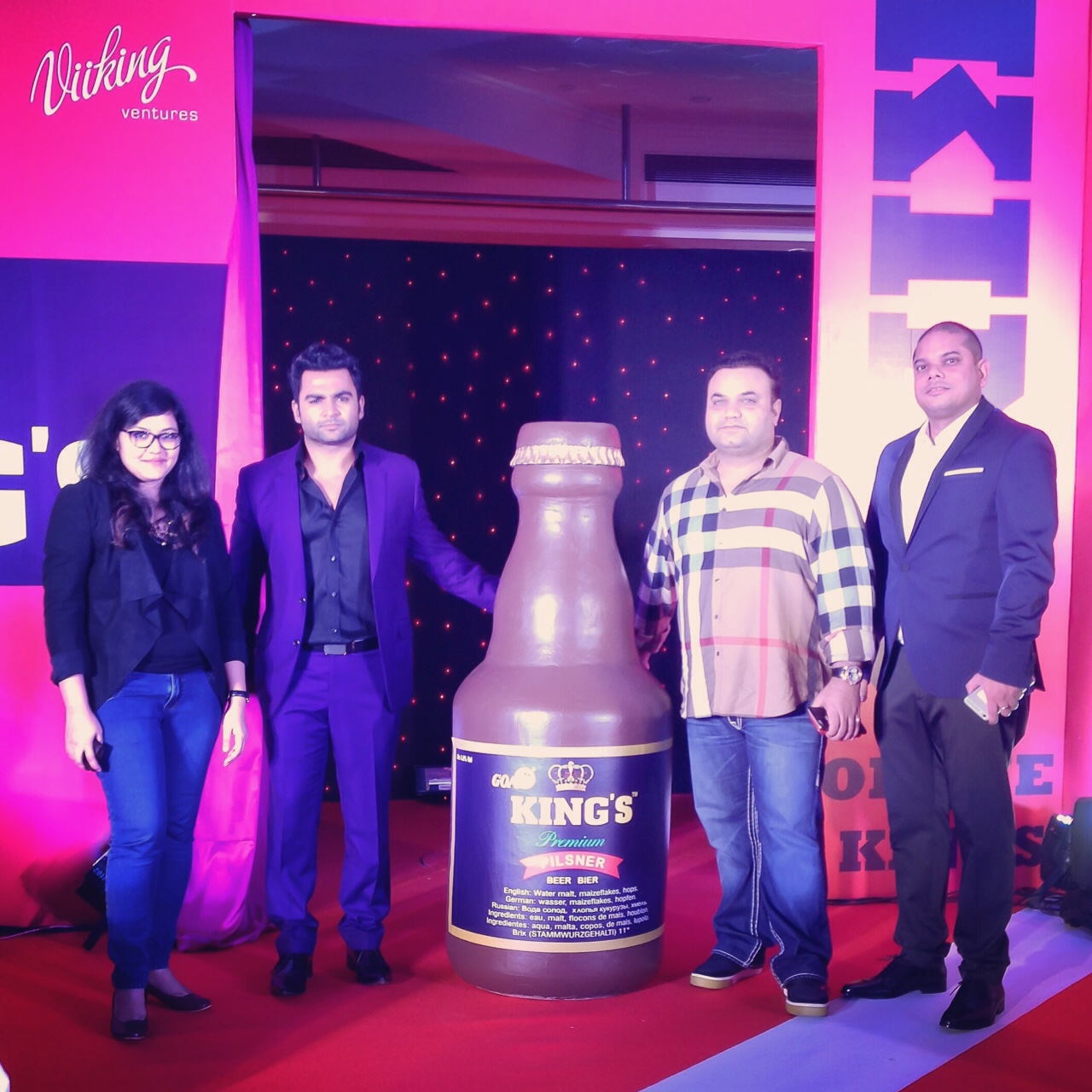
    L to R : Rojita Tiwari, Sachiin   Joshi, Moksh Sani and Vijay Montecruz
    Rojita Tiwari, Sachiin Joshi, Moksh Sani & Vijay Montecruz

    ( The brand will be distributed by Mokash Sani’s company Berkmann India which is a wine importing company and subsidiary of London based Berkmann Wine Cellars UK. And, of course, it will be listed in all 47 outlets of Sani’s retail chain Living Liquidz across Mumbai from 16th August onwards. Viiking Group owner, Sachiin Joshi also confirmed to Drinks & Destinations that investment on acquisition, marketing and pan-India promotion will all cost his company around Rs.100 crore. The former owner of the brand, Vijay Montecruz of Impala Distillery and Brewery Ltd. said one of the main reason of King’s beer being so popular amongst the Indians is because it is a Pilsner and there are not too many available in the market. He also added that all the ingredients except for water, are imported from Czech Republic. Montecruz confirmed that very soon they will be introducing a stronger version of the Goa King’s.)

    (This news piece was originally featured on http://www.just-drinks.com)

    http://www.just-drinks.com/news/kings-black-label-gets-revamp-ahead-of-india-roll-out_id117723.aspx

  • DSC_0834
    Location : Sofitel Hotel BKC, Mumbai where Nick Ord recently curated four special cocktails for the hotel’s specialty restaurants- Le Bar, Tuskers, Artisan and Jyran using brands from Diageo’s Luxury portfolio.

    Nicholas Ord also known as Nick Ord is the Reserve Brand Ambassador for Diageo’s Luxury portfolio and his responsibilities include, not just travelling around the world offering trainings, delivering concepts and interacting with the sales and marketing team and customers, but also to create experiences that adhere to his ethos – Drink less, drink better. In an exclusive interaction with Rojita Tiwari, he talks about the nuances of the cocktail business, decodes molecular mixology, barrel-aged cocktails and explains what exactly it is to live the life of a high-flying drinks whiz.

    You have been traveling widely across the globe. Can you share some of your most memorable/bizarre experiences while working in a foreign country?

    I was in China for Christmas a few years ago and obviously was downbeat about being away from friends and family. To lighten up our day, the guitar-player from the in-house band and I went to the Great Wall of China on Christmas Day dressed as Santa Claus – not predicting the inherent pressure of donning such an outfit on the day itself. We were mobbed and chased by children, who would cry if we ever removed the beard to take a breath of air! Another memorable experience involved visiting a Cheetah Sanctuary in Namibia where I tickled a full-grown cat under its chin until it purred (they are the only big cats who can do this). Or how about visiting the bullet-ridden streets of Beirut’s ‘political’ district, hearing about ‘trouble’ in the area we were about to visit, only to hear my guide confidently conclude ‘that just means we will get a table’. I never did find out if he was joking…but we got a table! Floating in the Dead Sea in Jordan, Giant Tortoise Islands in Zanzibar, snorkeling in the Maldives, drinking rum from a coconut in Seychelles on the beach then jet-skiing around a pirate-ship…. I have certainly made my time away from home count and would not change a second of it (photographic proof of all of these tales is available on request!)

    Which is your go-to drink?

    The Sazerac is my favourite to make, drink and discuss because it has a wonderfully deep history to it. Despite being arguably the earliest ‘cocktail’ to be invented in the United States of America, this drink is fiendishly difficult to make. The recipe includes the erstwhile Rye Whisky or Cognac or a blend of the two, slow-stirred with sugar and Peychaud Bitters, a flash of lemon zest and served in a glass rinsed with French Absinthe for aroma which blends wonderfully with the citrus if done the right way.

    What are the latest trends that you see worldwide in the mixology scene?

    We are just coming out of a massive Punch-boom, which is fascinating for this market because the Punch has its origins here in India, where sailors would drink a concoction of five ingredients, ‘alcohol, liquor, sugar, water and spice,’ (hence the name ‘Punch’, from the Sanskrit word for ‘five,’ ‘Pantsch’). Other recent trends include return of fresh seasonal ingredients with simple drink recipes, an interesting revival of low-alcohol drinks and cocktails revolving around Wine, Sherry, Port and Vermouths. Menu designs are increasingly leaning towards a short list of 5 – 8 drinks that are regularly rotated as compared to tome-like pages of beverages in the 1990’s and 2000’s. Bars are also pursuing the perfect ‘sense-of-place’ that makes an offering unique to their outlet as a USP and talking point.

    Is molecular mixology dead?

    Did it ever really exist? What the phrase ‘molecular cocktail’ means now and what it did originally are now two very different things. The pioneers of this new phase in both mixology and gastronomy via pioneers like Heston Blumenthal and Tony Conigliario via French Chef Herve. The chef and the Hungarian scientist Nicholas Kurti were fascinated by the idea of breaking ingredients and process down to a ‘molecular level. The phrases often associated were terms like ‘deconstructing’ flavours, textures and aromas and then ‘reconstructing’ them in unusual ways. So they would make ice-cream that tasted like bacon, sausages that tasted like strawberries and so on. The process took on a ‘lab-coat’ scientific image by their use of chemical texturisers and emulsifiers such as Xantham gum and Methyl Cellulose (when simple ingredients will often do the same job). However, the term ‘molecular’ has now become a catch-all for any new developments in the beverage scene. To quote famous London bar operator and bon vivante Jake Burger, ‘the alcohol we drink now is probably the best the world ever drank’. As such the barrel-ageing of drinks, carbonation via Perlini or Soda-Plus, dehydration of alcohol into ‘dust’ and cotton-candy, binding oil and water via sonic homogenisation and cooking via vacuum in a sous-vid etc are all considered by many to be’ molecular’ despite none of these really following the true original sense of the idea.

    A ‘normal’ cocktail has therefore become any drink that uses ‘traditional’ ingredients and methods only, such as muddling, shaking and stirring. But really what are bitters except a binding agent no different to methylcellulose? And what is egg white if not an emulsifier akin to Xantham gum. And as for carbonation, I had a soda-stream machine as a child, and my grandmother made ‘carbonated’ ginger beer using old-fashioned baker’s yeast.

    What is interesting is that one hundred years ago the Old Fashioned cocktail was at that time a protest against what became known as ‘Fancy’ cocktails. The current trend towards simplicity and fresh ingredients mirror this reaction.Hence, cutting it short, in my opinion, molecular mixology does not exist anymore and occupancy are on a constant rise, even in these summer months. However, being cautiously optimistic, we continue to lay focus on project related businesses, Meetings, Incentives, Conferences and Exhibitions (MICE), exotic food festivals and unique spa treatments.

    How has ‘mixologist’ as a career option evolved over the last few years?

    Mixology as a skill is something I love, the delicate art of creating new flavours and combinations along with dazzling new serves that tantalizes the senses, is something I would never give up whatever my role maybe. The skill of a bartender is 90% hosting, entertaining and making people happy, with the remaining 10% covering everything else, from stock control to spirit, beer and wine knowledge and yes…. mixology. There has never been a better time to pursue a career as a bartender and we are truly riding the crest of the greatest golden age in drinking since Prohibition America. The internet has allowed unprecedented access to the classic drinks, bartenders, menus and books from the last 200 years that have never before been so freely available. This has led to a dissection of all that has come before and the hyper-analyzing of trends going back to the first recorded written instance of the word ‘cocktail’ in 1798 to its first definition in 1806 and origin of the word itself (which is older than the word ‘hello’). Aspiring bartenders today can announce their ambition with pride. I remember quitting my sensible job with HSBC bank after graduating with a BA in History and Politics with Philosophy from the University of Leeds, to become a bartender. The disappointment in my parent’s eyes and disbelief of my peers, ‘You are going to work in a pub selling beer, when are you going to get a REAL job?’ Times have changed for the better and my parents are now very proud of my success.

    If you get to choose few ingredients on your own and of course the base spirit, what cocktail would you make that may represent the spirit of India?

    India being one of the largest producers of sugar cane in the world, my first thought would be to implement it with rum. Ingredients-wise, I would experiment with the classic Indian spice, garam masala or even other rich ingredients such as cloves, cinnamon, vanilla, peppercorns, star anise or cardamom. All of these flavours go great in a Ron Zacapa Old Fashioned or Sour, or with feisty Whiskies like Lagavullin 16 Year or Johnnie Walker Platinum Label.

    (The interview was originally featured on the beverage themed website All About Daru)

    See the link here http://www.allaboutdaru.com/nick-ord.aspx

  • Allied Blenders and Distillers Pvt. Ltd (ABD) has recently acquired a grain distillery unit in Telangana. The first grain distillery in ABD’s list, Shasta Bio Fuels has a capacity to produce 160 KL of alcohol per day. This deal has cost ABD approximately 200 crores.

     images.php

    According to official sources, the company will make an additional investment of ₹ 50 crores to upgrade the distillery by introducing state of art technology to improve efficiency of operation, value added byproducts and effluent treatment in the next 18 months. The acquisition is in line with ABD’s long term strategy of backward integration for security of supply of essential Raw materials-ENA and strengthening own production capabilities”. Shasta Bio Fuels is situated on National Highway No. 7 – Hyderabad – Bangalore highway on the bank of River Krishna at a distance of about 150 KM from Hyderabad Airport. This Plant will create employment and business opportunities in the state of Telangana. Shasta also has a captive power generation plant of 6.5 MW, which has some surplus power for export to state grid after meeting its own power needs.

    Deepak Roy Executive Vice Chairman – Allied Blenders and Distillers Pvt. Ltd said,“We at ABD are delighted with the acquisition of Shasta Bio Fuels in Telangana. This is the first Grain distillery of the company .With this acquisition we will be extending our presence in the newly formed state of Telangana. This acquisition is in line with ABD’s strategy of strengthening in house production capabilities”.

    ABD claimed to be third largest spirits company in the country has been on an acquisitions drive since last two years. In the past it has acquired two units, Wales Distillers in West Bengal and Unokoti Distillers in Tripura. It is currently in talks to acquire a few other bottling units.

    ABD achieved sales of 32 million cases in FY 14-15 which grew at exponential rate of 29% in FY’15 while the IMFL industry grew by 3% over the same period. ABD sales have grown at a CAGR of 21% over the last 5 years, which makes it one of the fastest-growing spirits companies in India. In the coming five years the company’s capex is expected to be in the region of ₹1000 crores.

  • Wines from Sula Vineyards The members of Anada Wine Club, Mumbai last week had a chance to enjoy some of the latest vintages from Sula Vineyards portfolio. Besides Anada Wine Club members a handful of wine professionals were also part of this special evening. Sovna Puri, Head – Tastings & Trainings, Sula Vineyards took members of the Club through six wines from the portfolio of Sula Vineyards, Sula Riesling (2015), Sula Chenin Blanc Reserve (2014) , Sula Zinfandel (Red) (2014), Sula Rasa Shiraz (2013), Sula Seco Rose and Sula Late Harvest Chenin Blanc. FullSizeRender The audience rapt in attention as Sovna Puri, Head- Tastings & Trainings, Sula Vineyards takes everyone through the Wine Tasting Session Olivia Malefane with Pule I. Malefane, Consul General, The Republic of South Africa

    The Chief Guests for the evening were  Pule I. Malefane, Consul General, The Republic of South Africa and his wife Olivia Malefane. Anada Wine Club was founded in 2004 by Dinesh Khanna, a hospitality veteran and Ranjan Kapur, one of India’s most iconic advertising figures.Also present at the occasion was Shraddha Nathani, Sula’s new AVP – Marketing. The wine club is a part of Andheri based, The Club which organises grape stomping festivals, wine dinners, wine tours and workshops to educate the members about wine through fun experiences.

  • It’s time to rejoice as two of the world’s most renowned wine regions Champagne and Burgundy find place in the UNESCO World Heritage sites list. What does that mean? It means that after enjoying the GI (Geographical Indication) status for years, both champagne and burgundy receive a major boost in wine tourism. Also, the slopes, the cellars and the houses are now well protected. Champagne and its neighbour Burgundy join the other wine regions such as Saint Emilion, the Douro Valley in Portugal, Tokaji in Hungary.


    I have been lucky enough to have visited Champagne region in the past thanks to CIVC (Comité Inter professionnel du vin de Champagne) and Champagne’s India Ambassador Rajiv Singhal who had organized a special tour few years back. The experience of visiting the vineyards, the houses and the cellars made it one of my most memorable trips till date.

    The Champagne Slopes, Houses and Cellars are a cultural landscape which has given rise to champagne wine. And in a broader sense, all the work done to produce, make and publicize the champagne wine passed down the generations and preserved in the 320 AOC champagne dis- tricts located in the five French départements of Marne, Aube, Aisne, Haute-Marne and Seine- et-Marne.

    Champagne’s international success, which intrinsically links production and selling, is down to both the winegrowers – small and large vineyard owners and subsequently cooperatives – who have used to their advantage conditions that are on the outer edge of what vines will endure (cold chalky soils) and visionary merchants who have raised the product to a level of excellence and publicized it among the international elite. Some of them were migrants, mainly from Germany (former drapers), or women, rare female captains of industry at the time, just like Madame Ponsardin, known as the Veuve (widow in French) Clicquot, and Madame Pommery. Champagne’s backstory is primarily a human story.

    Champagne’s special production process, including the second fermentation in the bottle, led to the business and area being organized to fit the process, with the unique development of cellars (close to 370 quarries and 25km under Saint-Nicaise hill in Rheims, 110km of cellars under Avenue de Champagne in Épernay, and 10km under the historic slopes). This stunning underground landscape, still in operation to- day, is one of the most representative examples anywhere in the world of wine industry heritage.

    Here is a map of the region and some images from my last trip to champagne in 2009.

    Map of Champagne region
    Map of Champagne region

    10399732_113580417188_661970_n

    Inside a champagne cellar...resting peacefully.
    Inside a champagne cellar…resting peacefully.

    So next time you find yourself in France, do make a trip to this enigmatic region. After all, a casual stroll inside the miles long underground champagne cellars, dining at some of the most reputed restaurants in the world, enjoying the scenic beauty and above all having the excuse to enjoy a glass of champagne at breakfast, lunch and dinner …thats what holidays are all about. What do you think?

    Biggest-Wine-Cellar-5

    How to reach there? Best way to reach Champagne is to drive down from Paris. It is just two and half hours drive by road from the capital. Or else there are regular buses and trains which can take you to Reims, into the heart of the champagne region. 

    Here are some of the links to help you plan your visit.

    http://www.reims-tourism.com/Discover/Champagne/The-Champagne-Houses

    http://www.france-bubbles-tours.com/?gclid=CL_kmsbq2sYCFZUqjgodY8QDxA

    http://www.private-tours-paris.com/champagne/a-day-in-champagne-12-hours/?gclid=CJq555Dr2sYCFVcVjgodW-gJ1w

  • IMG_7801
    Eduardo de Quesada, Consul General of Spain in Mumbai opening a bottle of Xenius Cava

    IMG_7803

    There are few Spanish wine brands present in the Indian market at the moment. Though Spain is blessed with great wine regions such as Rioja, Catalonia’s sub-regions such as Priorat, Penedes, Galicia-Rias Baixas (RYE-us BYE-shus) in the north-west and Ribera del Duero etc., not many of the wines from these regions have found home in India. Thanks to the Government of Catalunya office in Mumbai and the wine importer IXORA vineyards, from this month onwards Xenius, the wine label from Covides Vineyards-Wineries from Penedes region will be available in the country.

    Covides is the first wine co-operative in Catalonia and also the 6th largest producer of cava and one of the most important wine producers from the region with 2,300 hectares of vineyards.

    IMG_7764
    Suprio Bose
    IMG_7802
    With Ricard Gil, Director General and Maria Serret Jovells

    IMG_7765IMG_7800

    Ricard Gil, Director General and Maria Serret Jovells from the export department of Covides were also present at the dinner hosted by Suprio Bose, Trade Commissioner, Govt. of Catalunya office in India. Here are the five wines from Xenius available in Mumbai.

    Xenius Rose Wine – The wine is made from a selection of the best Tempranillo grapes. Very attractive strawberry-pink colour, fruity aromas, fresh, crisp and well balanced with medium acidity. Perfect for an Indian summer, brunches or as an aperitif. Good value for money.

    Xenius Barrica – A blend of Tempranillo and Merlot from the mature grapes of the D.O. Penedes area. The wine aged in oak barrels and in bottles. Deep red colour, hint of spice and smoke aromas, medium bodied.

    Xenius Merlot Barrica – Deep red colour with hint of violet, full bodied, powerful and elegant wine on the nose as well as palate. Balanced medium tannins and acidity. 100% Merlot grape and has 13.5% abv.

    Xenius Cava Semi-seco- A blend of Macabeo, Xarel.lo and Parellada grapes. A cava with pale gold in colour, consistent bubbles and a nice head. Fruity aromas on the nose, honey, butter and soft on the plate. This being an off-dry sparkling wine will surely appeal to many Indian wine drinkers.

    Xenius White Wine – Predominately Xarel.lo with other grape varieties such as Macabeo and Parellada. This is a still white wine. Though this will be available in the market, it wasn’t available for tasting last evening.

    Sachin Rane, Managing Director, IXORA vineyards said that the wines will be available in major retail stores, hotels and restaurants in Mumbai by end of this month. All the wines are priced between Rs 1200-Rs 1800.

    Note : In the past Torres and Raventos wines from Penedes regions have been introduced in the Indian market. 

    Where is Penedes?

    The mediterranean coast of Spain is mainly divided into sub-regions such as Catalonia, Valencia and Murcia. Catalonia region is famous for the sparkling wines Cava, the complex and full-bodied red wines from Priorat. Penedes is located in the same Catalonia region, just one hour drive in the south of Barcelona city. Miguel Torres is one of the most popular wine producers from this region.

    penedes-wine-regions-map
    Courtesy: http://www.cellartours.com

The Only Feed You Need: Booze, Buzz & Beyond

Stay informed with curated content and the latest headlines, all delivered straight to your inbox. Subscribe now to stay ahead and never miss a beat!

Skip to content ↓