• JIM MURRAY ‘THE WHISKY EVANGELIST’ CAUGHT IN ACTION!


    You may like him, you may hate him, but the ‘god of whisky’ is here to stay and so is his ‘Whisky Bible’.

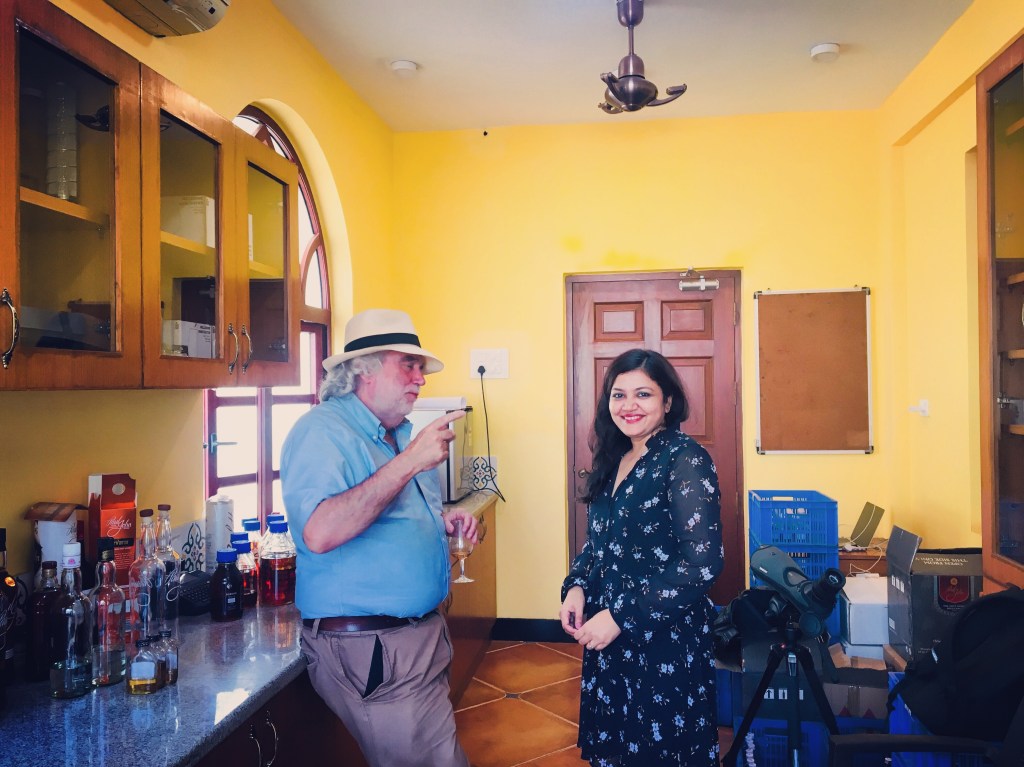
    Jim Murray, a name familiar to the whisky world is known for his candid nature. I had a chance encounter with him in a whisky conference in Glasgow many years ago, then had a brief interaction with him during a tasting session that he conducted in Mumbai some years back. This time, I had caught him in action while he was on one of his ‘low-key’ visits to India to taste samples from Paul John Whisky’s cellars at the distillery in Goa.

    The meeting was somewhat special as I was privy to a private tutorial from the man himself on tasting whisky, the right way.

    Murray tastes thousands of whiskies every year, travelling all over the world and rating whiskies for ‘Whisky Bible’ (the annual guide book that reviews whiskies).

    Jim-Murrays-Whisky-Bible-2019-Cover

    A journalist by profession, Murray rose to fame in the late 70s after he started visiting whisky distilleries, publishing tasting notes and rating many Scotch whiskies. The British writer gained popularity abroad when he rated Japanese, American, Indian, Taiwanese and Canadian whiskies highly; however, back at home; he faced criticism from the scotch industry on many occasions.

    On a January afternoon this year as I walked into the newly built state-of-the-art visitor centre at Paul John Distillery in Goa, I had no idea that the trip would turn out to be so interesting. Michael John D’Souza, Master Blender and Master Distiller of Paul John Whisky greeted me at the entrance. While admiring the vibrant and colourful interiors at the visitor centre I was instantly drawn towards the ‘Wall Of Fame’ showcasing awards, accolades and a number of trophies. The conversation with D’Souza veered towards, ‘how recognition and ratings from ‘Whisky Bible’ have changed the course for Indian whisky industry and Paul John in particular’ when he informed me of Jim Murray’s presence at the distillery. I jumped at the thought of having a chat with Murray after the tour.


    This slideshow requires JavaScript.

    By the time we were back from the visit, I saw Murray emerge out of a tiny room from the other the end of the corridor.

    He didn’t seem to have aged a bit since our last meeting. With his signatory Panama hat on the head, it was hard to think otherwise.

    After a brief exchange of pleasantries, we settled down on one of the sofas as he complained of a persistent backache. Probably from spending long hours on a chair tasting the whisky samples or, maybe, the result of travels on the country roads, I wondered.

    The man, in his sixties, shows the same amount of excitement and amusement that of a kid in a candy store every time he talks about whisky. He began speaking about the potential that Indian whiskies have and how he feels proud to have been able to identify the winners in them. When I asked him of the biggest challenge that Indian whiskies were facing, he replied, “It’s the perception of the Indian whisky-which still is of a poor quality spirit-in the international market. However, it has begun to change in the last few years”.

    I requested him to let me take his picture in action in the tasting room. And, he agreed. He got up and did something strange. He said, “ I need to smell you” and started sniffing around a bit. But, then I realized the cause of this action. Because he tasted the whiskies in an almost airtight room, any additional aroma entering the area could dilute the tasting space.

    We entered the room and I noticed hundreds of samples spread all over. His camera tripod came in the way as we made way to the desk. On his left, there was a glass partition, which overlooked the visitors’ tasting room. He said, “In 27 yrs. I have just had one holiday. When I am travelling around the world I take out some time to do Bird watching. That’s my hobby. And, that’s the only time I am on a break from tasting”. That explained the heavy camera equipment in that tiny room.

    IMG_8215

    Behind his desk was a closed window. All I could smell and feel in the room was whisky and its warmth. I took the seat in front of him and asked, “How many whiskies do you taste when you visit India?” He replied, “Oh, probably thousands of samples in total. I taste different whiskies, different ages and different samples from several barrels. The whiskies mature so fast in India. I help the distilleries keep an eye on the maturation of the whisky. Also, help them spot the right style for a whisky and its flavours. India is learning day by day. The blenders don’t always necessarily know which whisky is going to work and which won’t. I try to give them the right direction”.

    He began to pose for my pictures after pouring some whisky from a sample bottle marked with a barrel number. “Let me show you how you taste whisky. You must know it”, he said. He held the glen cairn glass in his right hand and began smelling the whisky. “Bring the hand as close to the chest as possible, hold the glass just under the right side of the nose, take a small sniff, let the spirit talk to you, now move the glass away and repeat the same process on the other side of the nose, all this while creating a triangle/ A shape with the palm. This helps in picking up different kinds of scents in the spirit with intensity, without overloading your senses”, Murray added.

    I tried to repeat the exact same process but it took me a while to get it right. “What do you smell?” He asked. I spoke of the tropical fruit notes and some vanilla. He asked me to keep repeating the same process and pushed me to identify more and more layers of notes emanating from the glass. Then came the time to taste the sample. He continued, “Take one sip of the whisky, keep it in your mouth and roll it and spit. Now open your mouth and breath, let the oxygen contact reveal to you the true flavours of the whisky”. It was a bit of a task to exercise that well-timed coordinated sensory exercise but then after a few attempts, I got it right. And all this while I saw Murray spitting down into spittoons on his left and on his right which were placed on the floor on both the sides of his chair, without a single drop spilling out of the marked area.

    I was beginning to admire his marksmanship when remembered to ask him what he thought of one of the most popular Asian whiskies, Kavalan from Taiwan and Paul John, both produced in similar climatic conditions. Murray said, “Both are incredibly well-made whiskies in almost similar climatic conditions but Kavalan only started to do well after they changed from German Arnold Holstein pot stills and columns with plates in 2008 to the Scottish lantern type of pot stills in 2012. That has made a huge difference to the Kavalan whisky. One more difference is that they get a lot of earthquake in that region in the outskirts of Taipei city”.

    As Murray also offers consultancy to a number of whisky producers all over the world, he keeps two sides of his job – the judging/scoring of whisky from finished bottles for the Whisky Bible and advising these companies while tasting samples -separate.

    But how does he deal with the criticisms at home front? “There are many scotch producers who don’t keep my book at their shops in the distilleries. And, I am totally fine with it. Because Whisky Bible is for the consumers and they buy it because they see authenticity and value in it”, he said.

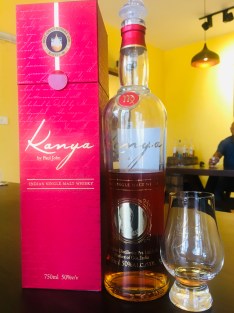
    In the end, I can’t help but ask him which is his favourite Paul John whisky? “I like Brilliance and Edited. But ‘Kanya’ has been one of my favourites so far”, replied Murray. As I enquired further about whiskies matured in PX (Pedro Ximenez Wine) and Oloroso (sherry) casks or peated, he didn’t show much interest in those styles as according to him “the true personality and charm of a good quality whisky can be found on its own, which is easy to lose at times with many layers of flavours coming from other sources”.

    IMG_0180

    The time with Murray was coming to an end and while saying him goodbye I realized what he said was true.

    In the end, what really matters is what’s in the core. The originality of whiskies from countries such as Japan, Taiwan and India has made them popular all over the world. And, even though many would swear allegiance to the peaty, sherry or PX finish or any other styles of single malts, the true personality of a whisky is only revealed in its pure form.


  • Anteprime di Toscana 2019: Tasting fine wines in Tuscany

    A traditional Ribollita paired with Rosso di Montalcino, Florentine steak or a wild boar meat dish with a glass of Chianti Classico or contuccini dipped in a glass of Vin Santo. Picturing food without wine or vice versa in Tuscany is a far difficult proposition than mastering the art of living in a mountainous Tuscan village or driving through its sharply winding, steep and narrow roads.

    Anteprime di Toscana successfully corroborates the same to the world. This annual event primarily explores fine wines and their latest vintages from the Tuscan regions designated to produce wines such as Chianti, Chianti Classico, Vernaccia di San Gimignano (the only white wine appellation as a part of Anteprime), Vino Nobile di Montepulciano and Brunello di Montalcino. In the second week of February every year, around 250 wine writers, buyers, and sommeliers from all over the world spend ten days in the home of some of the notable wines in the world tasting the latest vintages of these wines yet to be released in the market.

    The event that begins in the historical city of Florence with the tasting of Chianti and Chianti Classico wines travels afterward to the UNESCO World Heritage site San Gimignano for the preview of Vernaccia wines. San Gimignano also happens to be the home of Mona Lisa and Michelangelo’s descendants (it’s true and I have met them both during my visits) and offers world’s best gelato at the Gelataria by Sergio Dondoli. The caravan then journeys into to the interiors of Siena reaching Montepulciano to explore the wines Vino Nobile, ending the journey at the quaint, hilly, idyllic and picturesque Montalcino the home of Brunello.

    Almost a century after its formation, the Consorzio Vino Chianti Classico, the first wine-producers’ consortium to be established in Italy, now has more than 510 members, 351 of which are estates presenting their own labels in the markets. In 2014, Chianti Classico denomination identified by the Black Rooster (Gallo Nero) on the neck of the bottles underwent another identity makeover with the introduction of a new appellation within called Gran selezione showcasing the best of the best at the top of the pyramid. Also, last year, in the international markets, aggressive marketing and promotional campaigns showing clear differentiation between chianti and chianti classico DOCG has helped the Gallo Nero to thrive in Canada, USA and in Italy along with a number of other new markets.

    Appointment of Ambassadors (Steven Spurrier, the famous wine critic and current consulting editor for Decanter magazine has been appointed as the ambassador for the English market in 2019) has worked in favour of the Gallo Nero as well. The global turnover touching 800 million euro, bottled, wine production value of over 400 million euro certainly gives chianti classico lovers a reason to rejoice.

    Chianti Classico is a truly vineyard driven wine whose terroir speaks to you in honesty. The production regulation that allows a minimum of 80% sangiovese and 20% other red grapes or 100% sangiovese, is almost always true to its place of origin. The region lying between Florence and Siena that covers the municipalities of Castellina, Gaiole, Greve, Radda in Chianti and parts of Barberino Tavarnelle, Castelnuovo Berardenga, Poggiobonsi and San Casciano in Val di Pesa.

    On top of the Chianti Classico pyramid is Gran Selezione which requires 30 months aging of the wines produced from the vineyards owned by the producer. It must represent the characterstics of the best quality of Gallo Nero i.e, fruity, spicy, elegant, good structure, fineness and balanced tannins with acidity that gives great substance and aging potential of decades to the wines.

    Gallo Nero’s lesser-known cousin but of great quality with huge potential is Vernaccia wines from San Gimignano. The white wine appellation that entered Anteprime sometime back is young, fresh, high on acidity and also shows great aging potential. It’s an interestingly packaged day that we spend in the UNESCO world heritage site with the tastings of the latest vintages held inside a museum every year.

    While the tasters take a break in between and stroll around the picturesque village sight seeing and enjoying gelatos from gelateria Dondoli or sip on a cup of Italian coffee at one of the cafes, the session that is always looked forward at Anteprime is the comparative tasting of the Vernaccia wines with other international style of wines such as Gruner Veltliner (Austrian white variety) or wines from Burgundy (Chardonnay) etc.

    This year, it was a very informative tasting of wines with the influence of Ancient and Modern Sea with special ties to the Mediterranean. Tasting of 12 wines, Ansonica, Insolia, and Vernaccia was the highlight this year conducted by wine critic Leonardo Romanelli. The Vernaccia wines that stood out at the tasting were Podere Le Volute 2017 docg, Riserva San Benedetto 2016 docg, Riserva Le Mandorle 2016 docg Fattoria Poggio Alloro. Also, look for a bottle of Montenidoli Carato 2015 or 2013 if you ever have the choice to pick a Vernaccia di San Gimignano wine. You won’t regret it. It’s a great example of how age-worthy Vernaccia wines could be.

    Montepulciano was bright and sunny at this time of the year providing perfect set up for the tasting of Vino Nobile vintages 2016, selezione 2016, riserva 2015 and other older vintages going back to 2012 at Fortezza di Montepulciano. The terroir in Montepulciano has favoured many producers to take up organic or biodynamic farming in the last few years making the vintages more and more elegant, age-worthy with sustainable vineyard practices.

    The origin of the word Vino Nobile can be traced at the Contucci family winery located in the heart of the city at the main square, a few meters away from the Fortezza. Contucci family is one of the oldest in Montepulciano settled in the city since XI century. They became specialists in wine growing, and already in the 1700s were known as one of the “putative fathers” of Vino Nobile di Montepulciano, as the wine for the table of the nobles.

    Leading the way for noble wines with some incredible vintages are producers such as Tenuta Valdipiatta, Bindella “Vallocaia”, Boscarelli, Salcheto, and the famous Tuscan producer Antinori’s Fattoria La Braccesca.

    During my visit this year I discovered the interesting story of the origin of Brunello di Montalcino and it’s founding family, notably Clemente Santi who worked as a pharmacist at the local pharmacy in 1745-now known as Farmacia Salvioni located in the heart of Montalcino town-before he started producing wines, aging them in wood and creating the iconic Brunello di Montalcino. Clemente’s descendants later in 1800 made the name for Biondi Santi and Brunello di Montalcino was officially born.

    The vintage 2014 has been a harsh one for many brunello producers and we could see it at the two-day long tasting organised at Benvenuto Brunello 2019. Although, there were some producers who were consistent with their great quality even in this difficult vintage. One such producer is Caprili. The small family run winery situated very close to GAJA’s Pieve Santa Restituta winery in Montalcino has been growing quietly in the efficient hands of the young winemaker Giacomo Bartolommei. He shared that it was a conscious choice to reduce the yield significantly to achieve the desired quality and maintain the consistency in the 2014 vintage. Few other exceptions with a good 2014 vintage were Tenuta di Sesta, Barbi, Caparzo, Poggio di Sotto. The other iconic producers such as Col d’Orcia, Mastrojani, Podere Le Ripi, Il Poggione although show great potential, could certainly improve with age.

    The perfect example of Brunello’s age-worthiness is seen with the iconic wines of Col d’Orcia. Every year, a select group of tasters, are invited by Count Francesco Marone Cinzano producer of Col d’Orcia for an exquisite dinner at his home/winery. He generously opens some old vintages dating back to 1967. This was my third year at the dinner and we had the vintages 1969,79,89,99, and 2009 of Brunello di Montalcino wines. While some of these vintages are rare to find anywhere else in the market, the others are usually priced above 100 euros. Luckily, we do have the 2013 vintage of Col d’Orcia available in India now and if you are into fine wines and especially love a good Brunello di Montalcino, do write to us at drinksanddestinations@gmail.com for more details.

    This article was first featured on luxurylaunches.com

  • Craft lagers, crafted spirits and everything natural, and balanced, the beverage trends in 2018 have certainly created some stir in an otherwise stagnant industry in terms of innovation. Going by the evolution in the global drinks culture, here are the top 5 categories of drinks that you should watch out for in 2019.

    While experts predict that 2019 will be all about convenience, occasion-based and mindful drinking, there are mainly five categories of spirits which we at Drinks & Destinations think are going to receive significant interest as the consumers, community of bartenders and hospitality industry professionals from across the globe opt for more and more origin specific drinks.

    Agave based spirits-mezcal, Mexico 

    Made from the heart of the agave plant called piña, this spirit comes from only the designated areas in Mexico. The white spirit Mezcal has certainly grabbed attention of liquor majors such as Diageo and Pernod Ricard and also of the entire world. Remember Tequila is a type of Mezcal because it’s also made from a particular kind of agave. But Mezcal can be made from a number of varieties of agave plants from the designated nine regions in Mexico, the most important one being Oaxaca.

    The heart of the agave plant cooked inside earthen pits that are lined with lava rocks and filled with wood and charcoal before being distilled in clay pots is what makes the artisanal Mezcals favourites of many which are also the source of the smokiness commonly associated with mezcal.

    A current favourite amongst the bartenders worldwide.

    Sake, Japan

    First of all not every Sake comes from Japan. And, we are only referring to the Japanese sake here. Sake also spelled saké or SAH-kee is sometimes referred as a Japanese rice wine, which is made by fermenting rice that has been polished to remove the bran. Unlike wine, in which alcohol is produced by fermenting sugar that is naturally present in fruit, typically grapes, sake is produced by a brewing process very similar to beer, where starch is converted into sugars which ferment into alcohol which is why sake is said to be ‘brewed’. Undiluted sake contains 18–20% abv which is often lowered to about 15% by diluting with water prior to bottling.

    After centuries Japan has understood the importance of spreading the Sake love all over the world hence, there’s a huge interest in creating awareness about the drink in the international drinks community. With Japanese food getting extremely popular world-over, it’s only natural that Sake is going to be a preferred drink of many in 2019.

    Baijiu, China

    In fact, Baijiu as a drink has the best food pairing abilities because of the wide range of flavour profile. The fiery Chinese spirit made from Sorghum (jawar in Hindi) has had a checkered past. Even now people have a mixed reaction to it when they taste it for the first time. But contrary to popular beliefs Baijiu could be enjoyed extremely when selected carefully. The labor intensive and time-consuming process of producing Baijiu makes it a premium spirit. And various styles of Baijiu’s such as light aroma, sauce aroma, strong aroma etc make it one of the most versatile drinks to be enjoyed in cocktails as well as sipped alongside food.

    Scotch Whisky, Scotland

    Scotch is seeing a new-life of sorts since the whisky drinkers shifted their loyalties towards American, Japanese, Canadian, Irish whiskies, and more recently, Taiwanese, Indian and even Australian (Tasmania) whiskies. Probably because the whisky drinkers were in search of something new, or, may be because at some point scotch industry did face a shortage crisis, with a number of distilleries shutting down and demand to supersede the supply. However, scotch is set for a major come back this year. There are more than 130 whisky distilleries operational in Scotland right now and this year 40 new sites are being resurrected and 10 new operations slated to open in 2019. A range of whisky festivals held round the year across Scotland, a longtime void in the international market in authentic, good quality scotch single malts and blended whiskies is bringing the whisky drinkers back to Scotland.

    Also, this time around, the producers are using more non-fossil fuel sources to power distilleries and recycling steam and heat energy, cutting down on water use and creating recyclable packaging and taking steps towards sustainable distillation practices.

    Zero Waste Cocktails / Craft Spirits


    Last year truly was the year for craft spirits, craft cocktails and everything crafty. Which will continue in 2019 as well? We are grateful for that trend. As, this also pushes the bartenders to take extra efforts in creating great quality cocktails while making responsible choices of using more and more local ingredients, replacing plastic straws with other alternatives and making sustainability the keyword of the moment.

    A lot of innovation happening in the cocktail and home-grown craft spirits scenes and it will be exciting to keep an eye on this segment in 2019.

    This article by Rojita Tiwari has appeared on Luxury Launches website

  • Five interesting facts about the world’s second best cocktail – Negroni

    HD4A0073

    The century-old original recipe, perfectly balanced combination of equal parts of all the ingredients used in making this popular cocktail is what makes this drink so special. The spirit we are talking about is Campari and the cocktail is Negroni.

    Here are a few facts about the Italian bitter, which you must know before ordering that next glass of Negroni in a bar.

    Another Italian treasure:
    Campari is a contemporary and charismatic classic spirit that was invented in 1860 but was officially produced in a distillery near Milan in 1904. The secret recipe, which has remained unchanged, is obtained from the infusion of bitter herbs, aromatic plants, and fruit in alcohol and water. With its vibrant red colour, intense aroma and inspiring flavour, Campari has always been a symbol of intrigue and pleasure. These are the values that have made the Campari brand famous throughout the world as an icon of passionate Milanese style and excellence.

    HD4A0126

    No Negroni without Campari:
    It was around the year 1919 in Florence when Count Camillo Negroni contemplated ordering an Americano cocktail but decided it was time for a change. He requested it with a touch of gin instead of soda, inspired by his last trip to London and its prevalent gin scene. The bartender was pleased to honour Count Camillo Negroni’s request and added an orange garnish rather than the lemon wedge of the Americano to signify the new drink he had created. In Florence, the Count’s ‘usual’ became known as Count Negroni’s Americano, or the “Americano with a touch of gin”, but whatever it was referred to as back then, Negroni was born. Negroni is now one of the most famous contemporary classic cocktails. Anywhere you go in the world, you will find a mixologist who can make you the iconic Negroni. The International Bartenders Association (IBA) lists Campari as an official ingredient of the Negroni, and thus, there is no Negroni without Campari!

    The second best cocktail in the world:
    Four times in a row Negroni has been voted as the second best cocktail according to the Drinks International cocktail review of bars all over the world. Although the classic recipe to make this drink is simple, it has complex flavours and looks great too. Equal parts of Campari, sweet vermouth and dry gin with the garnish of an orange zest has become synonymous to good times.
    Negroni Week :
    In 2013, Imbibe Magazine launched Negroni Week as a celebration of one of the world’s great cocktails and an effort to raise money for charitable causes. Now in its sixth year, Imbibe teamed up with Campari to present Negroni Week 2018. From 4th to 10th June 2018, bars around the world took part in Negroni Week, inviting people to celebrate the classic cocktail while also raising money for some great charitable causes. There’s a special website dedicated to the cause (visit negroniweek.com for more information, including a list of participating bars and events). Aspri spirits, the importer of Campari in India has been instrumental in making India the 2nd ranking country in Asia to celebrate the weeklong event across a number of bars in the country. Seven Days, three ingredients and one simple way, to give back. That’s what Negroni week is all about.

    Negroni with a Twist:

    HD4A0071

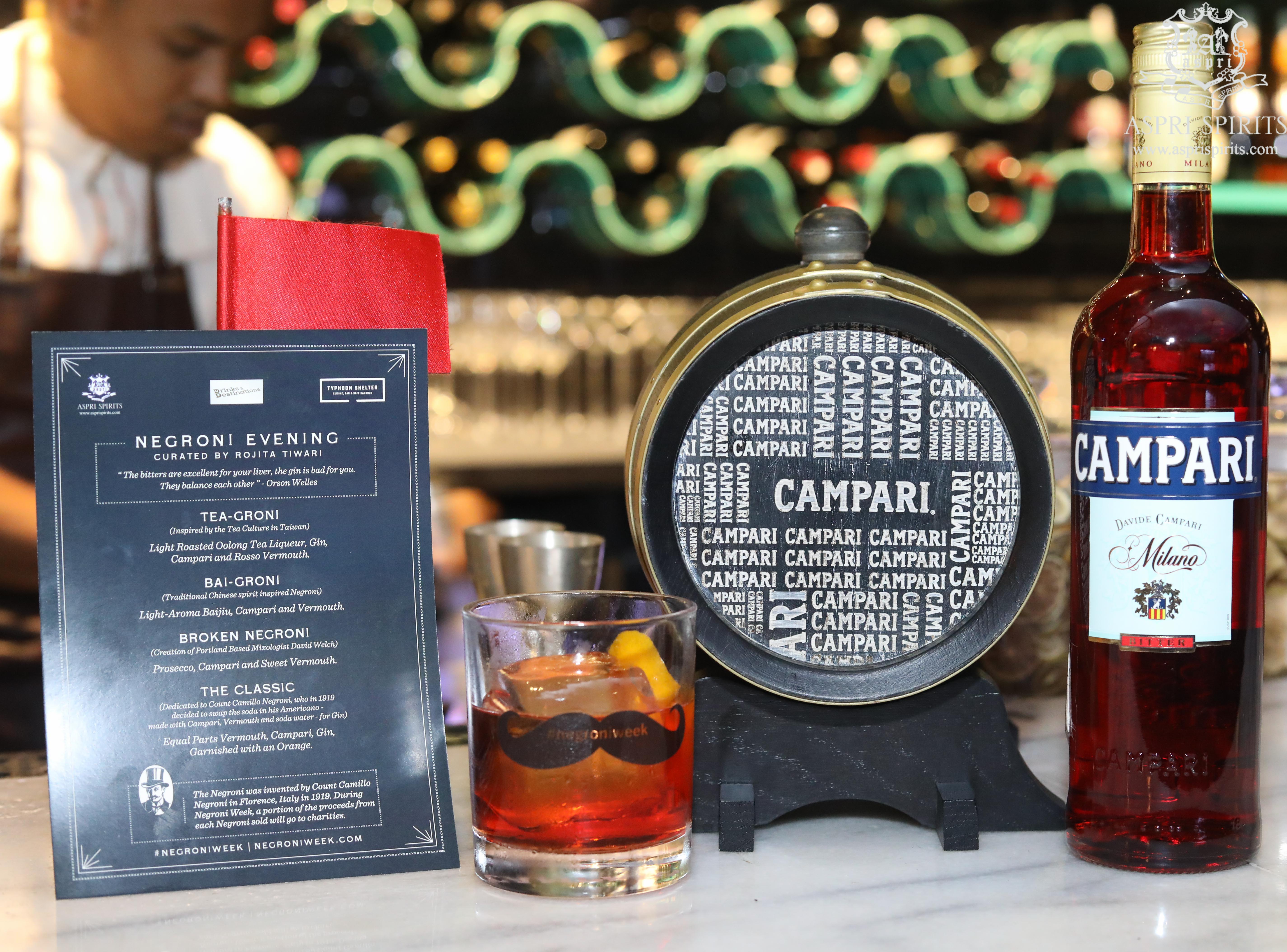
    It’s true that there’s no Negroni without Campari but the freedom to experiment with other ingredients is what makes this a unique and versatile cocktail. At this year’s Negroni Week hosted by Rojita Tiwari at the newly opened resto-bar Typhoon Shelter in Lower Parel, Mumbai some of the variations included replacing the gin with the Chinese spirit Baijiu, and in another one adding a tea liqueur from Taiwan and also had a broken Negroni with Prosecco in the menu. Every year, Negroni Week is celebrated in the beginning of the month of June.

    The article was originally featured on Luxury Launches

  • Pub hopping – The 6 best bars to visit in Taipei

    Close observation of the vibrant bar culture in Taipei reveals that the real cocktail revolution is taking place here; in this capital city of the tiny island-country Taiwan. It’s truly a melting pot of cultures from all over Asia and the western world. Rojita Tiwari reassures this after spending a week in Taipei, mostly barhopping, tasting different styles of cocktails and interacting with some of the finest bartenders from Taiwan.

    Victor Yang with his boyish charm moves swiftly behind the bar from one end to the other at ‘AHA Saloon’- creating cocktails with the accuracy and precision equivalent of a perfect lab work – all this while striking a conversation with his guests seated at the bar table. Aki Wang’s den ‘Indulge Experimental Bistro’ is a place where one can spend hours while listening to him passionately explaining each and every flavour of the tea liqueurs that he creates with the handpicked teas from across Taiwan. At ‘Fourplay’, five minutes into the conversation with Allen Cheng and he wins your heart by serving you a drink exactly the way you want, as you pick your own ingredients. Nick Wu’s personal touch in every element of his sophisticated ‘Bar Mood’, from the selection of furniture to stocking up the bar with only syrups and juices made of local ingredients, also occasionally spoiling guests with an unusual cocktail off the menu- these bartenders are all magicians of their craft.

    Interestingly, Taiwan’s bar culture wasn’t always vivacious. The country saw an upsurge in its-otherwise negligible-drinking culture during the nineties. There was a time when night outs meant hanging out with friends at the teahouse. But things have changed over the years. While minimalistic approach towards the décor and the drinks at these bars also suggest the fact that almost every aspect of the Taiwanese life draws inspiration from Japanese culture, the versatility, and ease with which the younger generation has adopted the virtues of the east and west is commendable. A reflection of which was seen in a lot of the cocktails that I tasted during my visit.

    Here are the 6 must-visit bars across Taipei that could leave you with an experience of a lifetime.

    1) Indulge Experimental Bistro – For the art of Tea & Cocktail Mixology
    Aki Wang’s Indulge Experimental Bistro was awarded the Best Bar in Taiwan Award at Asia’s 50 Best Bars 2018 held in Singapore. Located in a posh residential area in the quieter by lanes of central Taipei, the place is totally missable, unless you are looking for an herb garden outside a building. But as soon as you enter, you feel the place has a soul. The friendly staff, a very talented female bartender manning the bar with ease at a peak hour, an exceptional kitchen serving some delectable food items prepared with fresh produces and locally sourced ingredients, Indulge Experimental Bistro is a delightful place to unwind after a busy day. Divided between a casual dining area and an underground semi-formal cozy den space that serves a wide range of spirits including some rare single malts, cognacs, and Japanese whiskeys, Indulge Bistro is an experience. The drinks menu boasts of a wide range of tea cocktails such as Four Seasons Spring Cocktail (The Green tea liqueur with Tanqueray No. Ten Gin, Pomelo and Lemon Verbena), Ruby Black Cocktail (2018 Ruby completely fermented black tea liqueur with Deveron 12 YO single malt whisky, Beetroot, Raspberry, Rose & citrus reduction) and many more, it is truly a tea enthusiast’s dreamland.

    2) Marco Polo Lounge at Shangri-La – Signature cocktails and the view
    Shangri-La Far Eastern Plaza Hotel in Taipei should be your choice of place to stay while you are in the city. The hotel reflects the perfect blend of luxury, elegance, and class. It has an impressive Gin bar on the lobby level called Lobby Court that offers some rare and exciting local gins. For those who like to enjoy their single malts and cigars in a quieter corner, Li Bai Bar is the place. With a collection of more than 40 whiskies served inside the classic English style charming bar set-up, this should be your pick for a dram. But I would choose Marco Polo Lounge on the higher floor of the hotel, not only because I know that the bartender Kevin Luo can mix up a great cocktail using the local Taiwanese liquor Kaoliang, called ‘Marco Polo Had A Farm’ but also because the lounge offers one of the best views of the TAIPEI 101 building and also of the cityscape.

    3) AHA-Saloon for a speakeasy drinking experience
    Victor, Jeffrey, and Kae, the award-winning bartenders decided to open a bar on the main street in Taipei and made AHA-Saloon one of the most popular hangouts in Taipei. You may have to be lucky or patient enough to find a seat at AHA-Saloon but ones you have entered inside, you are in for a great show. It’s not just the way the cocktails are prepared here by these star bartenders, the glassware, the décor, an exclusive private-members only area upstairs with a wall display of some of the rare whisky labels, makes this bar a must-visit. And, while you are seated at the bar, ask for a ‘Meet Shalimar At Mine’- cocktail made with pandan, yam, and juice from the Taiwanese native plant wood called Calocedrus. Interestingly, the bar serves only drinks. So, if you get hungry, just step out and you have plenty of local food to try out on the street.

    4) Bar Mood – For more than just one drink
    Bar Mood is in no way a regular fine dining bar. Located in one of the busy by-lanes in central Taipei, the place is every bit chick, minimalistic and edgy. As you enter, you can hang around at the welcome bar area if in the mood for just one drink. The bar has a special tie-up with Cinco Jotas from Spain so it serves the fresh, delicious, flavourful Acorn-fed 100% artisanal Iberico Hams. But, you only get to enter the main bar if you are ready to order more than two drinks. Once you are inside, you may not want to ever leave that place. A bar that serves cocktails with some of the finest spirits and uses only homemade syrups and juices made from local ingredients sounds perfect. Right? The bar food at Bar Mood can leave you with a completely satisfying and indulgent experience; this place speaks of bespoke luxury. Choice of Cocktail – Mood Tiki (Ron Zacapa 23 yr. old, Homemade spice syrup, Salty Starfruit juice or apple juice and fresh lime juice).

    5) Cocktail on Tap – For a night of revelry and Just Drinks
    Picture this. A cocktail bar in the middle of a small by-lanes in a residential area (almost every area is residential in Taipei), absolutely packed from inside and crowd spilling outside to the street at around 9 pm on a weekend. The bar serves around 20 cocktails, all on tap, at an affordable price and open till the wee hours of the morning. No food and no seating. So fill your stomach and wear comfortable shoes if you are heading to ‘Cocktail on Tap’. Favourite pick, Sherry Cobbler (Sherry wine, Zubrowka vodka, pineapple, sugar and citric acid).
    6) Fourplay – For authentic Made To Order drink experience
    In one of the best neighborhoods in Taipei city is the playground of four players, former colleagues who decided to stay unconventional and run a bar, which is as much about the cocktails as about the experience. The customer is the king here; at least, that’s what the players would make you believe. The drinks look stunning here and taste absolutely exceptional. While the cocktail names and shots like Marijuana and Smoky Rose might intimidate you, this is also the perfect place to ask for a custom-made drink. Go for a local Kaoliang based cocktails or stick to your regular drink with a local twist or just go crazy with your choice of shots here. Fourplay could be a playground for a drinks expert but it could also allow enough playtimes to a regular cocktail lover.

    This article was originally featured on  Luxury Launches website.

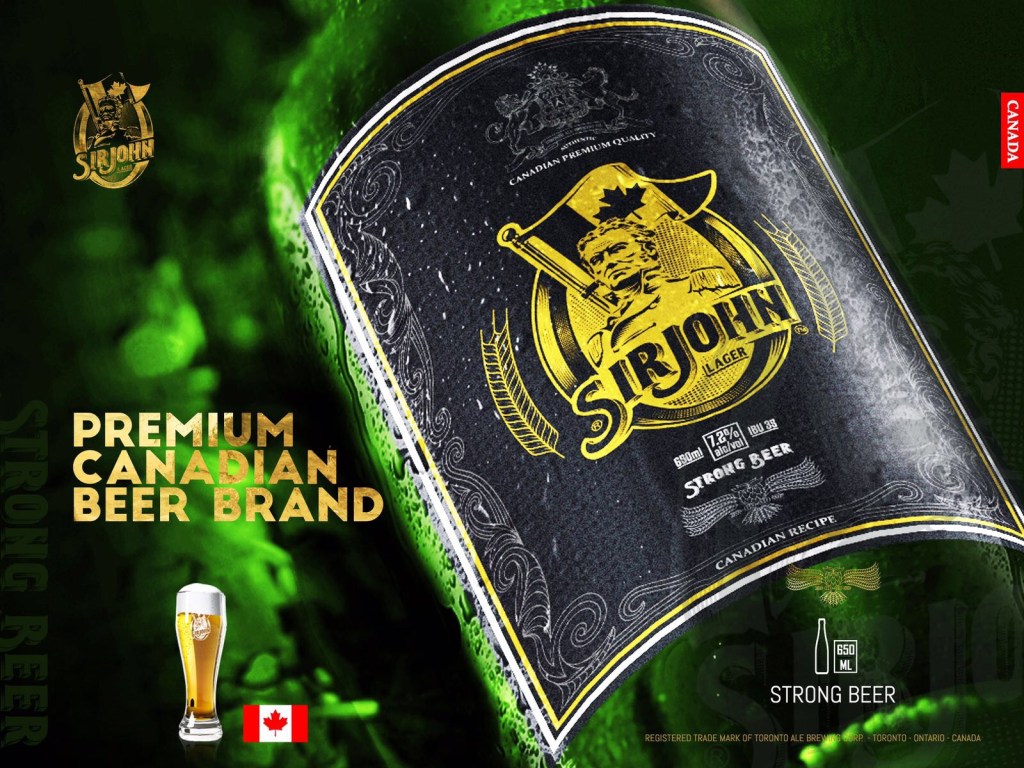
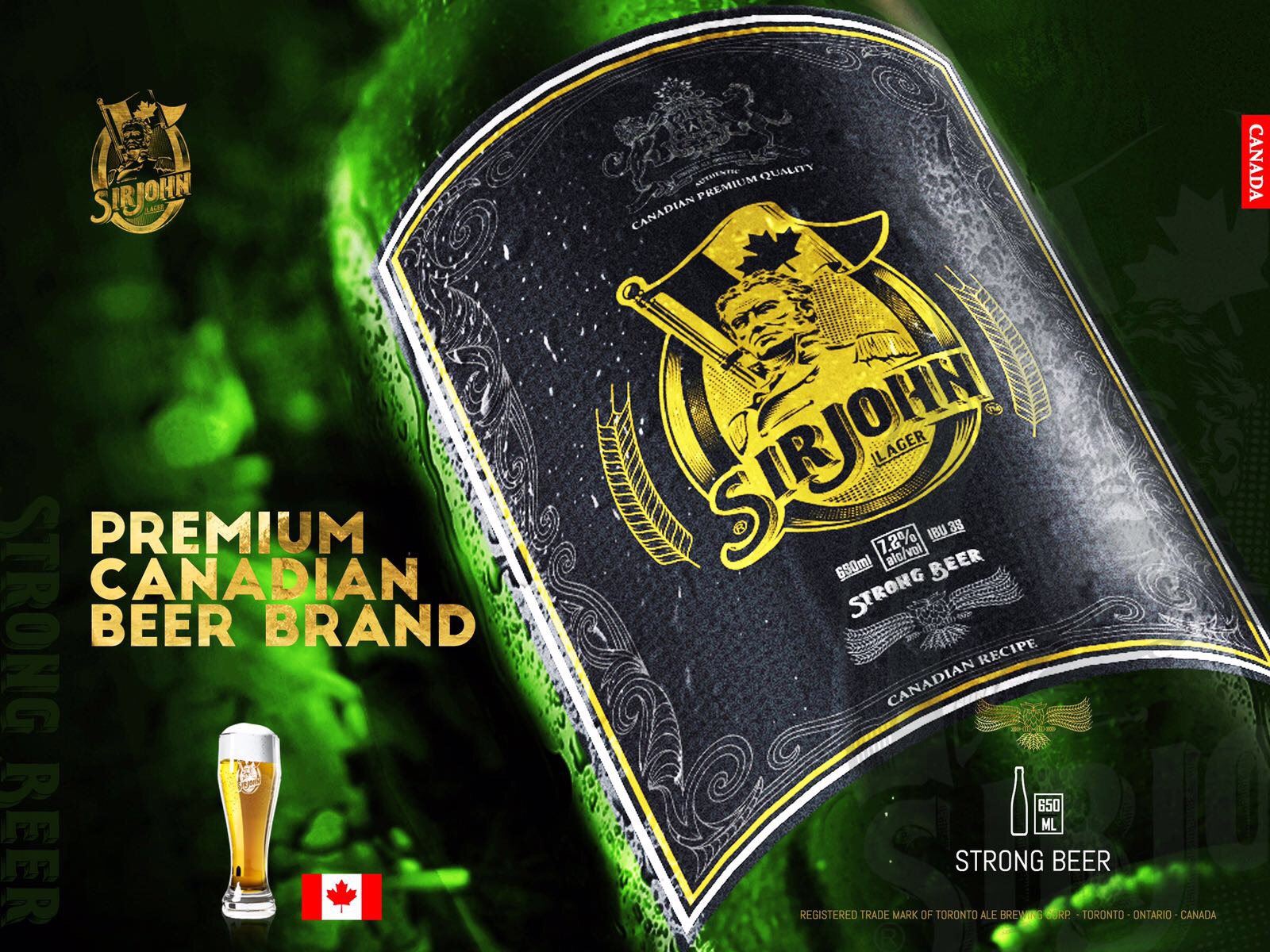
  • SIR JOHN NEW ‘BREWED IN INDIA’ BEER FROM CANADIAN BEER MAJOR

    IMG_5357.JPG

    The subsidiary company of Canada based Azim Capital and Toronto Ale Brewing company, Kanoe Impex India Pvt. Ltd. recently rolled out its first brew from India called SIR JOHN.
    The lager beer produced under a contractual brewing and bottling arrangement with Denzong Breweries Pvt Ltd (owned by the Bollywood actor Danny Denzongpa) is planning to produce half a million cases in coming fiscal year.

    Toronto based Azim Capital is a company that has many business interests such as mining, Commodities Trading, Construction, media and investment banking, funds Toronto Ale Brewing Co. It is headed by the dynamic duo Jack Azimi and Mike Azimi.

    While Toronto Ale Brewing Co. already has four styles of premium beer, Lager, Amber, Hefeweizen and Stout with 5%, 8% and 12% abv. , the company plans to introduce the well known 1793 KROY a lager beer from its imported beer portfolio in the near future.

    “Kanoe Impex India Pvt Ltd was started with an aim to introduce Canadian beer recipes in India. Toronto Ale Brewing wishes to enter different jurisdictions across the globe in 6 phases. We have just started phase one with operations in India”, said Jay Gawade, the company’s COO.

    Because of the brewery’s location in Odisha, it was the first market that SIR JOHN was launched last October. “We started with 0.2% of the market share in Odisha’s beer industry and our share is growing ever since. In 6 months we have achieved more than 40 thousand cases of primary sales. This is from the brewery to govt. owned warehouse as distribution and marketing in Odisha is by the State Beverages Corporation”, added Gawade.

    The company has entire East India in radar with West Bengal operations beginning once new excise policy is out for 2018-19.  At present only the SIR JOHN strong variant is available in the Odisha market as the state has more than 90% market share of strong beer consumers. Soon there will be 3 other variants of SIR JOHN in the market including a new label called ‘Cold Strong’ which will be a premium beer with premium packaging and a lighter style than SIR JOHN using the ingredients imported from Canada. These new variants will cater to the more developed beer markets such as Kolkata and Bhubaneswar.

    At present only the SIR JOHN strong variant is available in the Odisha market as the state has more than 90% market share of strong beer consumers. Soon there will be 3 other variants of SIR JOHN in the market including a new label called ‘Cold Strong’ which will be a premium beer with premium packaging and a lighter style than SIR JOHN using the ingredients imported from Canada. These new variants will cater to the more developed beer markets such as Kolkata and Bhubaneswar.

    Gawade explains that as there are Canadian ingredients used in the recipe, even the strong beer is enjoyable for regular beer drinkers despite a higher level of alcohol content. Particularly, the combination of European and Canadian hops gives a good balance of bitterness and fruitiness in SIR JOHN which makes this beer a pleasant refreshing drink at 6.2% abv.

    Speaking about the imported KROY range, he adds, “Once India provides healthy liquor policy for importing beer from abroad we will be bringing in KROY to the market. Right now it will be made available in the Middle East including Dubai and part of Africa”.

    To read more about KROY see the link to our previous article Canadian Luxury Lifestyle Beer Brand 1793 KROY To Enter India 

  • J’ NOON- FIRST LUXURY FINE WINE FROM INDIA
    Luxury Fine Wine from India! Yes, it’s true.

    This slideshow requires JavaScript.

    In 2015 I was asked by an international magazine to write a piece on the fine wines from India. When I told them that the price of the most expensive Indian wine was around 25 euros the story idea was dropped. We are still far from producing a fine wine with a price tag of 80 euros or 100 euros a bottle but good news is that we finally have a wine that’s 50 euros a bottle.
    J’NOON collection by Fratelli Vineyards is the perfect example of how the exchange of skills and technological know-how can benefit the Indian wine industry.
    Thanks to the passion and dream of Kapil Sekhri, proprietor Fratelli Vineyards and, Jean- Charles Boisset, proprietor Boisset Collection, Burgundy, France that we have three extraordinary Indian wines.
    Why is J’ NOON special?
    1. It’s a limited edition collection with only 2400 bottles of red, white and sparkling wines.
    2. The grapes are grown, nurtured, handpicked and carefully selected from the Fratelli estate vineyards in Akluj, Maharashtra located in the right bank of the Nira River.
    3. These wines are created personally by the iconic Burgundy and California wine producer Jean-Charles Boisset (JCB) with the Fratelli team at the winery in Akluj.

    We tasted the wines at an exclusive launch event curated by Sonal Holland, India’s first and only Master of Wine and organised by Fratelli Vineyards in the presence of Jean-Charles Boisset recently in Mumbai.

    IMG_8819
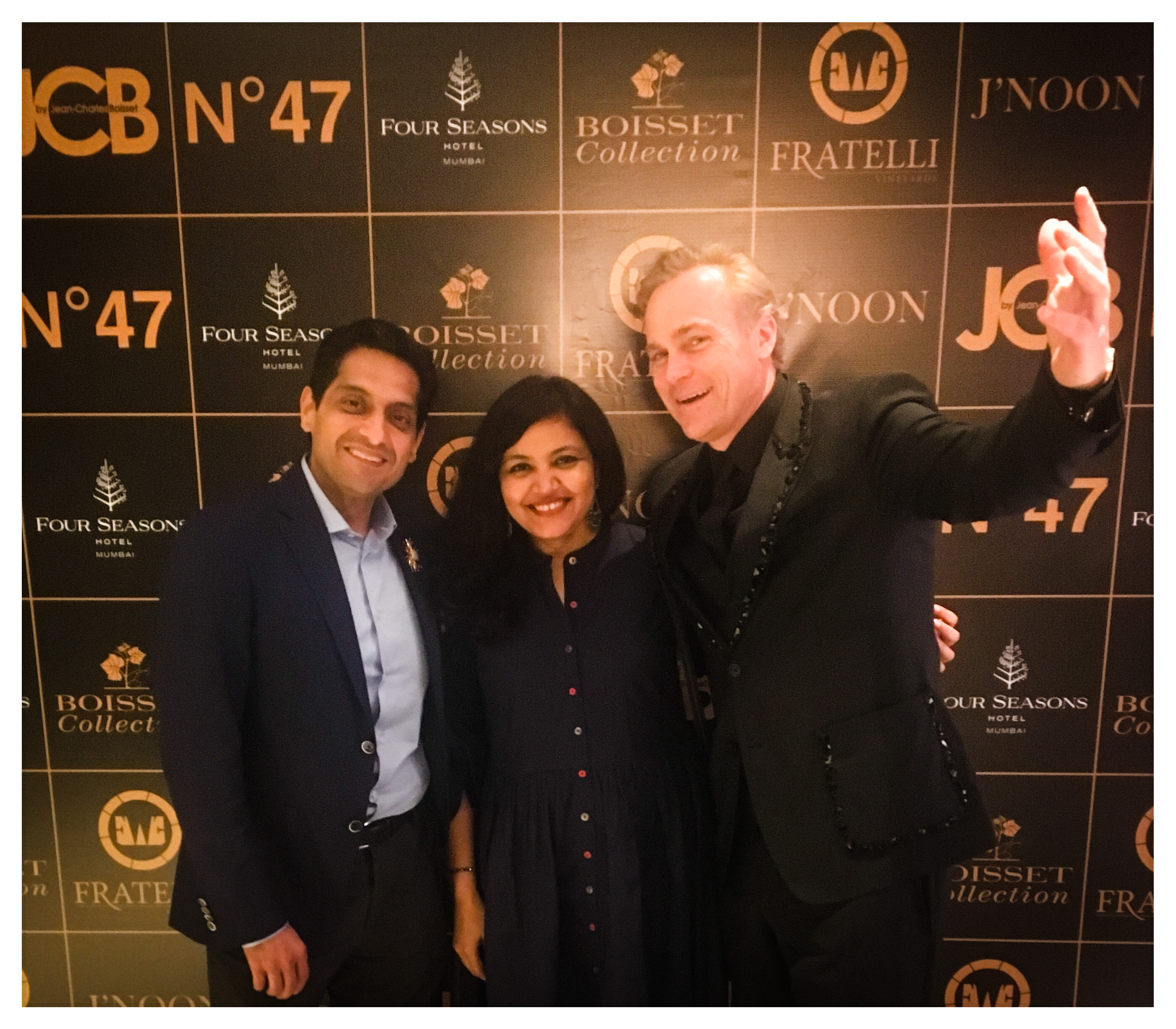
    Kapil Sekhri, Rojita Tiwari, Jean-Charles Boisset

    The Collection 

    JCB No 47 – The sparkling wine is dedicated to India’s year of Independence 1947. This 100% Chardonnay Brut is a single-vineyard sparkling wine. The vineyard is located in the sandy soils in Motewadi which gives minerality to the wine. On the nose the aromas of green apple and tropical fruit and on the palate, it has rich complexity, great texture which brings this very close to a vintage champagne-style wine. The wine was barrel fermented in French oak and secondary fermentation was in the bottle following the ‘Methode traditionelle’ with an ageing of 24 months in total. The wine is priced at Rs 3500 (approximately 44 euros) and available at only a select few five-star hotels and just a few retail stores in Mumbai and New Delhi & NCR.

    J’NOON WHITE – The white wine is made of 60% Chardonnay and 40% Sauvignon blanc grapes all from the vineyards surrounding the winery in Akluj. It’s certainly hard to believe when you taste this wine. When I asked how is it even possible to produce an Indian white wine which has the distinctive aromas and flavour profile of a Burgundy white wine? Kapil Sekhri replied, “That’s where the expertise of Jean-Charles comes in. Although our vines are young, in India, due to the climatic conditions they age much faster. And controlled yield, fully-monitored production and a constant tasting and analysis of the combination of wines from different barrels have made this possible.” The grapes are sourced from the sandy rocky soils of Garwar which gives the combination of flavours such as green apple, stone fruit and on the palate it has the freshness of a great Chardonnay with lime, white pepper and some herbaceous notes of the Sauvignon Blanc finding a perfect balance somewhere between a great Pouilly-Fuisse and white wines from the Northern Rhone Valley. It was aged for 12 months in French oak barrels and stainless steel tanks. The wine is priced at Rs 2500 (approximately 31 euros) and available at only a select few five-star hotels and just a few retail stores in Mumbai and New Delhi & NCR.

    J’NOON RED – The red wine is a blend of Cabernet Sauvignon (57.5%), Petit Verdot/Marcelan (38.5%) and Sangiovese (4%). The grapes from vineyards in Garwar are co-fermented and aged in French oak barrels and stainless steel tanks for 24 months. While the cabernet sauvignon adds structure and freshness to the wine the other grapes give it a deep purple colour and flavour of black fruit and strong tannins. This wine most certainly has a good structure with a combination of fruit and good tannin. However, it is too young to drink it now. Would certainly need a resting for at least a few months. This wine is priced at Rs 4000 (approximately 50 euros) and available at only a select few five-star hotels and just a few retail stores in Mumbai and New Delhi & NCR.

    Special Note: Don’t miss your chance to taste the wines from J’NOON collection if you happen to find a bottle. Or, you can write to us at drinksanddestinations@gmail.com and we might just be able to make it possible for you 🙂 

  • The debate between natural cork and screwcaps is an on-going one. But here’s a little insight into an interesting experiment which was conducted on a group of 140 wine drinkers who volunteered to find out more. 

    The Grand Cork Experiment, designed by Professor Charles Spence, of Oxford University, confirms the sensory benefits of cork-sealed wines.

    We all know how a cork’s unique popping sound gets our taste buds racing as we anticipate a delicious glass of wine.

    But this reaction has never previously been scientifically tested and quantified.

    The Grand Cork Experiment – Neuroenological Tasting – designed by Professor Charles Spence of Oxford University’s Crossmodal Research laboratory, offered a unique immersive wine-tasting experience.

    The ground breaking trial was organized by world-renowned multi-sensory food architects and experience design studio, Bompas & Parr, in collaboration with the Portuguese Cork Association and held in Soho, London in July 2017.

    The experiment compared the impact on the wine tasting experience of removing a wine cork as compared to twisting a screwcap and tested how the sounds, aromas, and sensations associated with opening a wine bottle trigger our brains and influence our taste buds.

    140 volunteers were asked to enter the Experiment Chamber, visible from the street via a giant window, and were asked to sit in a specially designed chair and put on headphones.

    Before sampling each of four wines, served in identical pairs, participants were played the sound of a popping cork or a twisted screwcap and then asked to rate the wine in terms of its quality, intensity and celebratory mood.

    State-of-the-art brain activity monitors were used to test how visitors’ senses are triggered by the rituals associated with wine drinking.

    Hosted in a beautiful cork-clad lounge, the experiment enabled the participants to sample fine wines and test how different aromas impact the taste of wines, as well as creating personalised cork wine stoppers to take home with them.

    In preparation for the final test participants had to stimulate their senses of taste, smell, touch, hearing, and sight by taking part in various experiences: such as drinking a mixture of malic acid and water, placing their hands in a bowl filled with glass stones,

    listening to white noise through headphones, and undergoing an “eye massage” by placing vibrating pads next to the eyes.

    The results were disclosed in September and unequivocally demonstrated that wine corks play a key part of the sensorial experience of wine drinking.

    Comparison of the results from each wine when served after removing a cork or twisting open a screwcap, revealed that on average participants rated cork-sealed wines as having 15% better quality, being 20% more appropriate for a celebration and 16% more inciting of a celebratory mood.

    Professor Charles Spence commented: “Our senses are intrinsically linked – what we hear, see and feel has a huge effect on what we taste. The sound and sight of a cork being popped will set our expectations before the wine has even touched our lips, and these expectations then anchor our subsequent tasting experience.

    These results emphasise the importance of closures for wine, and the clear association between cork and quality in our subconscious.”

    The cork vs screwcap debate has raged in the wine industry for decades, with experts, sommeliers, and producers from across the world deeply divided in their opinions. This experiment is the first empirical demonstration that a cork closure delivers a more positive drinking experience.

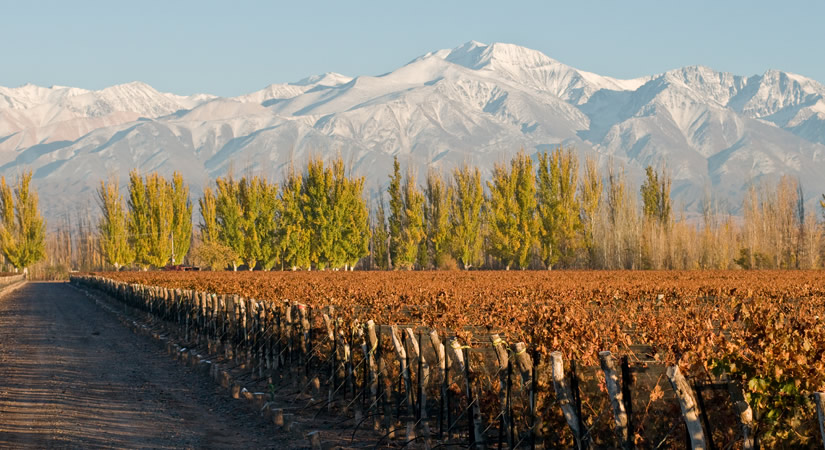
  • Mythic Estate: Keeping the Legends of Malbec & Mendoza Alive


    The glorious rise of Malbec in the last few years has often raised a pertinent question. How did the purple grape that originated in southwest France manage to thrive in South America? So much so that it’s created a unique identity for itself in Argentina. Undoubtedly, it’s the geographical location, climatic condition and the influence of the mighty Andes. During his recent visit to India, Nicolas Perinetti, Export Area Manager of Bodega Casarena, the producers of Mythic Estate wines spoke about the Argentinean Malbec and Mythic Estate and what makes these wines special. 

    The grape variety Malbec enjoyed its peak at its original home, southwest France and especially in Bordeaux, during the pre-phylloxera time. However, the disease destroyed most of the Malbec vines and subsequently, it faced difficulty in ripening because of its susceptibility to diseases and problems such as mildew, frost, and coulure. However, in the 1850s when it was brought to Argentina by Michel Pouget Malbec began to thrive in the climatic conditions of Mendoza. Very soon it became the glory of Mendoza. And in the center of it all was Lujan de Cuyo. The region that today produces some of the best malbec wines in the world.

    lujandecuyo2

    Lujan de Cuyo also happens to be the home of Mythic Estate. Elaborating on the climatic condition and terroir, Perinetti said, “Mendoza presents the perfect terroir for growing Malbec. The climate is dry, there are 300 days of sun, deep roots, the alluvial soil in Lujan de Cuyo and the altitude (800 mt above sea level) is one of the highest in the world for growing vines. So that helps Malbec to have the perfect colour, tannin, and spicy characteristics when it’s ripe. The round and supple texture which is a unique characteristic of a great Malbec can only be achieved here.”

    He added, “Medoza is on the same latitude as the wine regions in New Zealand, Australia, and South Africa. Also, Lujan de Cuyo was the first region in Argentina where Malbec was planted and at present 90% of the red wines produced in this region are malbec. However, there are also regions such as Patagonia and RioNegro, which produce malbec but don’t have the same vigor”.

    We tasted three of the Mythic Estate wines at the event organised by the wine & spirits importing company Flipsydee and hosted by Nicolas Perinetti, in Mumbai.

    Mythic Estate is a boutique project of Bodega Casarena and produces a wide range of wines at the winery in Lujan de Cuyo. This appellation is also famous for its oldest and most prized vineyards in Mendoza. From Mythic Estate’s portfolio, there are only three wines available in India at the moment. Mythic Mountain Chardonnay, Mythic Mountain Malbec, and Mythic Block Malbec.

    casarena-winery-and-vinyards

    During the tasting, Perinetti spoke about the origin of Mythic.He said,“Casarena (translated as “Sand House”) is named after the earth-toned stucco exterior design of the winery that has the shape that is similar to the old houses that were built in Mendoza. This viticulture project began in 2007 after the rebuilding of a century-old family winery from 1937”.

    The Project MYTHIC is a winemaker’s dream. These wines have the very best blends and are crafted to offer a unique taste of the most emblematic grape varieties from Argentina, added Perinetti. Bernardo Bossi Bonilla, the winemaker spent years making wines at Catena, Tikal, and Casarena before starting his own label ‘MYTHIC’ where he has the full freedom to craft his wines.

    “It was only apt that when it came to deciding the logo, the mythical creature, a serpent with dragon wings which is known to have been the protector of harvests according to folklore in Argentina, became the preferred choice. That way we are keeping the legends of the land alive”, concluded Perinetti.


  • Here’s some trivia for you. The cork oak trees have been around for 65 million years. Yes, turns out it’s a survivor. The outer bark of the cork tree is used in making natural cork, which is used in making closures for the wine and spirits industry. And, seven out of ten bottles in the world are closed with corks.

    Even as the debate between natural cork producers and other closures such as screw caps, plastic or synthetic closure manufacturers continue to make headlines on every forum, it is ineffectual to deny the innumerable benefits of using natural cork as closures reveals, Carlos de Jesus, Head of Marketing and Corporate Communications in Corticeira Amorim in an exclusive interview with Rojita Tiwari.

    maxresdefault-2
    Carlos de Jesus, Head of Marketing and Corporate Communications in Corticeira Amorim

    The closure industry has gone through and is still going through many evolutions at the moment. What are the latest natural cork trends that you are seeing worldwide?

    We are witnessing two very strong trends worldwide. First is premiumisation that is happening across the board in wine & spirits industry. As packaging is an integral part of the process, cork closures industry is seeing a boost too. Second is sustainability.

    A premium proposition also has to have a sustainable proposition. Luxury and premium category is becoming more and more intertwined with sustainability. It is a positive conversion of two trends where cork on its own has strong credentials associated with premium products. And when you bring the two together it becomes a strong and beautiful proposition for the world of wine.

    When you talk about sustainability does that also include Cork re-harvesting or recycling?

    In the US and some other wine markets, cork recycling has become a regular practice. But it is upcycling, which is more effective. That’s what we at Amorim focus on. We use the discarded/used corks to create other utility commodities and that’s how we are trying to increase the usability in other forms.

    The popular belief is that only premium quality wines need cork closures. Any comment?

    No. That is far from being proven or prove-able. I think if the natural cork has been proven as the best closure for a premium wine why will it not be good enough for your regular value-for-money wine? I find it bizarre that we are in the year 2017 and still debating on this subject.

    Cork works as the appropriate closure not just because it is premium but also because it balances the oxygen ingress, which helps in the development of wine in the bottle. A good quality wine needs to have a cork closure. It is a fact. A very interesting piece of research information came out of the Oxford University recently. It’s an experiment designed by Prof. Charles Spence, an experimental psychologist at the University. His research established that consumers having the chance of comparing the opening and the drinking of wines sealed with a cork and the ones sealed with screw caps on an average rated the cork-sealed wines as having 15% better quality and 20% more appropriate for a celebration and 16% inciting of a celebratory mood.

    This is a piece of information that every winery must take into account. This report matches very well with the worldwide data, which confirms cork’s overwhelming preference over other closures across markets.

    For example, in China over 90% of the wine consumers believe that natural cork is beneficial for wine quality. In US where 72% of the top 100 premium brands are sealed with natural cork US consumers are willing to pay a premium of $3.87 more for a bottle sealed in cork. Even the ‘Top 100 Wines of The World’ list published by The Wine Spectator has 89% wines, which are sealed with a cork.

    What is your comment on a market like Australia where some of the premium wines are sealed in screw caps?

    I would like to refer to what people in Australia themselves are saying, people like Peter Gago, Chief Winemaker of Penfolds refuses to put anything else other than cork as a closure in their top range wines. There are many such examples in Australia. It doesn’t matter what we say but it is the truth that cork is making a tremendous comeback in Australia. We have seen double-digit growth in our sales there. Australia is an export-driven market. After a few bad years, Australia is now trying to regain its export markets. China has become the largest export market for the Australian wines and this is a radical shift from the UK being the largest export market a few years ago. So the world has changed and so has the debate of closures.

    Has there been any prominent growth in terms of use of natural cork or awareness about it in India?

    It’s growing but we also want to see the production and consumption of wine and spirits in India growing faster. We all have a responsibility in making sure that those developments happen sooner rather than later. India will always be a very specific market. Countries like US or China or other export-driven markets develop a lot quicker and lot faster but I see no insurmountable reason why this cannot be possible in the vast majority of India if not the entire country. We would like to partner with the local Indian producers whenever possible so that the development gets faster.

    What is the percentage of Amorim’s investment in the R & D segment?

    As Amorim is a knowledge-based firm our pure R & D investment is about 7.5 million euros per year. But besides that, we also need to take into account capital expenditures that go in improving, training and catering to a lot of other layers in the production process of natural cork stoppers. Cork production requires sophisticated quality control and the process is very scientific and technical.

    Do cork closures on spirit bottles have any significant impact or contribution to the quality of the liquid inside the bottle?

    Cork closures on spirits bottles are perfect to protect the liquid in the bottle. The fundamental difference is that when a spirit goes into a bottle that liquid is at its peak and it is as good as it is going to be. Wine, on the other hand, is just starting to evolve in the bottle. Issues like oxygen ingress or phenolic transplant that are very important when you are interacting with a very intricate chemical reaction process called wine, the complexity of that interaction when it comes to spirit isn’t that deep. What is even more important in case of spirits than in case of wine is the ability to deliver the right looks and premium aspect and packaging for the liquid. Which is one of the most important requirements when you are selling a spirit. Cork brings that ability for a bottle of very expensive spirit to look the part. There nothing that can or in fact nothing does replace cork for spirits.

    What are the global issues that the cork industry is facing currently?

    We know that “we can never rest on our laurels”. Past performances don’t guarantee the future success. So, we know that we will never go back to the good old days of having a market share of 95-96% in the cork industry. Those days are gone. And it is a positive thing. It is much better to have 70% share of a market that is much bigger than having 95% of a smaller market. The main challenge is that we have to recuperate about 1.8 billion bottles that are still in plastic stoppers. Secondly, TCA proof NDTech by Amorim is the break through technology. But we are not yet at zero defect proof but even though we know that there’s no such thing as zero defect, we have to keep trying for perfection.Our volume growth shouldn’t diminish the value proposition that cork enjoys. If you look at the figures released by the Cork Quality Council every year, it shows that the amount of TCA problems in corks has recorded an enormous decline.

    Our volume growth shouldn’t diminish the value proposition that cork enjoys. If you look at the figures released by the Cork Quality Council every year, it shows that the amount of TCA problems in corks has recorded an enormous decline.

    How is the health of a cork forest relevant to the quality of cork production?

    It is very important. And, chlorine related environmental pollution is a problem for not just for humans but also for the cork forests. And, TCA is not exclusive to only cork, it can be found in coffee, in beer, in fruit, tap water so it is an omnipresent compound. When you look at the cork forest, you look at it from different points of view. One of the points of view is from the analysis of a critical path for the formation of TCA. And a lot of TCA can certainly be formed in the forest. But it can also be formed during the production process of the stoppers or during the handling of the bottles in the plant. So part of the practice is to visit every step in this process to identify the cause of the problem and handle them appropriately. Amorim as a company is not owners of the cork forests. We get our supply of raw material needs from 1000 cork producers. What we can do is to tell them to maintain better quality and follow healthy maintenance of the cork forest and the raw materials.

    But unfortunately, not many cork manufacturers talk about this aspect of the cork production.

    In Portugal, where the cork oak occupies 23% of the national forest area, important initiatives in reforestation have been developed at a rate of ten thousand hectares per year, or an annual growth of around 4%.

    Can climate change affect the cork manufactures?

    Climate change is getting more and more difficult to ignore. Anyone working with the land will tell you that change is on its way. We have seen those changes in the cork forests. But remember that the Cork trees have been around for an estimated 65 million years and that’s a long time. They have seen a lot including the appearance of the Sahara desert. So if there’s a species that can adapt to any change it’s the cork forest. But they also have weak spots and certainly, the changing patterns would be something we will be keeping an eye on. But on the other hand, this is the tree that gives a lot without asking for much. And I believe that threat not necessarily it has to come from one side. When you look at from the other side of the business, if 70% of our value business is the closures business, if the impact of climate change is imminent for our clients such as wineries, then that would be something we need to watch out for.

    Fortunately, we know that each cork stopper retains up to 112 grams of CO2 so cork can be a passive ally of the wineries in reducing their carbon footprint.

    You can also listen to our podcast episode on Natural Cork Vs Other Closures here.


The Only Feed You Need: Booze, Buzz & Beyond

Stay informed with curated content and the latest headlines, all delivered straight to your inbox. Subscribe now to stay ahead and never miss a beat!

Skip to content ↓