Rojita Tiwari wears many hats — and most of them come with a pour. A globetrotting drinks writer, sommelier, educator, consultant, and certified booze judge (yes, that’s a real job), she’s been stirring things up since 2006.
Founder of Drinks & Destinations, India’s go-to consultancy for all things wine, spirits, and strategy, Rojita has introduced Baijiu to India, helped launch a Whisky, and judges everything from wine to whisky, rum, gin, vodka, mezcal, baijiu to sake at top global competitions such as CMB and Spirits Selection. She’s bagged titles like Best Wine & Food Influencer (Wine Travel Awards 2023), Ambassador of the Industry Title and twice made it to the “Top Ten Women in Wine in India” list — cheers to that! She is also the only certified International Ambassador of Moutai Flavour Baijius in India.
You’ll find her words in Drinks International, Whisky & More, Rumporter, Mint Lounge, Spiritz, Sommelier India and more.
Want to raise a glass or a campaign?
Reach her @drinksanddestinations or email drinksanddestinations@gmail.com.
Cheers!
The Indian grape brandy JANUS from Sula vineyards has won a bronze medal in the tasting category at the recently concluded prestigious International Spirits Challenge 2016.
The product launched in 2015 is India’s first brandy made of 100% premium grape spirit. “We are thrilled to receive this prestigious recognition,” said Rajeev Samant, CEO, Sula Vineyards. “This acknowledgement further validates JANUS’ groundbreaking project to create India’s first 100% premium grape brandy. Winners are determined in part by experts in the industry. We are pleased that they have recognized our efforts to lead the industry in terms of innovation and quality.”
Deriving its name from the ancient Roman deity with two faces, JANUS embodies the exceptional French Cognac making heritage and the expertise of Sula in selecting the best Indian grapes. JANUS is made from carefully selected grapes from the best Indian vineyards which are then double distilled in small batches using traditional French alembic pot stills, to produce a liquor of exceptional smoothness and character
JANUS is currently available in 750 ml and 180 ml. A 750 ml in Karnataka is priced at 1900 INR, Andhra Pradesh INR 2390, Telangana INR 2265. In Goa, Pondicherry, Daman, and Silvassa JANUS is retailed at INR 1500 and available across leading outlets. It is manufactured by Artisan Spirits, 100% subsidiary of Sula Vineyards.
Full results are published on the International Spirits Challenge (ISC) website http://www.internationalspiritschallenge.com
Also, read my earlier article on JANUS launch in July 2016 featured on Just-drinks.com here .
The Consulate General and Promotion Centre of the Argentine Republic in Argentina, together with Restaurant LIMA, had recently organised an event called ‘FLAVOURS OF ARGENTINA’, dedicated to promoting Argentine tourism, culinary, wine and culture, all aimed towards encouraging an open business climate between India and Argentina.
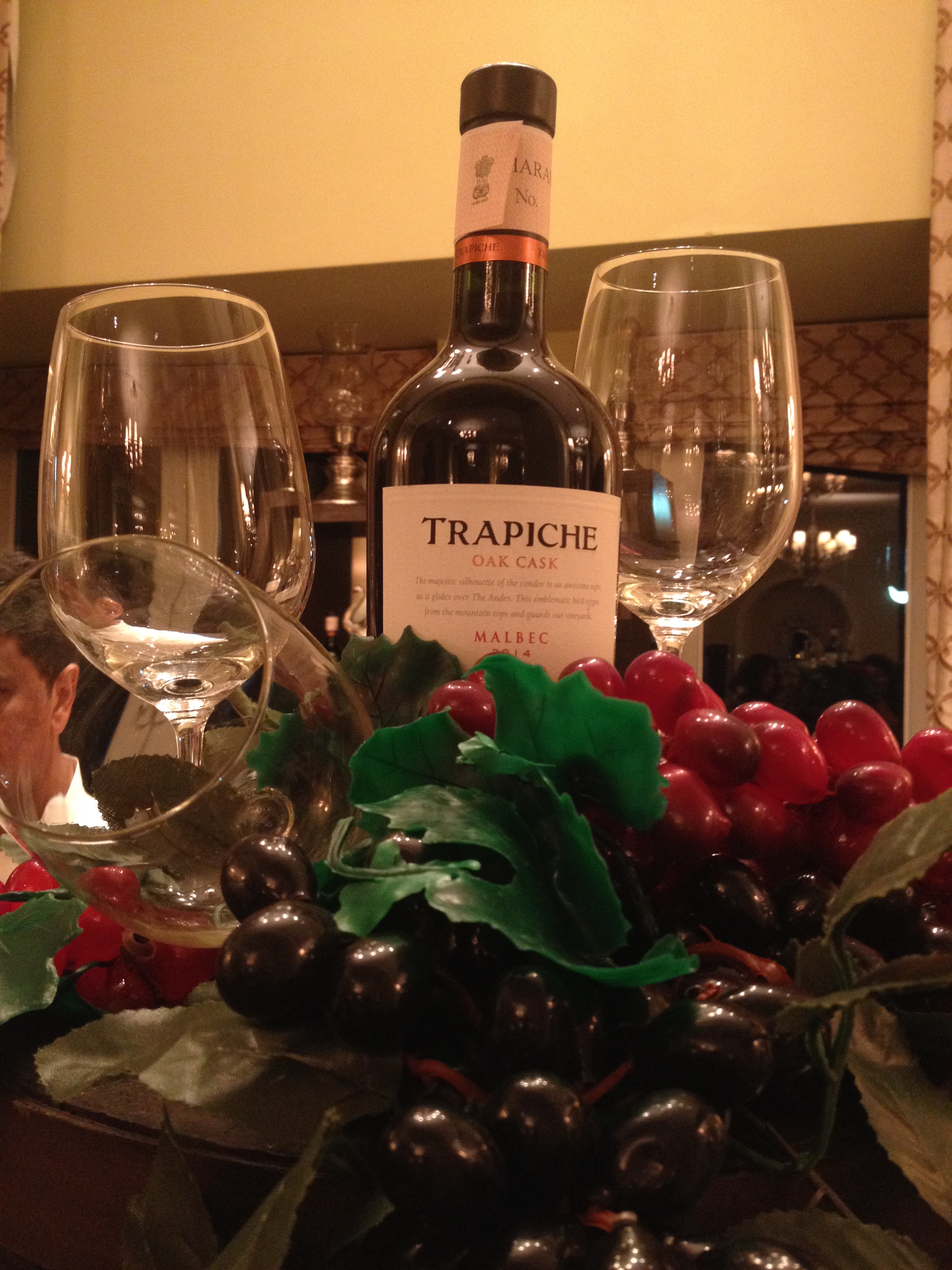
Acting Consul General Alejandro Zothner Meyer raised the toast and invited the guests to enjoy the wines of Argentina with some culinary must-haves. Needless to say, the wines were Malbec specials like Dominio de la Plata Crios, Trapiche Oak Malbec and white wines like Trapiche Sauvignon Blanc and Dominio de la Plata Crios Torrentes. Sommelier and CEO of All Things Nice, Nikhil Agarwal introduced the wine region and spoke about the wines of Argentina.
The evening slowly came alive with tango performances by BTangoConscious. As guests savoured the wines with argentine food specialties like luscious lamb meatballs, fugazza, choripan and empanada chicken, the music ascended to Latin fever-heights with salsa, bachata, and cha-cha, bidding everyone present to the dance floor.
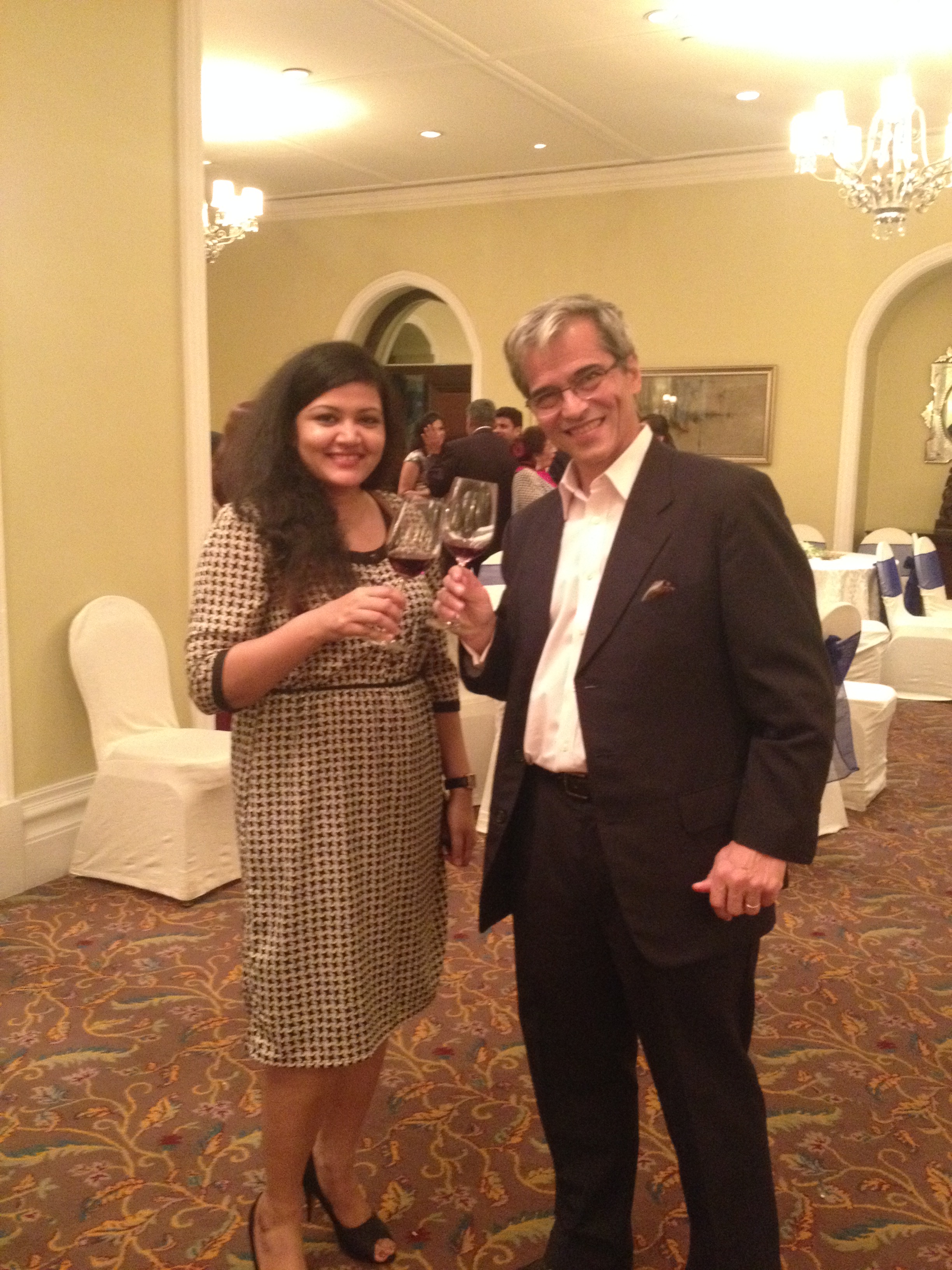
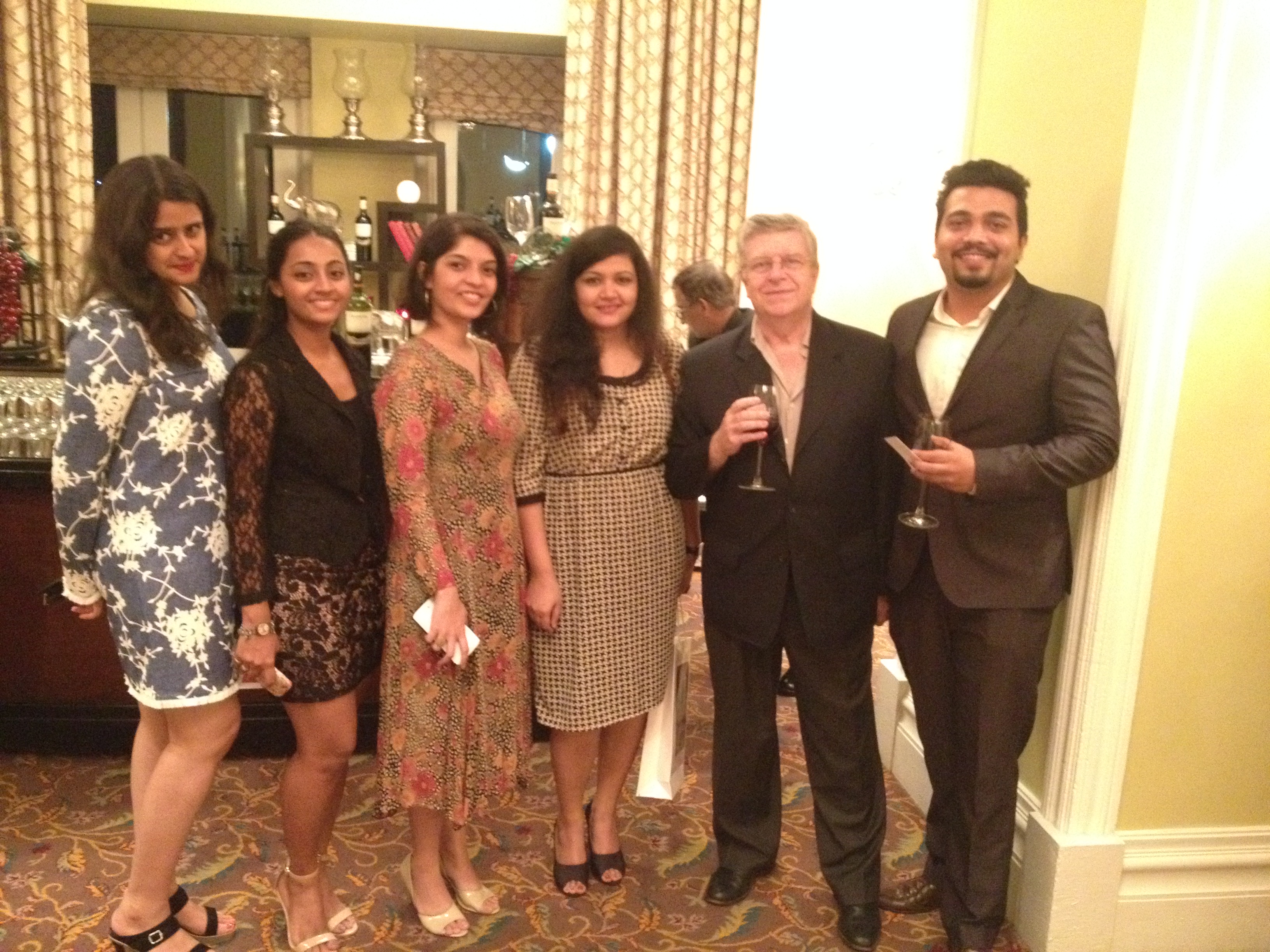
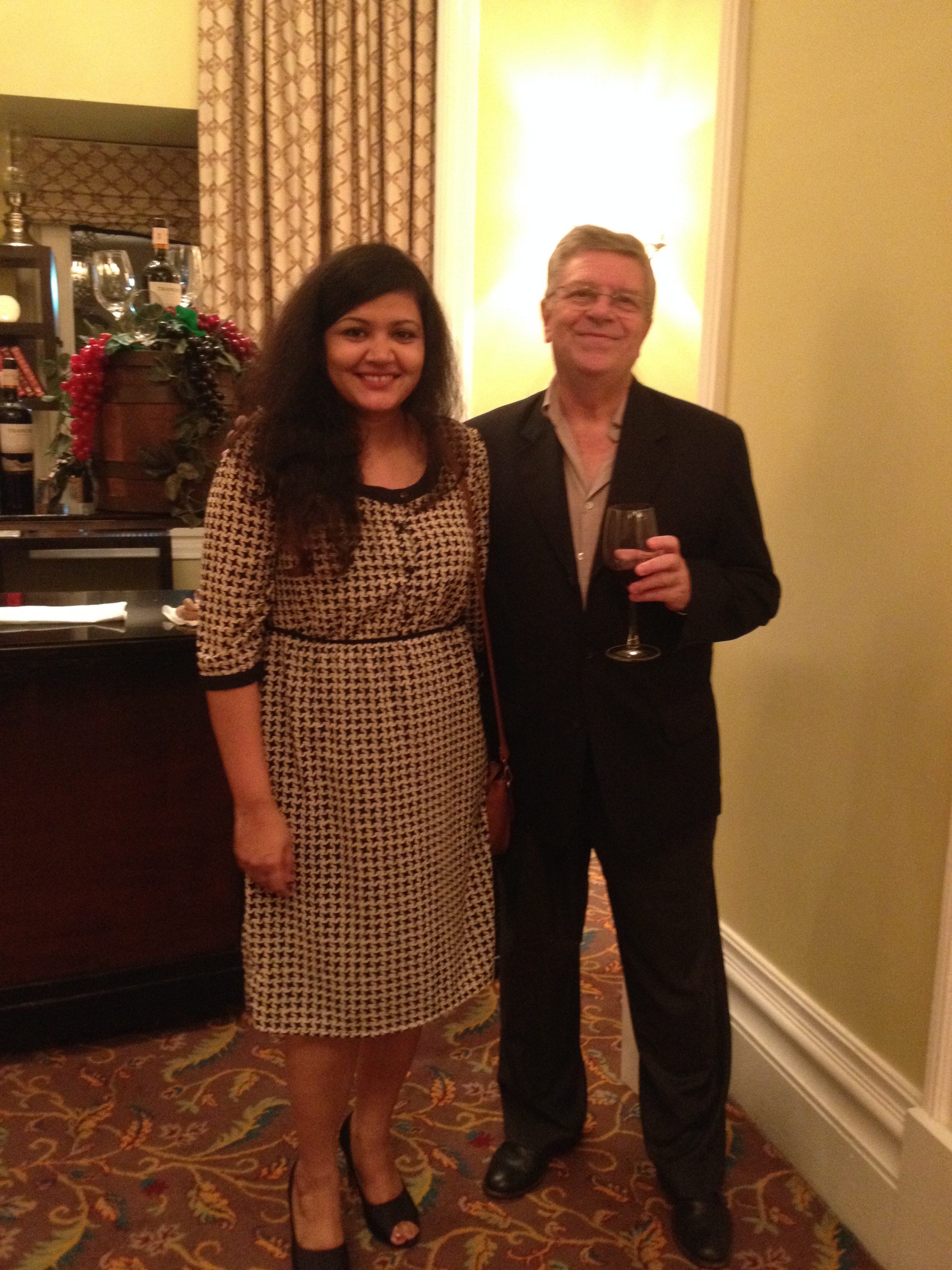
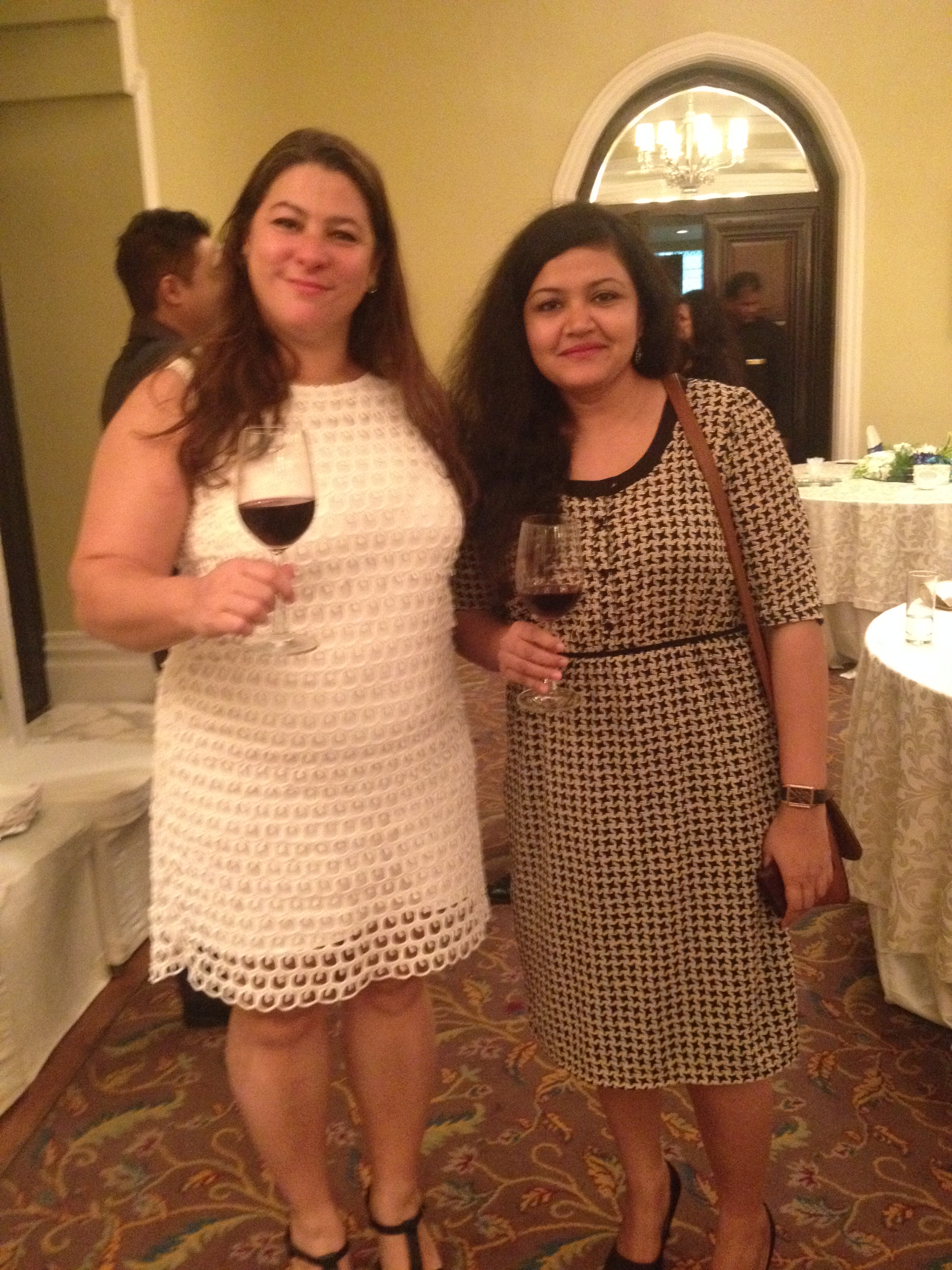
The fun-filled evening was attended by representatives and heads of travel companies, popular restaurants in the city, famed sommeliers, wine importers, wine enthusiasts and captains of industries from various sectors in which India and Argentina share a common trading platform. Also present were the prominent director, Shyam Bengal and his wife. Other guests included Chef Vicky Ratnani, Sumer Vaswani from Blue Frog, Food blogger, Sameer Malkani, Rojita Tiwari from Drinks and Destinations and Blaise Fernandes, CEO of Gateway House.
The Delhi unit of TajSATS, the country’s leading airline catering company, was awarded the ‘Best Inflight Caterer’ for the year 2016 at the GMR-IGI Airport Awards 2016. This is the fourth time TajSATS has won at the prestigious GMR-IGI Airport Awards – since its inception in 2012.
The GMR-IGI Airport Awards are annual awards which have been institutionalised to recognise exemplary achievement, seamless service and inspiring entrepreneurship of business partners from the Airport community. The awards aim to acknowledge partners who have excelled in service standards in paving the way for being amongst the best airports in the world.
Commenting on the achievement, Sagar Dighe, Chief Operating Officer, TajSATS Air Catering Ltd. said, “We are delighted and honoured to be awarded this accolade for the fourth time. This award serves as a testimony to TajSATS’ commitment to delivering high-quality standards of service to all our stakeholders.”
The Awards have been instituted with the aim of recognizing the key performers in the Indian aviation industry at Delhi International Airport, who work relentlessly to keep the airport experience in the forefront. The GMR-IGI Airport Awards 2016 were given across 28 diversified categories and TajSATS, Delhi was awarded the Best Caterer of the year award on the basis of various parameters. TSACL Delhi ranked first in the categories such as – Maximum number of meals served to airlines, Caterer with highest revenue sharing record, Caterer with best ramp safety record, Impeccable report submitted by all hygiene audits conducted by GMR and Caterer with an impeccable food quality record.
TajSATS Air Catering Ltd is a Joint Venture between The Indian Hotels Company Ltd, also known as Taj Hotels Resorts and Palaces (headquartered in India), and SATS Ltd (headquartered in Singapore), and is the market leader in India in in-flight catering. TajSATS is present at seven locations in India, namely Delhi, Mumbai, Chennai (through its associate company, Taj Madras Flight Kitchen), Bangalore, Kolkata, Goa and Amritsar.
When the world is coming to terms with the dangerous implications of the environmental negligence by humans, any small or big step towards sustainability certainly brings a ray of hope. Thinking on the similar lines, Adrian Pinto, Senior Manager Wines, Pernod Ricard India came up with a unique concept to “Change the World One Sheet at a Time”. Here is how.
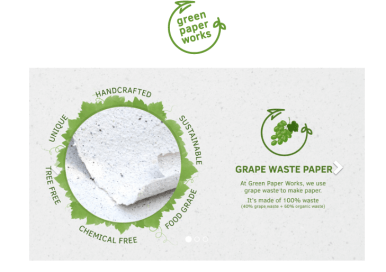
Do you know how much wine is produced in the world annually? Five billion cases, equal to 60 billion bottles. And do you know how much waste is produced as a result of the winemaking? Over 33 million tons of waste, that includes, seeds, stocks and skin of grapes. So what exactly is done with the waste? Almost nothing. As Adrian realised, the waste can actually be used to produce paper. At Pernod Ricard ,“Approximately 500Tn/yr of stems are transported to a landfill and waste management at the cost of 24 €/Tn.”– Fernando Pozo, PRW Spain. “The Marlborough Winery currently sends the bulk of our marc to a third party vineyard at a cost of approximately $25/tonne.”
The advantages of grape paper are plenty. Needless to say that it uses the grape waste, Tree free, made from 100% Waste & Chemical free. It’s not just cost effective but grape farmers could also generate income by selling unsalable or damaged crop for paper production.
Adrian is already in talks with the Indian Institute of Packaging Mumbai (IIPM) to develop captive packaging for wine & spirits industry. The paper is currently being tested by IIPM for being a Food Grade packaging paper.
His PCT (Patent Cooperation Treaty) application has been filed with the WIPO (World Intellectual Property Organization) and accepted by the European Patent Office, (EPO) (ISA/EP) on the 12th of May.
“Many external agencies in India are keen to learn more about this project. I am looking at the commercialisation of this patent and have been advised that this patent would be of more value, in regions that generate the grapes waste example EU, USA, Australia, South Africa, South America, to name a few”, said Pinto.
Well, this is a great initiative and the project certainly seems to have great potential. If you would like to know more about it do write to Adrian at info@greenpaperworks.com or itsadrianpinto@gmail.com.
As some of you may remember, I have been a regular juror at Concours Mondial de Bruxelles, the international wine competition that travels to a different country every year. This year was my third time at the competition and first as the President of one of the Jury panels. Here’s an account of my experience of ‘Chairing a Panel’ at CMB 2016 held in Plovdiv, Bulgaria.
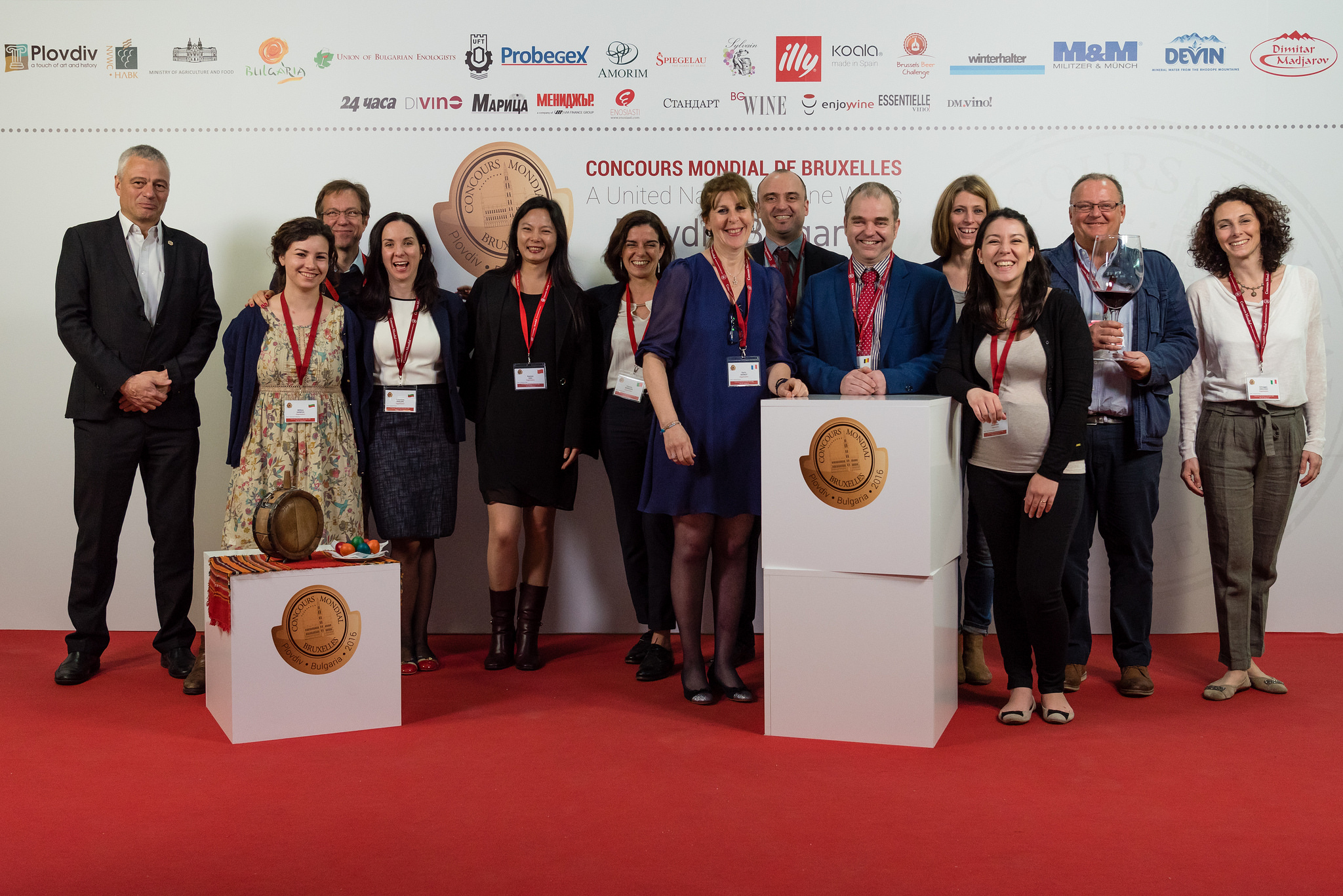
The Jury 2016
Venue for CMB 2016
The Competition in Progress
The 23rd edition of the internationally renowned wine competition Concours Mondial de Bruxelles was held in Plovdiv, Bulgaria from April 29 to May 1, 2016. There were 350 jury members from all over the world who judged around 9000 wines during those three days. The members were divided into various jury panels and each jury panel had 5 to 6 members. My panel had 5 members, including myself as the President of the Jury.
Plovdiv, Bulgaria
Now, remember the famous line from the movie Spider-Man, “With great power comes great responsibility”. Except that, here, a President is responsible for more than a few things.
Time Management
This is an essential aspect of chairing a panel. Every morning each jury is served around 50 or more wines, divided into 4 or 5 flights. And every panel is given around 4 hours to complete the tastings. It is the duty of the President to coordinate with the sommelier as well as the panel members to finish the task in the stipulated time frame. As there are times when prolonged discussions or rather debates over a particular wine could upset the schedule, the president is expected to rationally allot time to each wine.
Pay Attention
Thanks to the great organizational skills of the CMB team, before the competition every jury member, receives a mandate explaining the CMB process of scoring each wine. And during the competition, while judging the wines, one has to pay attention to the flight no and sequence etc. However, if you are the President of a panel, you are required to do much more than that. Days leading up to the competition, every selected President receives a mandate from the organizing team stating the duties that he/she is required to perform. So that prepares you for the responsibility.
Understand the process
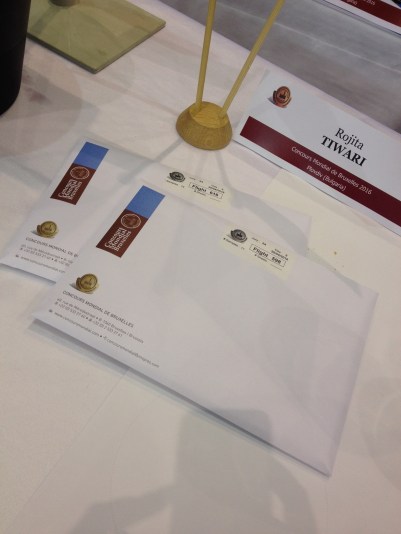
The president needs to be meticulous with the entire process. To manage the tasting sessions with due diligence, every time a wine is served, you have to check that it is the same wine on the sheet that needs to be filled in. After the scoring of each wine, the president is required to collect the score sheets from the jury members and place the sheets in the corresponding envelopes by flight.
Listen to your fellow jury members
Tasting in Progress
Jury 24 with Sommelier Viktor
Be friendly yet professional with the fellow judges. Listen to their feedback or comments on a wine, respect their difference of opinion, and don’t impose your views on the members or try to change their judgment. As judging wines blind could sometimes be tricky, it is best to keep everyone’s views/ scores/ judgment in mind and yet have an independent approach.
When in doubt, consult
It is inevitable that sometimes, the wine samples could be oxidized or corked. In such a situation, the competition allows the panel to call for a second bottle of the same wine. Only the president has the authority to take the call. The process for this is scrupulous. The president has to fill in a form and give it to the sommelier. If the second bottle displays the same result, the word ‘rejected’ has to be specified on the required box, justifying document-featuring explanation once again handed to the assigned sommelier. This has to happen in consultation with the fellow jury members. In the end, if you are still in doubt, the organizing committee has a designated taster who you could consult to take the final decision.
Be Confident
One of the most honoured moments for me was when the president of the panel that I was a part of during my first time at CMB walked up to me and said, “I am so glad to see you chairing a panel this year. Do you know that you are probably one of the youngest Presidents at CMB 2016?” My point here is that responsibilities aside, it is a great honour to lead a group of fellow judges who are experts in their own right. If you are confident, it certainly helps in the smooth conduct of the competition.
Above all, enjoy the Process
L to R: Javier Pascual from Spain, Carlos Alves from Portugal, Elena Miloshevska from Macedonia, and Nikolay Tsvetkov from Bulgaria
Rojita Tiwari – President, Jury 24, CMB 2016
I certainly had a great time judging some fabulous wines during those few days alongside my fellow jury members Javier Pascual from Spain, Elena Miloshevska from Macedonia, Carlos Alves from Portugal and Nikolay Tsvetkov from Bulgaria. While we agreed on most of our judgments, we certainly had our moments of disagreements, but overall it was a great fun, learning and exciting experience.
In 2017, Concours Mondial de Bruxelles will travel to Valladolid, Spain.
On the left : Chairman of the Concours Mondial de Bruxelles and managing director of Vinopres, Baudouin Havaux with the team of organisers.
The Result
To see the list of medal winners at the CMB 2016 competition, please click here.
My first tasting of Japanese whisky was a few years ago at one of the international wine & spirits events in Bordeaux, France. For some reason, they always have a big Japanese pavilion at this particular event. One day, I walked up to one of the counters at the pavilion, picked up a glass and took a sip. It was a moment of truth for me as I stood there savouring few drops of that exotic liquid. The aroma, the smoothness, the lingering aftertaste, it was a whisky from Suntory. I instantly fell in love with the Japanese spirit.
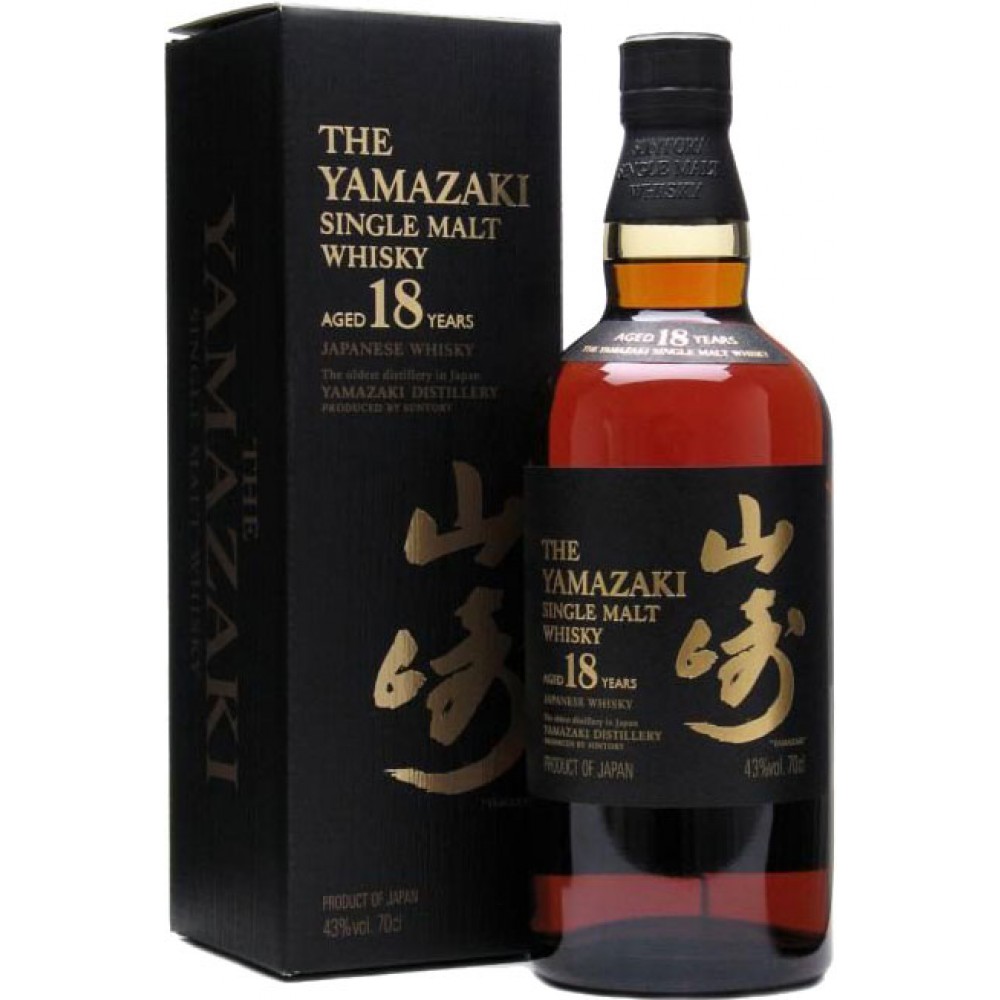
As it turns out, I wasn’t the only one. From whisky enthusiasts to connoisseurs and experts across the globe have begun to take notice of the whisky made in Japan. Even whisky evangelist Jim Murray couldn’t resist the temptation when he declared Yamazaki Sherry Cask 2013 as the World Whisky of the Year in his Whisky Bible 2015. That must have been a big shocker to the Scotch whisky industry.
What really makes Japanese whisky so special! Well, let’s take a look at what has happened in the last few years. The commercial production of Japanese whisky started sometime in the 1920s with the building of the Yamazaki distillery in Kyoto. Until recently the selling was restricted to only the domestic market, however, over the last few years, the market has expanded to Europe and northern America.
The biggest contributors to the success of Japanese whiskies are, Tetsuji Tamayama, the grandfather of Japanese whisky and founder of the company Nikka and Suntory’s first master distiller Masataka Taketsuru who studied in Scotland and later decided to bring back the popular Scottish drink home. He was, of course, supported by Shinjiro Torii, the founder of Suntory who built Japan’s first whisky distillery in the valley of Yamazaki.
Because of obvious reasons, Japanese whiskies were produced with the exact same process as scotch. Yet, there are some significant differences. The Japanese producers distill a mash of malted barley or fermented grain in Column/Coffey stills, and then the spirit is aged in oak barrels for a minimum of three years.
However, the land of the rising sun gets a long summer, which is favourable for distillation and the other seasons like autumn, spring and dry winter help in ageing the whisky as well as adding that extra character to the spirit. While the weather does play the most important part, it is the mastered art of creating unique blends and selection of malts that has also contributed to building an enviable range and styles of whiskies, which can compete with some of the best American and scotch whiskies in the international market.
In terms of flavour characteristics, Japanese whiskies are less peaty than their Scottish counterpart. Each producer of Japanese whisky has a number of single malts coming from each distillery limiting the exchange of productions amongst different distilleries, which is the case with Scotch whisky producers. Use of a wide variety of yeasts, experimentation with the distillation process and use of stills of different shapes and sizes, all add to the final product.
Like in Scotland, Japanese whisky producers rely heavily on natural water resources. For example, Yamazaki has its own natural water resource. Low-pressure distillation due to some of the distilleries high altitude locations and respect for its tradition is what makes Japanese whisky what it is.
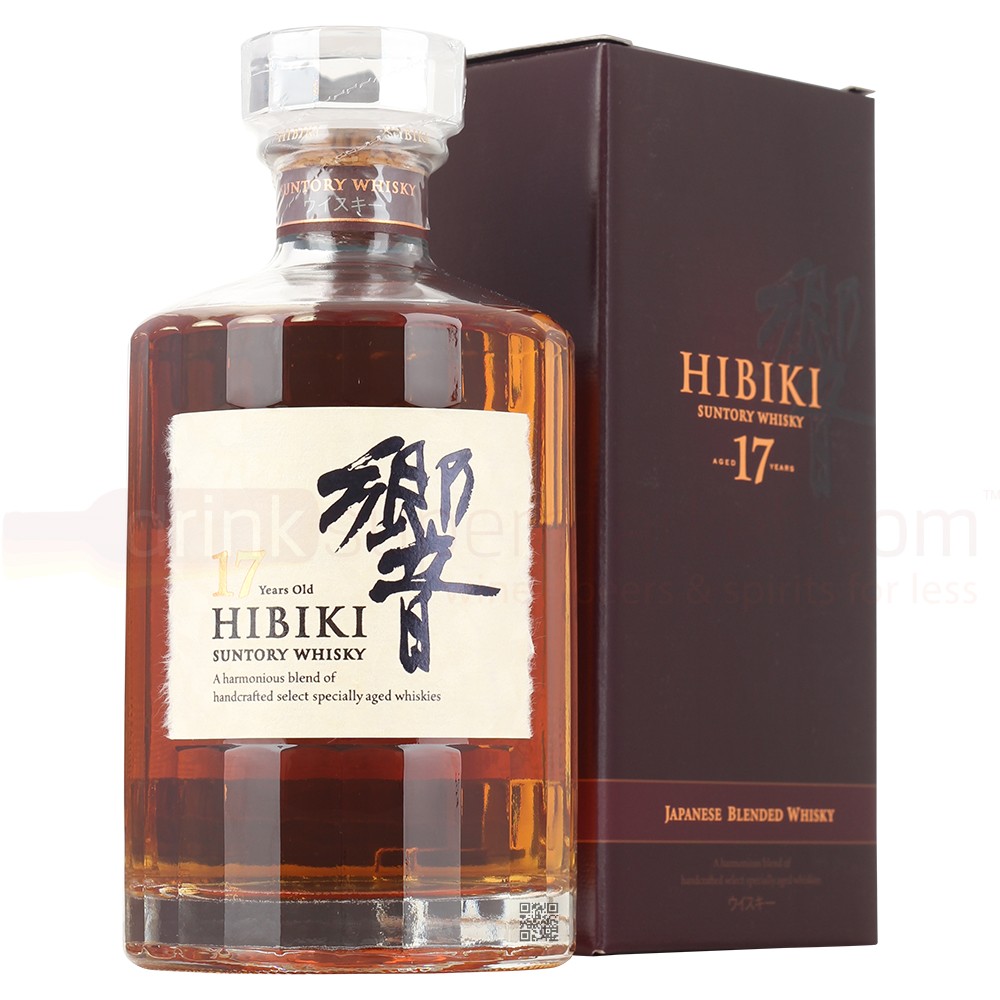
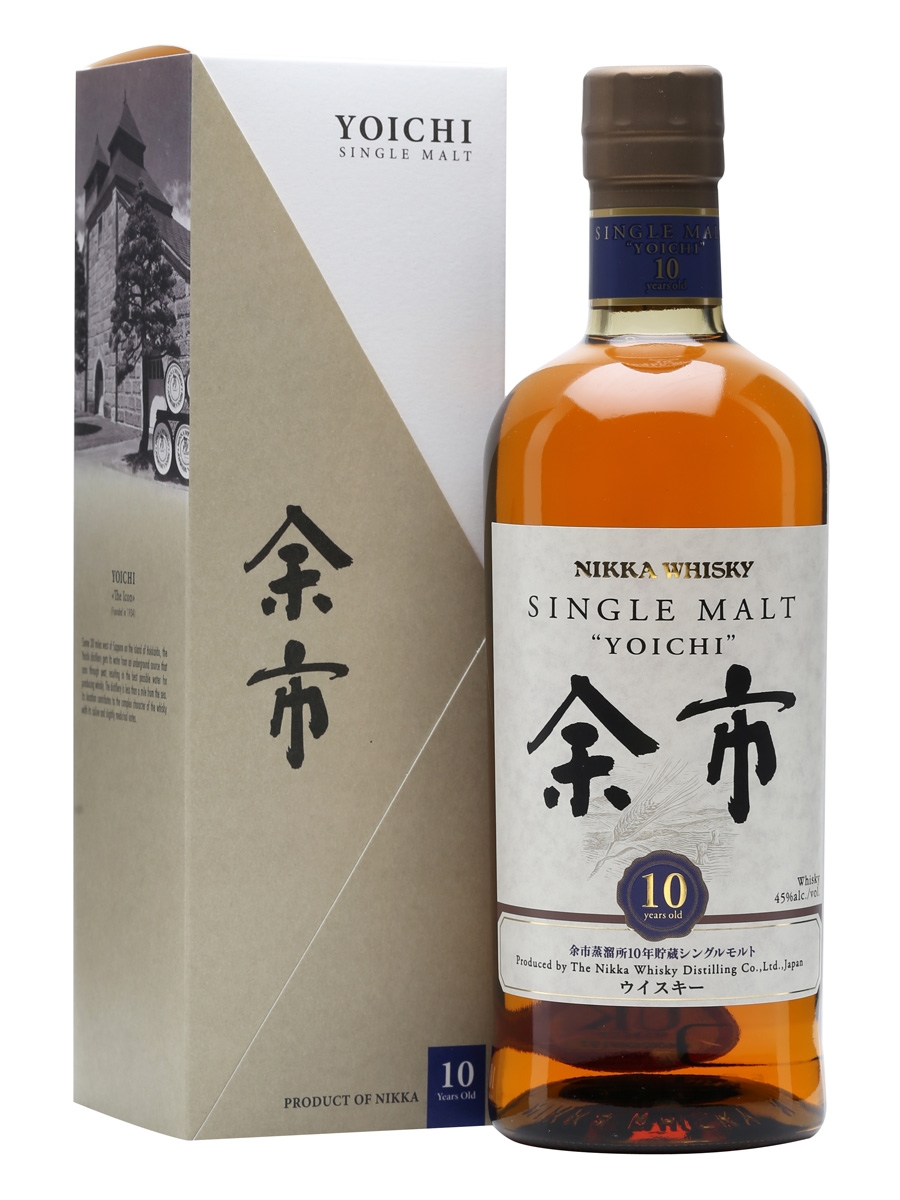
Perhaps that’s the reason why Japanese whiskies command such premium price in the market. In India, we have a range of Japanese single malts available at the moment. Starting from Hibiki 17 YO, Hakushu 12 YO, and Yamazaki 18 YO at the 5-star hotels across the country to brands of Akashi, White Oak Single Malt (Rs.14775), White Blended Whisky (Rs. 4850), Blue Blended Whisky (Rs. 6150), Red Blended Whisky (Rs. 3800) and Shin Umeshu (Rs.4200), which are available with the importer, Flipsydee. From the portfolio of Nikka, Dhall Food & Beverages imports, Nikka Yoichi 10 YO (Rs 19,900 in Delhi) and Nikka Taketsuru pure malt (Rs 15,320). An official from the company quoted, “Price doesn’t matter. The response to Japanese whiskies in India has been so good that we are planning to add one more brand, Togouchi Blended whisky, to our portfolio soon.”
Since more than a century India has remained one of the biggest consumers of Scotch whisky and its only fitting that now Japanese whiskies are paving the way for a new set of whisky enthusiasts who are wealthy and are in search of something elusive and exclusive.
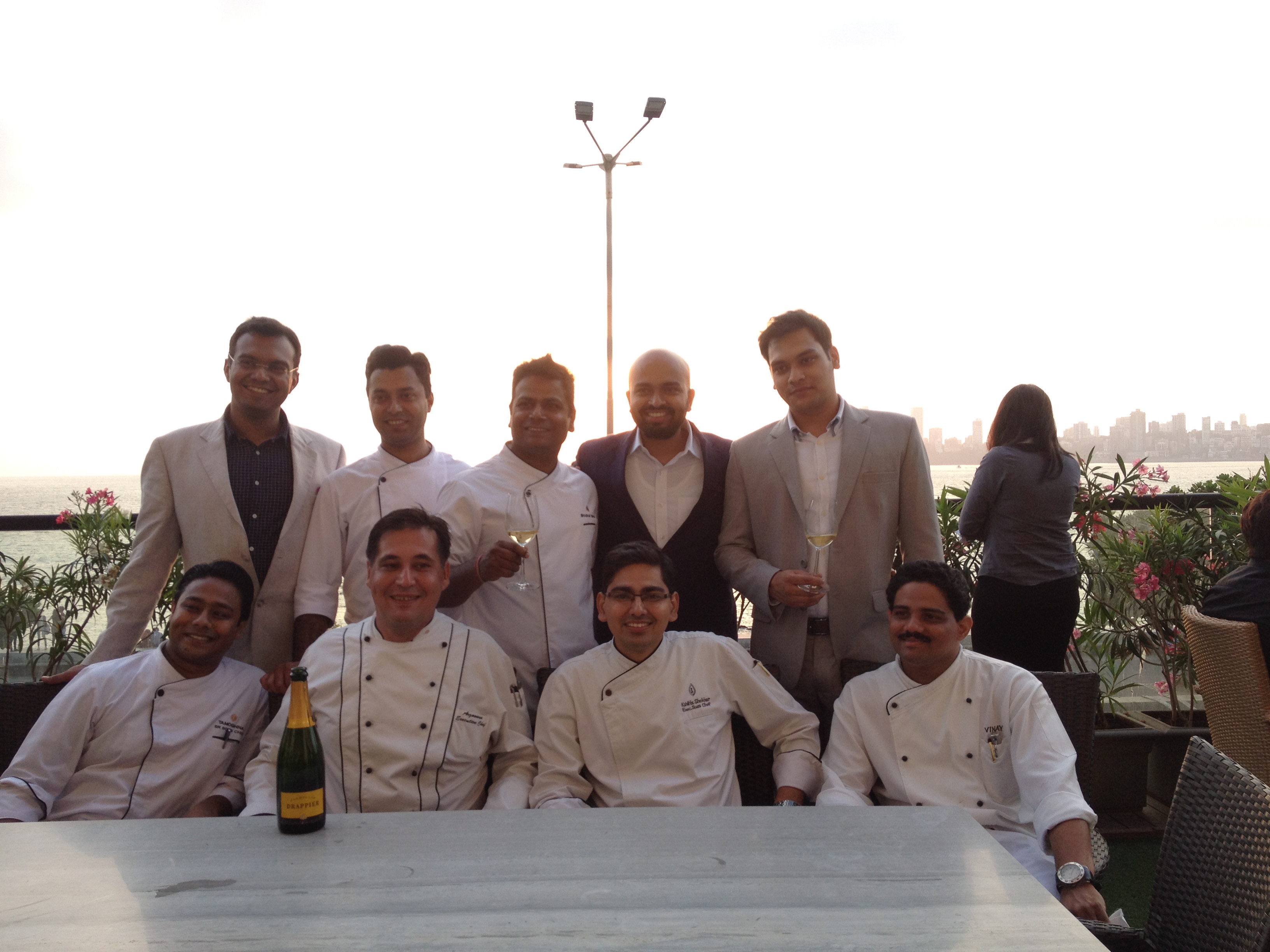
Drinks & Destinations was recently invited to a fine tasting of wines from the wine & spirits importing company Ace Beveragez’s portfolio at The Intercontinental, Marine Drive, Mumbai. The tasting conducted by wine consultant Ajit Balgi was a rare occasion showcasing some great wines available in the market currently.
Sandip Parsan, Ajit Balgi & Rakshit Parsan with the team of Long & Short, Intercontinental Hotel, Mumbai
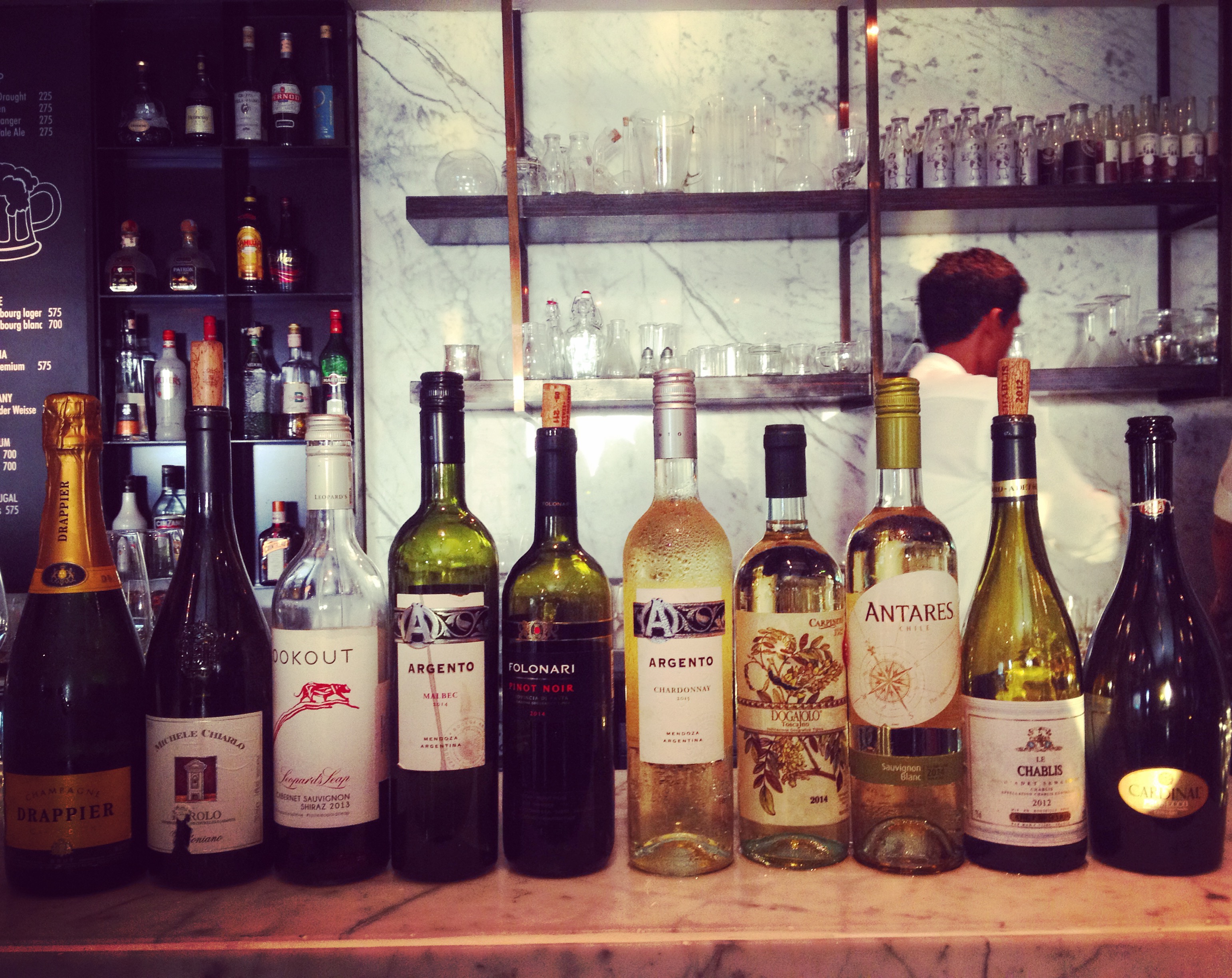
The 10 wines that were tasted with some delectable snacks from the kitchen of the bar-Long & Short at Intercontinental were, Foss Marai Cardinal Treviso Extra Dry DOC Prosecco, Adet Seward Chablis (a great chablis priced at around Rs3500), Antares Sauvignon Blanc from Chile (high on acidity, priced at Rs 1500, the least impressive of the lot tasted that evening). A very interesting chardonnay called Argento, at Rs 2000, this is definitely a recommended wine), Carpineto Dogajolo Bianca IGT (a wine from the famous Tuscan wine producer Carpineto, great quality wine blend of chardonnay, sauvignon blanc, and grechetto in addition to the beautiful label. The surprise of the evening was Folonari Pinot Noir IGT, the wine from Veneto region in Italy is a value for money(Rs 2050) pinot noir with the expressions of a great french style wine. The South African Leopard’s Leap Look Out, a blend of Cab Sauv, shiraz, and cinsault at Rs 1860 was followed by Argento Malbec from Argentina. The wine decanted for some time expressed great aromatic characteristics of an Argentinean malbec. The end of the evening was reserved for the finest, Michele Chiarlo Barolo DOCG 2010 vintage which will be available in Mumbai in June. And Drappier Carte d’Or Brut, the 100% natural champagne may not be everyone’s champagne, but certainly is a fine drinking champagne enjoyed in a flute or still wine glass.
Rakshit, Sandip & Ajit
Presenting the wines to the guests, Rikshit Parsan, Director Ace Beveragez said, “Wines have been confined to dinner times in Mumbai and this tasting is to break away from the mould and portray wine as an anytime drink given the varied styles of wine. We are glad we chose Long & Short for this evening and we would love to see patrons to socialize over high tea and wines or conduct their day end meetings and watch the sun go down with a glass of Champagne.”
The team at Long & Short did an excellent job of preparing and presenting the food keeping in mind the wine list. Executive chef Arzooman Irani said, “People associate a certain formal protocol when it comes to wine. They either drink it with a meal or open a bottle in the evening. We’re telling people that even late afternoon, surrounded by some nibbles, would be a great time to drink wine. With appetisers that best bring out the flavours of the wine, this is a quintessential Long & Short initiative; where it’s all about making wining and dining fun.”
The specially crafted menu by Executive Chef Arzooman Irani included Vietnamese rice paper roll, cheese tofu mash, micro herbs & pansy; smoke salmon mousse on arugula blinis, salmon roe & chives; honey garlic rosemary infused baked camembert, chili almond biscotti; Braised lamb chops, baby veggies, morels jus; Herb crusted sea bass. Chilly tamarind sauce, pumpkin mash; Beetroot Macaroons to name a few; paired perfectly with the assortment of wines.
If there is one thing that truly defines a bottle of wine is the place of its origin. Because the grape, that the wine is made of, denote the terroir, climate, the style of wine making etc. Though every grape variety carries the identity of the place of its origin, sometimes, a long travel across continents can help it build a much better home away from home. So is the case with the grape variety Malbec. Originally from South-west France, Malbec now thrives in the vineyards of South America, especially in Argentina.
Malbec, Auxerrois or Côt whatever France may call it, until around mid-twentieth century, the grape variety was on its top in the region of South-west France including Bordeaux. The historical centre of Malbec production was originally in Cahors, a town located in southwest France near the Pyrenees around 200 miles from Bordeaux. According to the history, the wines of Cahors started traveling all over the world in the mid-seventeenth and eighteenth century.
The nineteenth century marked the decline of the wine of Cahors in France and England. Bordeaux merchants barred the way to the British market. Furthermore, French winemakers prioritised other wine varieties that were better adapted to the characteristics of soils and climates of the region. The prestige of the wines of Cahors, so vigorous in the Middle Ages and in the early centuries of modernity, underwent a period of decline. Cahors wines were left off the lists of wines recognised and valued in the nineteenth century. The coup de grace for the downturn of Malbec in France was the phylloxera plague. This attacked the vineyards of Cahors from 1877 and wreaked havoc. The 40,000 hectares that had been cultivated up to that point disappeared almost entirely within a few years. From this devastating experience, the Gaul growers lost their last ties with Malbec, a situation that could not be reversed until the second half of the twentieth century.
Malbec in South America
The expansion of Malbec, outside of France, began in the eighteenth century, towards the east. In the following century it reached the Southern Cone of America and by 1840s and 1850s, Malbec strains began to grow in the Quintas Normales de Santiago de Chile and Mendoza. While the wine industry started flourishing in Chile, Argentina turned out to be a late entrant in it due to the prevailing political situations at that time. However, it took 150 years for Argentina to find its star.
Argentine viticulture began to recover after 1990, with Malbec as its star strain. The area sown to this variety jumped from 10,500 hectares in 1990 to 16,350 in 2000, to 26,900 in 2008, and finally to 28,500 in 2009. Growth in this twenty-year period (1990-2009) was in the order of 173%. Malbec consolidated its position as the emblematic variety of Argentine viticulture for its red wines, and led the national exports, that from 2000 began a steady and unprecedented progress.
It took Argentina 150 years, from receiving the first vines of Malbec, until they were able to produce a decent wine for export. It was a long period of work and interaction among men, plants, soils and climate.
Argentina began exporting wine in relevant quantities at the beginning of the twenty-first century.
World Malbec Day
With Alejandro Zothner Meyer, Deputy Consul General, ArgentinaWith Eduardo de Quesada, Consul General of Spain (Second from Right) and the staff of Consulate General & Promotion Center of Argentina in MumbaiWith Eduardo de Quesada, Consul General of SpainWith Andrea Alba Gonzalez, Deputy Consul, Argentina
The celebration of Malbec Day came into form when modeled on France, an initiative was proposed to add new grape varieties as a means to enhance the national wine industry in Argentina. On April 17, 1853, with the support of the governor of Mendoza, Pedro Pascual Segura, a project was presented to the Provincial Legislature, with a view to establishing a Quinta Normal and Agricultural School. The House of Representatives approved the project on 6 September that year. The management of Pouget and Sarmiento in the Quinta Normal de Mendoza was a crucial part of this process.
The Consulate General & Trade Promotion Centre of Argentina in Mumbai celebrated the sixth edition of World Malbec Day this year at the Taj Mahal Palace & Hotel. The celebration happened along with 64 cities and 50 countries around the world, together paying tribute to Argentina’s flagship grape variety-MALBEC. This year, the Consulate hosted the event on the 12th of April to include a farewell for their outgoing Consul General, H.E. Tomas Ferrari.
The wine of choice for the night was Trapiche, one of Argentina’s oldest and biggest wine producers. The vineyards are located in Mendoza, Argentina at the foothills of the Andes Mountains. It is Argentina’s largest exported premium wine brand, with a presence in more than 80 countries. Under the guidance of world-famous wine consultant and enologist Michel Rolland of Bordeaux, France, Trapiche has become one of the most iconic wines from the region.
The soiree included a tasting and information tour about Argentine Malbec & its origins by the Sommelier of the Taj, Abhas Saxena. Guests were briefed about the wonderful journey through which the Malbec varietal of grapes went through to reach its current avatar. The guest list included distinguished members of the Diplomatic community in Mumbai, including the Consul Generals from Spain, Poland, Ecuador and Australia, and the Consulate’s personal friends and business associates from various industries.
Since its first edition in 2011, the World Malbec Day celebrated on 17th of April, has become a symbol of the transformation of Argentina’s wine industry and more specifically of the grape variety Malbec.
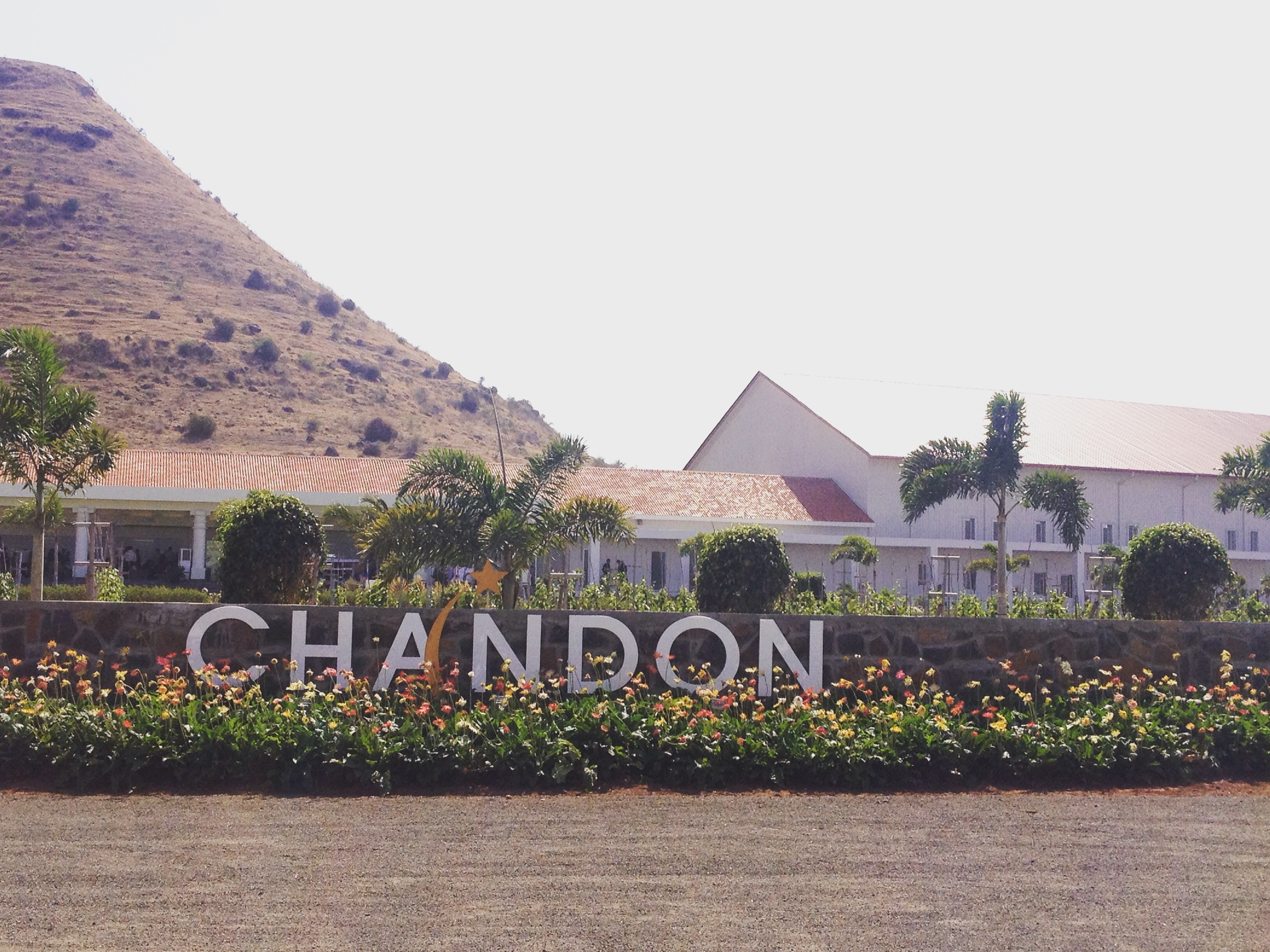
After three years of launching Chandon sparkling wine in the country, the LVMH Group holding company Moët Hennessy India recently opened doors to its state-of-the-art winery in Dindori, Nashik to a very selective group of media and trade.
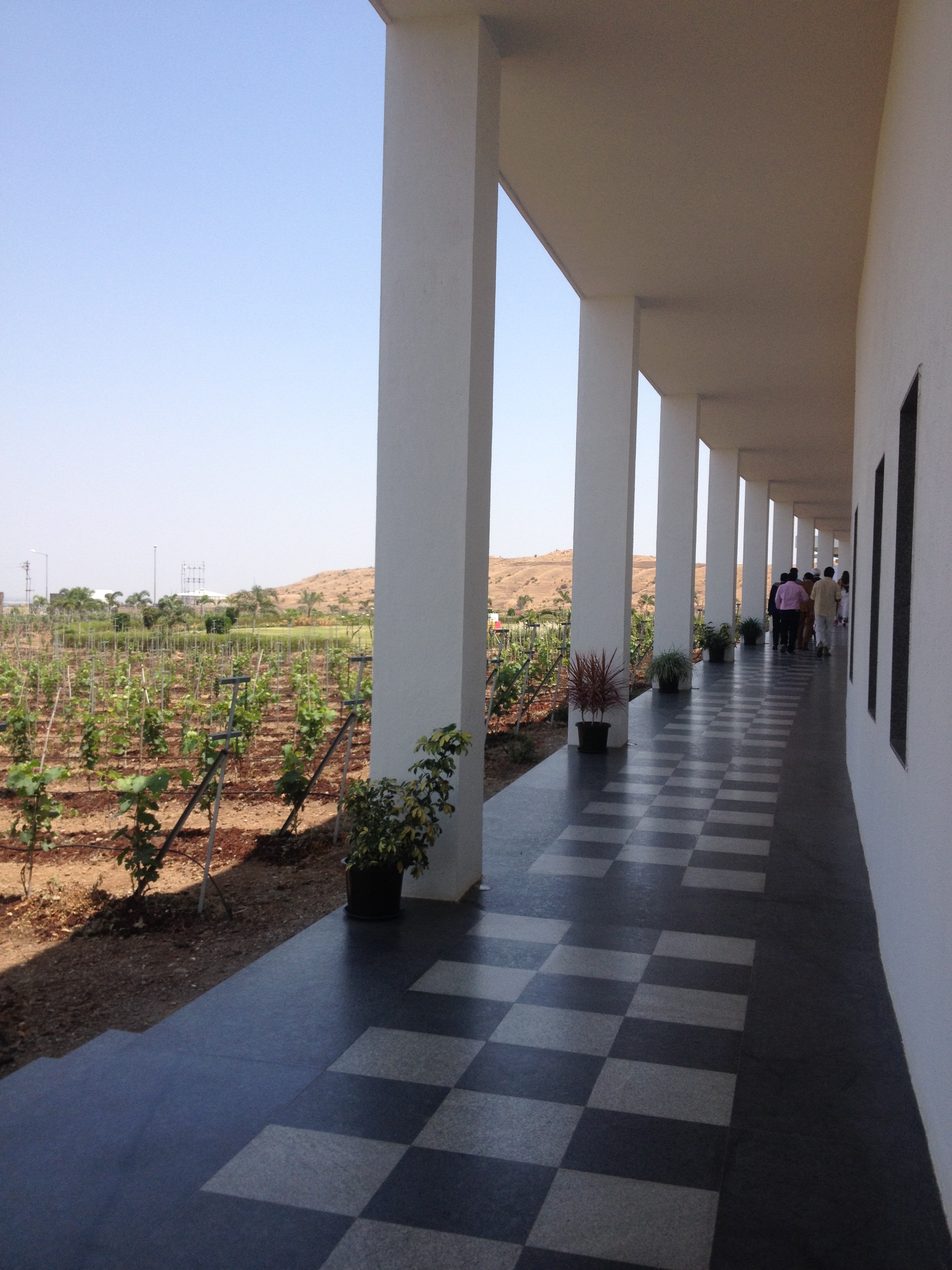
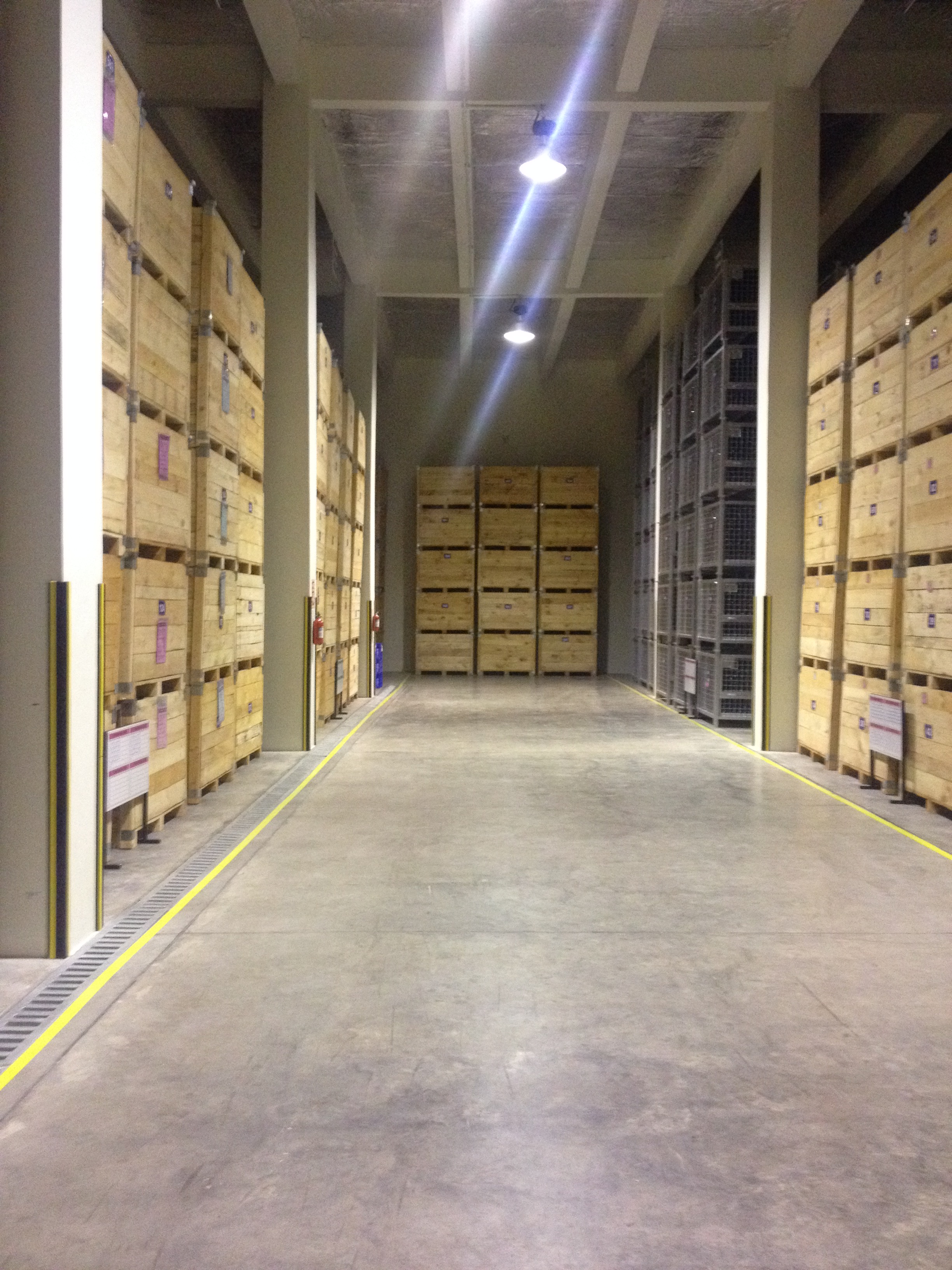
The property built on 21-acre of land in the wine capital of India is also the largest facility in the country. With a total capacity to produce 50,000 cases of Chandon sparkling wines (brut and brut rose) and the scope to increase it further in future.
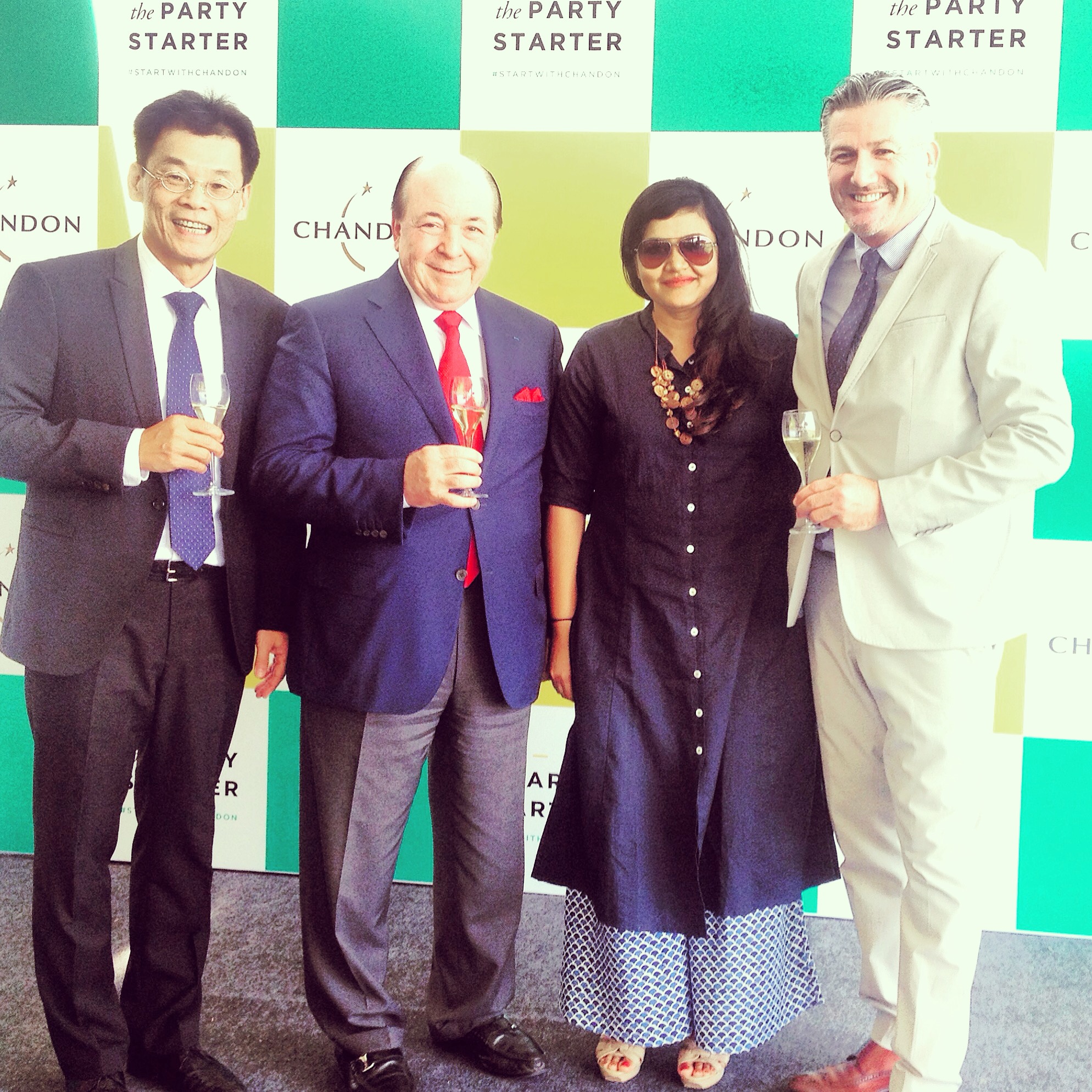
With Wiboon Arunthanes, Regional Director, MH Asia Pacific, Davide Marcovitch, President Chandon and Steven Steve Bullock , MD, Moet Hennessy India.With Sophia Sinha, Senior Marketing Manager, Moet Hennessy India.Amrut Vare , Wine Maker, Chandon India
At the launch event, while the group honchos, Davide Marcovitch, president-Chandon, Wiboon Arunthanes, Regional Director, MH Asia Pacific, and Steven Steve Bullock, MD, Moet Hennessy India played good hosts, the new Argentinian winemaker and Operations Manager at Chandon India Gustavo Agostini was present to address the queries about the winery and production facilities.
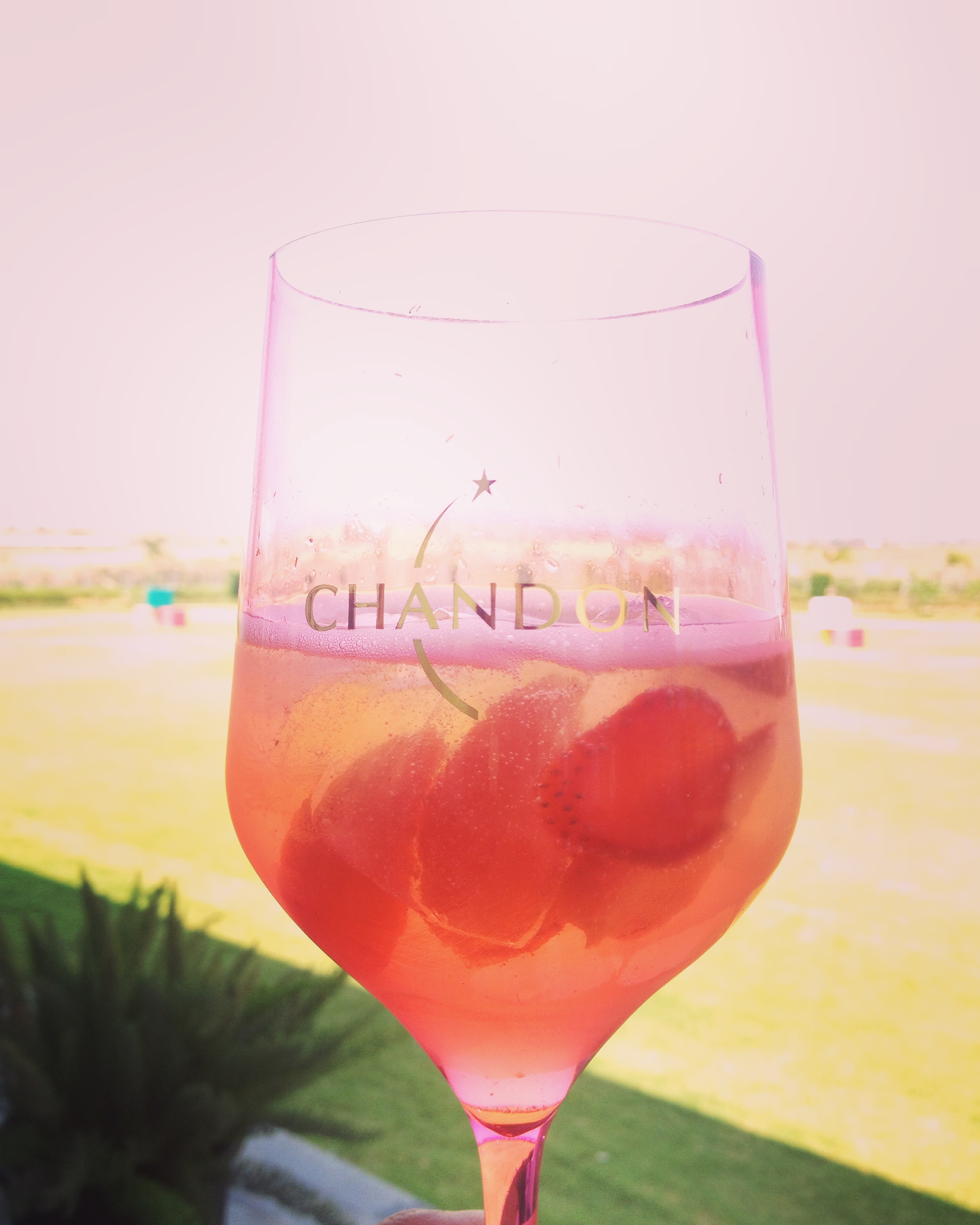
Winemaker Amrut Vare and viticulturist Nivrutti offered a guided tour of the winery to the guests and Rohan Jelki, Brand Ambassador of Moët Hennessy India stayed busy behind the bar mixing some sparkling cocktails, Chandon spritzers, to help people beat the heat.
The launch of Chandon wines in India in 2013 was a glitzy affair and the wines certainly have given a boost to the sparkling wine segment since then.
Placed right in the fun, lifestyle brand segment, Chandon presented the true spirit of its French family of origin -Moët & Chandon. The story of the house of Moët & Chandon is as interesting as the champagne itself. So is the marriage between the champagne house Moët & Chandon and cognac producer Hennessy that took place in 1971 and gave birth to the company Moët Hennessy. When in 1987 the luxury fashion company Louis Vuitton and MH were merged, LVMH became the most fashionable lifestyle company redefining luxury in every sense. Moët Hennessy worldwide owns a number of wine and spirit brands and the wines made outside France are produced under the Chandon Estates also called Domaine Chandon.
Besides India, Chandon has found homes in Argentina, Brazil, California, Australia and China.
Until 2014, the Indian Chandon was produced under contractual arrangement at York Winery with grapes sourced from different vineyards. Though the wines are still not made from grapes of Chandon’s own vineyards, since 2014 the sparkling wines are produced at the Chandon winery by a team of international and local winemakers and viticulturists who are closing working with grape growers from the Nashik region.
At present, Chandon has two variants of sparkling wine in the market, the Chandon Brut that is a blend of Chardonnay, Pinot Noir, and Chenin Blanc, and Chandon Brut Rose, a 100% Syrah-based rose sparkling wine.
The brand Chandon speaks of an incredible success story with a 100% growth in the last financial year. The quality (crisp, edgy, freshness and fruitiness of Chandon brut and brut rose), its brand image and aggressive marketing strategy have made Chandon extremely popular in the country. To an extent that it’s succeeded in establishing a connection between the Chandon loyalists and the quintessential luxury brand company by making Chandon an affordable and accessible party drink.
Have you heard of the new rum in the market yet? Well, it’s not in the Indian market as of now and you may have to take a trip to a foreign land (read US, UAE or some countries in Europe) or fly via Bangalore airport to get hold of a bottle of this premium dark rum. Or, you could request Gautom Menon, the rum aficionado, and producer of Wild Tiger Rum to arrange a bottle for you. In the end, it will all be worth it.
I have known Gautom Menon for a few years now, since the time he was involved in his father’s liquor manufacturing business in Kerala. Menon always had a special inclination towards rum and he wanted to create a premium dark rum which could become a proud representation of the ‘spirit of India’. When we met for the first time to talk about Wild Tiger Rum, he said, “Every country in the world have their own national spirit, but it’s strange that, in our country where a major part of the spirit consumption is from rum category and given the fact that we also make most of our whiskies from sugar cane molasses, also the base for rum, we haven’t thought about making rum as our national drink!”
He added, “Wild Tiger Rum serves two purposes. First, it is a true #MakeinIndia story. Though the draconian laws, taxes and regulations in the country have forced us to take the route of Amrut Single Malt- produced in India but launched first in the international market and then in India-I am positive about the product creating the same impact in the domestic market soon. Secondly, it’s the label, which is very close to my heart”. As a part of its core CSR policy – The company donates 10% profits towards Tiger Conservation in South India where they work with other established wildlife conservation societies and with prominent Tiger experts.
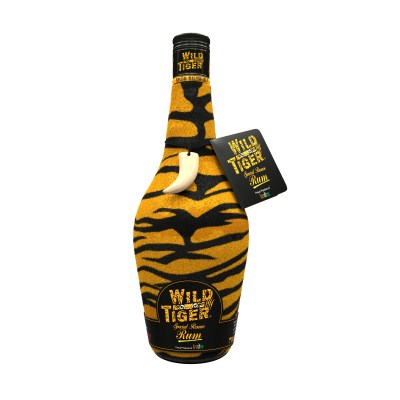
One of the most distinctive aspects of the WILD TIGER’s packaging is – just as no two Tigers share similar stripes, the stripe design of the each bottle are distinctive and ensures that no two bottle designs are alike, making each bottle unique to its owner or gift recipient, by this virtue it makes it a default special edition of sorts and at an affordable price point.
The replica Tiger Claw that adds elegance to the overall packaging symbolises “No Fear”, according to ancient Indian mythology.
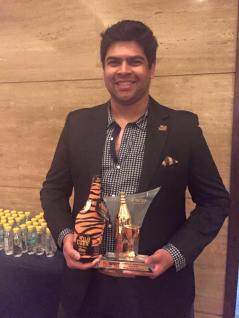
WTR has already grabbed a special prize for its unique packaging at an industry event. Menon says, “Innovation and Social Responsibility are at the heart of everything we do at Wild Tiger and we approached this with a mantra “Think out of the bottle”. Almost all packing elements are made using recycled materials to reduce the impact on our environment.
And when it comes to the liquid inside the bottle, Menon takes extra caution about that too. “The flavour profile was finalised after long deliberation, tastings with master distillers, taking feedbacks from many international rum masters. Wild Tiger is India’s first rum to be produced from a blend of molasses and cane spirit, giving it gorgeous aromatic notes and depth in flavour”, he said. WTR is produced in Menon’s family owned distillery in Kerala.
After holding the trade launch in London at the UK Rum Fest where the brand created a big buzz and from the showcasing at USATT in New York in March 2016, Menon is eager to establish the brand in the top Rum markets of the world but with a special focus on Travel Retail. He adds “the exotic blend makes Wild Tiger uniquely delectable or as we like to call it “RUMTASTIC”. The brand is soon to be available in the US by Eastern Liquors INC who will initially introduce WTR in the East coast primarily in the states of NY, NJ, CT and MA by the end of May 2016.“We are also thrilled to announce our partnership with ‘1423’, the
“We are also thrilled to announce our partnership with ‘1423’, the Denmark-based distribution company who will act as an exclusive importer for select countries in Europe, catering to markets in Denmark, Germany, Sweden, Norway and will be adding a few more countries after the initial launch in May. The deal was signed at the recently concluded Paris Rum fest. “Our goal is to have an extensive presence in at least 16 countries by the end of 2016”, given India’s strong ancient roots to the origin of Rum we would like to take an Indian brand to new territories and to un-scaled heights”.
Wild Tiger Rum has also another industry first, having completed listing as the official rum onboard Tiger Airways , the rum will be served on all Tiger Airways flights from July 2016 onwards. This is a first for an Indian spirits brand for onboard sales.
But, what about plans for India? “Well, my ultimate aim is to establish it as a true Indian spirit and for that, I will keep looking for opportunities in India. Maybe soon you will see the tiger roaring in Mumbai,”he concluded without disclosing further.
The Only Feed You Need: Booze, Buzz & Beyond
Stay informed with curated content and the latest headlines, all delivered straight to your inbox. Subscribe now to stay ahead and never miss a beat!


 el companies, popular restaurants in the city, famed sommeliers, wine importers, wine enthusiasts and captains of industries from various sectors in which India and Argentina share a common trading platform. Also present were the prominent director, Shyam Bengal and his wife. Other guests included Chef Vicky Ratnani, Sumer Vaswani from Blue Frog, Food blogger, Sameer Malkani, Rojita Tiwari from Drinks and Destinations and Blaise Fernandes, CEO of Gateway House.